
Laser welders are categorized by output power and cooling systems.
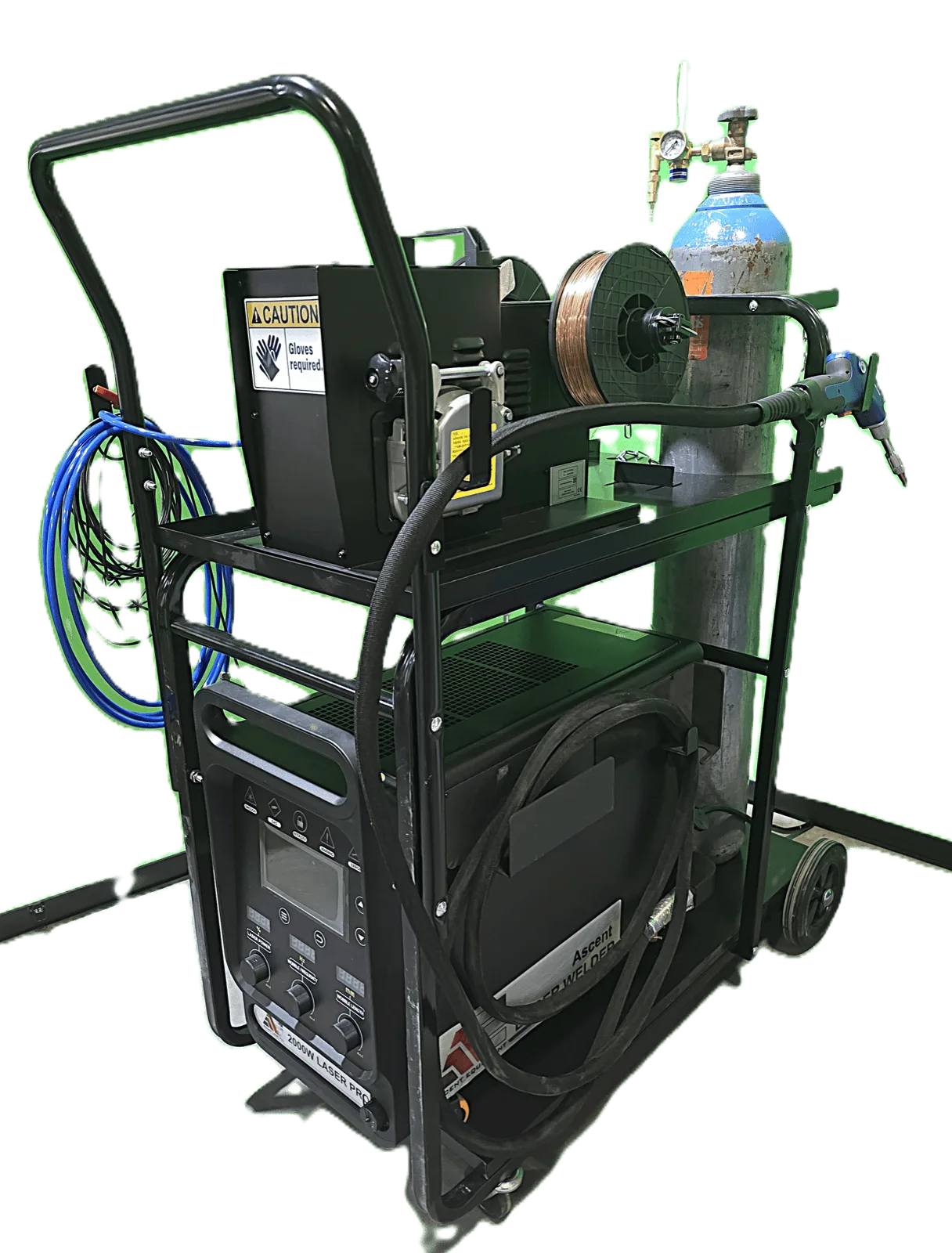
For fabrication, we recommend a minimum output power of 2000W.
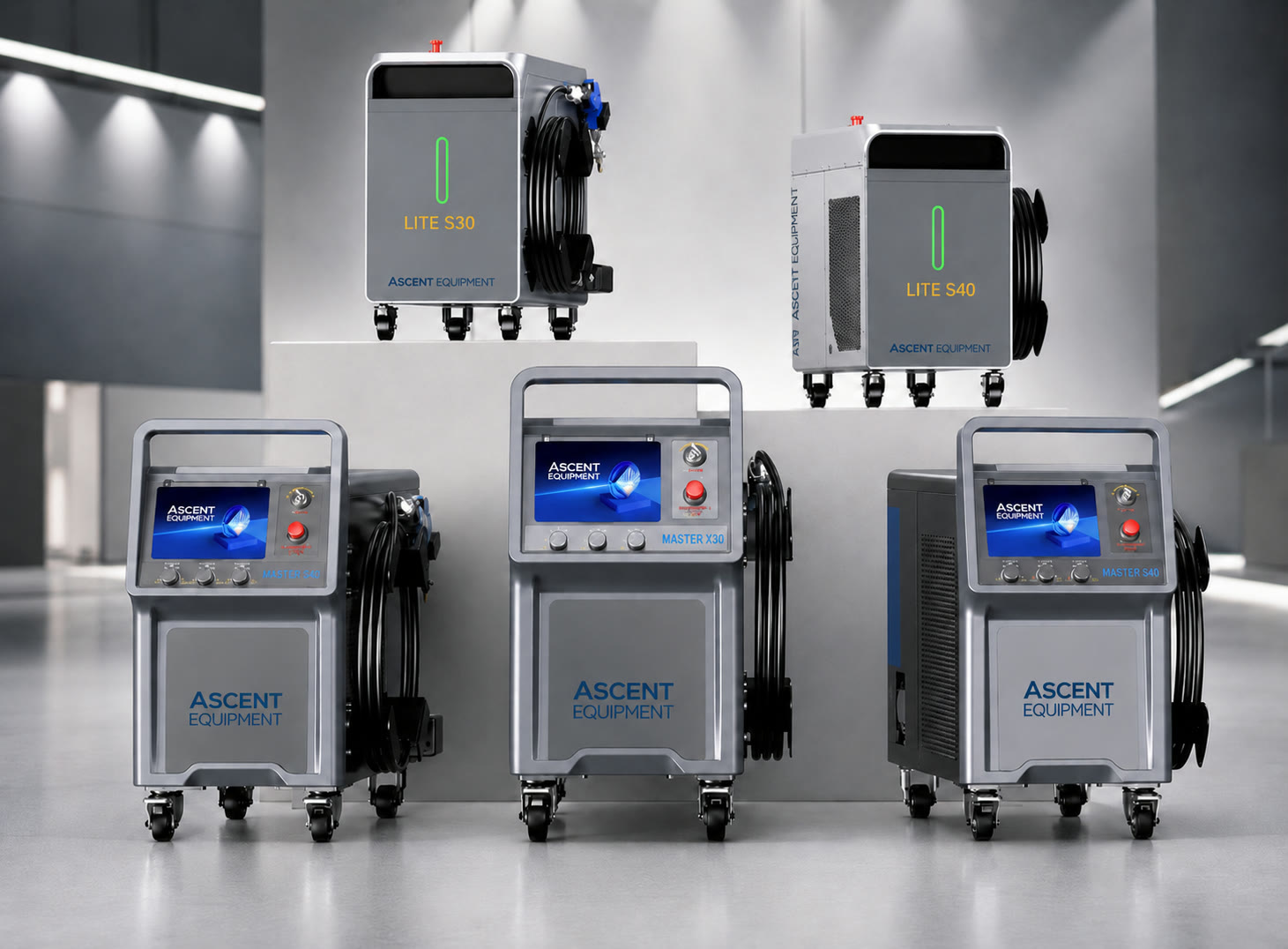
Cooling systems can be divided into water-cooling, air-cooling, and the new Ascent refrigerated heat pump.
The disadvantage of air cooling is that the operator must allow the machine to cool down after a few hours of operation.
Water cooling requires regular maintenance.
In contrast, the Ascent refrigerated heat pump is designed for continuous operation without scheduled cooling breaks and does not require water-chiller maintenance.
Output power is crucial when choosing a laser welder to match the machine's output to your materials and their thickness.
For example, the Ascent 2000W laser welder can weld aluminum from 0.030" to 0.27".
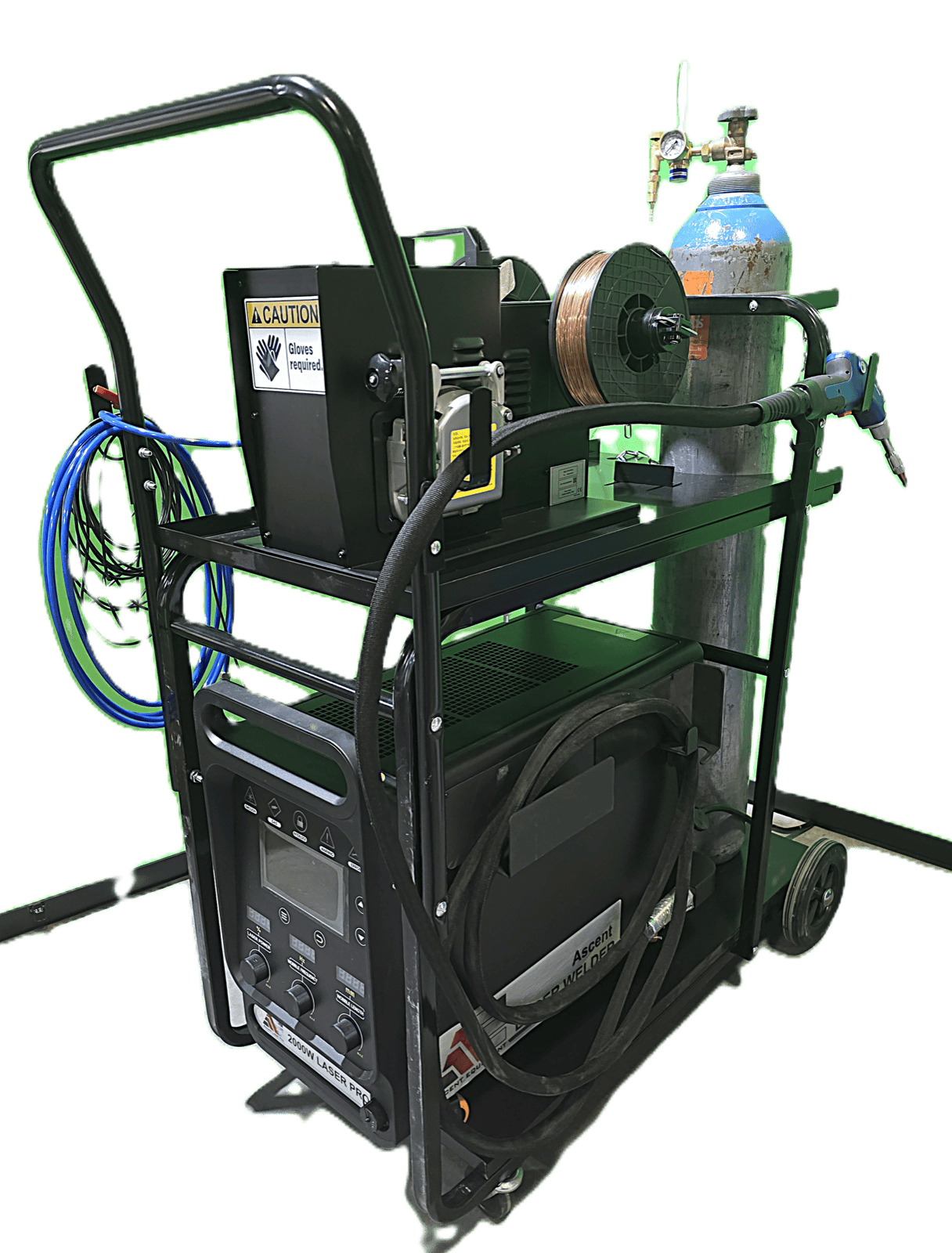
Wire feeder: Laser welding melts the two parts together; if there is a gap, a wire feeder is needed. The feeder is integrated into the
machine's operation, ensuring it can use industry-standard wires available from any welding supplier.
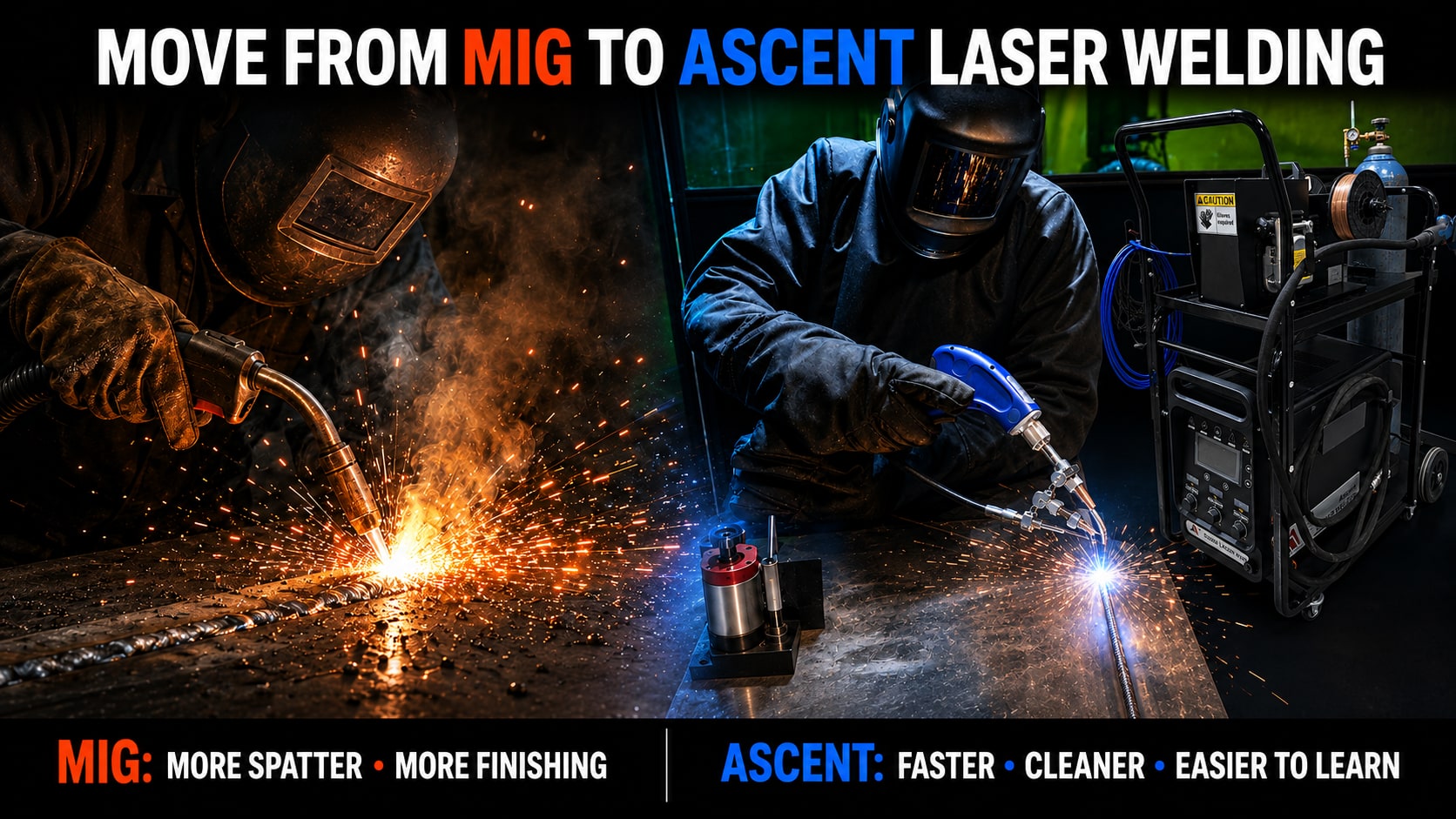
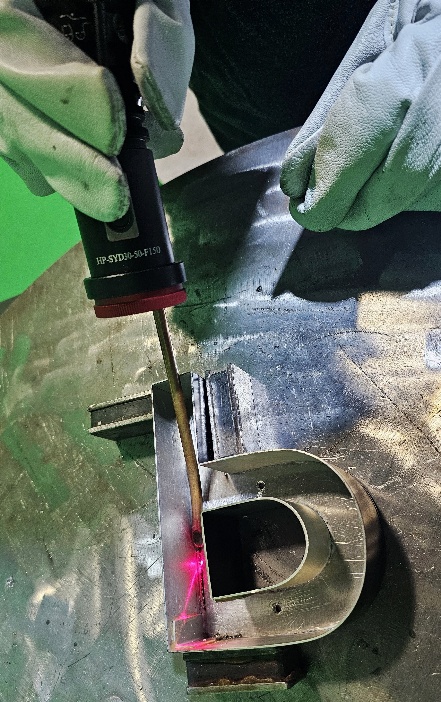
The welding torch features a "Wobble Head" that oscillates the laser beam, creating a wider weld.
This feature is highly recommended for structural parts, as it improves weld strength.
The welding torch should be as lightweight as possible to prevent operator fatigue.
Additionally, you will need a supply of protective lenses (for aluminum, this should be changed every few weeks)
and different nozzle shapes, depending on the weld geometry.
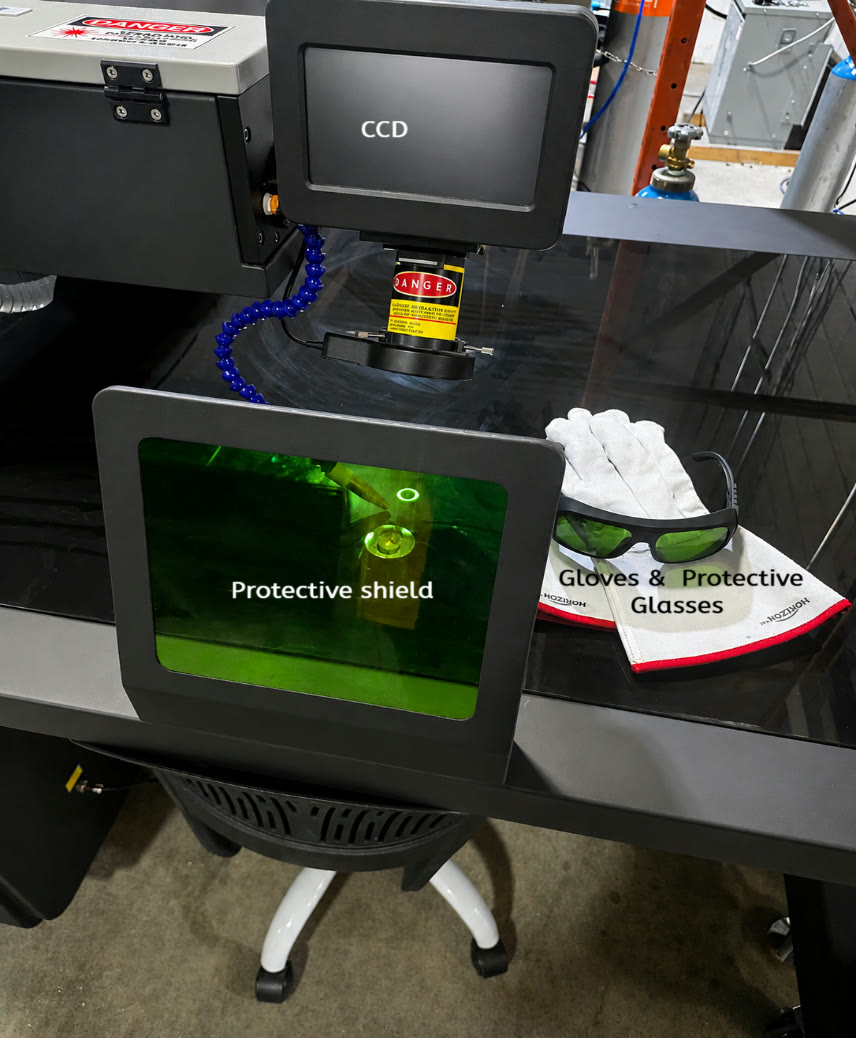
Laser safety is paramount; ensure you are provided with safety glasses rated OD 7 or 8, a fiber laser helmet, and gloves.
In the US, the laser welder needs to be manufactured to comply with FDA/CDRH laser-product performance requirements under 21 CFR Parts 1000 and 1040.
Support is also important; verify that the company offers a multi-year warranty in North America (Ascent backs its handheld welders with a 2-year comprehensive parts-and-labor warranty) and a supply of consumable parts.
Operator learning curve: Typically, learning to operate the laser welder only takes a few hours. However, it would be beneficial if the company could provide training at your facility.
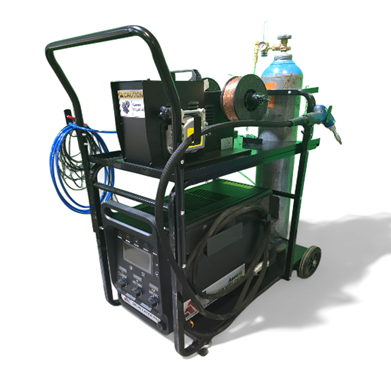
Feature: another feature is to get the machine with a trolley that can accommodate the laser welder, the wire feeder, and an inert gas tank.
For more information: https://ascentequipment.com/refrigeration-laser-welders/
Dave Rom
President and chief engineer