
Call us: 1-800-927-5107 647-494-7800 ext. 1008

Why Choose Ascent Channel Letter Bending Machines

Why Choose Ascent Channel Letter Bending Machines

When shops compare channel letter bending machines, the conversation almost always starts with a single number: the price of the machine. That's natural — it's the easiest thing to compare. But it's the wrong number to anchor on, because it treats "a bending machine" as one interchangeable category, when in practice the machines on the market split into two very different kinds of investment.

What a "premium" machine actually buys you

Among the higher-end, flagship channel letter bending systems on the market, it's common for a single top-tier model to cost more than two specialized Ascent machines combined — an EDGE-3 and a 5AS, for example, purchased together.

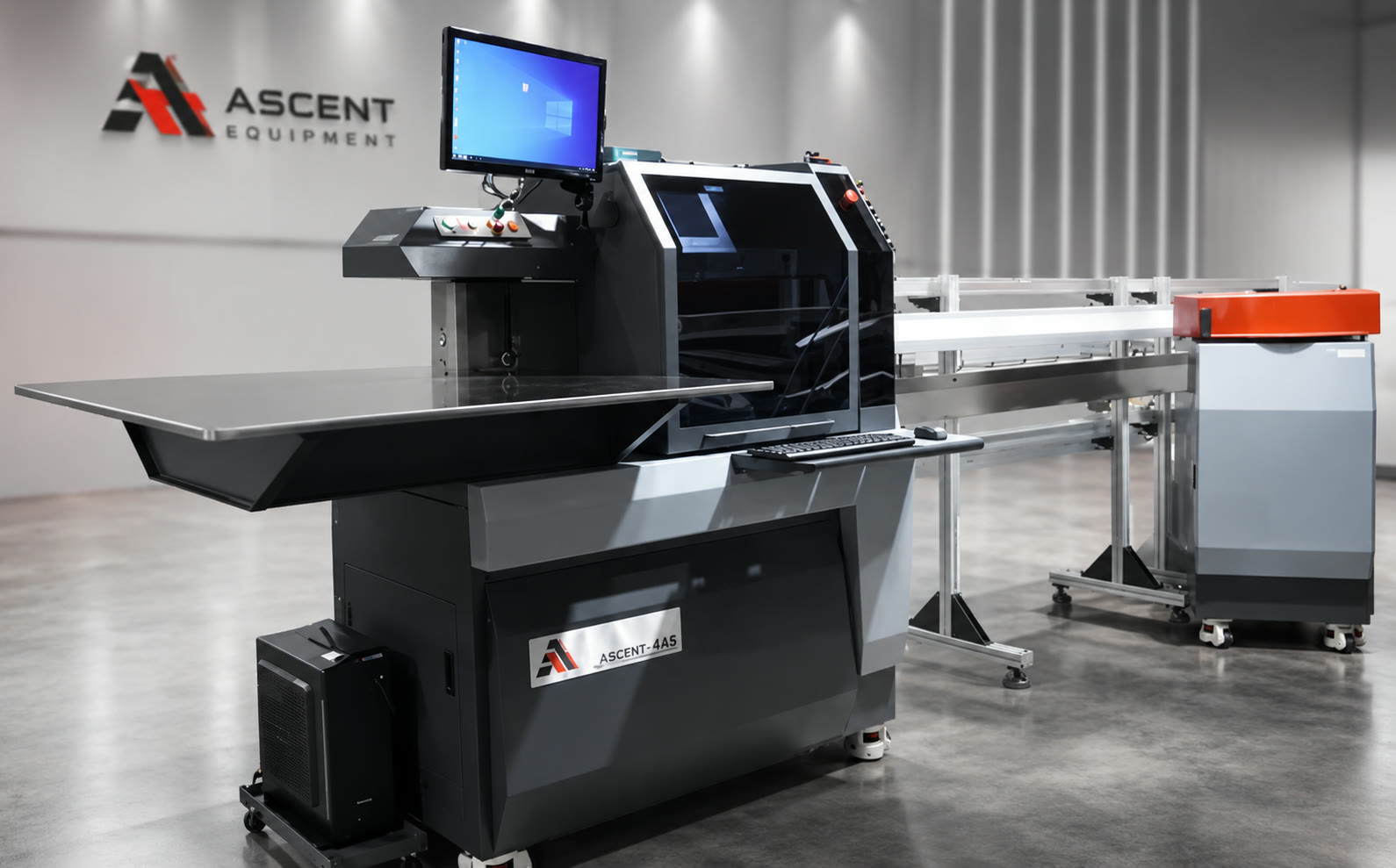
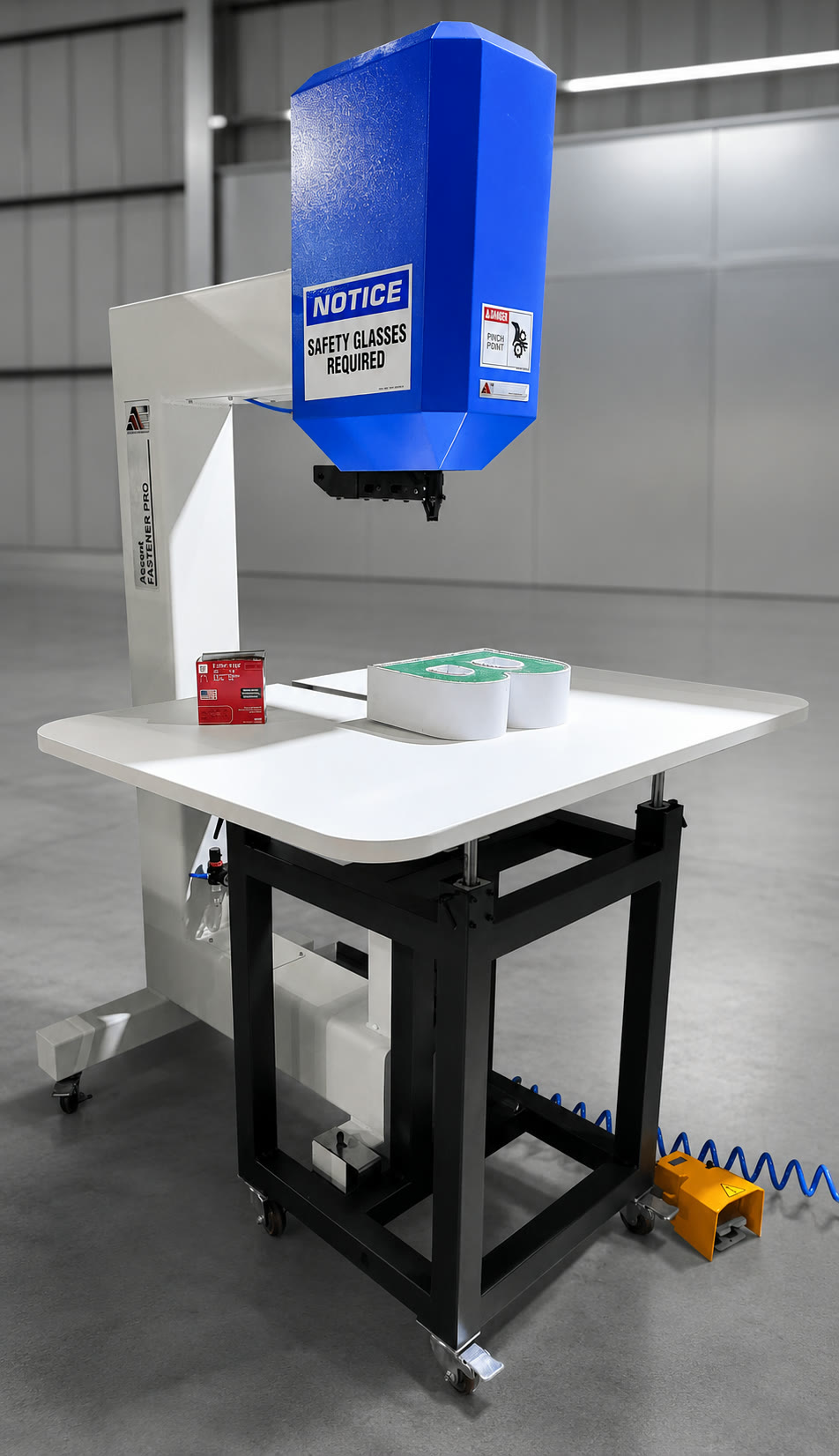
That's worth sitting with for a moment. For less than the price of one flagship machine built primarily around a single bending approach, a shop can own two purpose-built Ascent systems that, between them, cover a genuinely broader range of construction methods: traditional notching, flanging, and bending for trim-cap letters on the EDGE-3, and trimless extrusion, F-trim, side-lit plastic returns, and welding-free reverse/halo construction on the 5AS.

One machine, however capable, is still one machine. Two specialized machines are two different production paths.

The pattern repeats across the premium tier

This isn't a quirk of one machine. Across the higher end of the channel-letter bending category, the same tradeoff shows up in different forms:

  • Several systems are built almost entirely around speed on one construction approach — conventional notched-and-flanged returns — with aggressive throughput numbers to match. What they don't offer is an equivalent path to trimless, F-trim, or welding-free reverse/halo construction without a second machine.
  • Some publish strong automation features — unattended operation, waste-reducing tooling — but are notably less specific about their own warranty terms, which a shop has to ask about directly rather than find published anywhere on the manufacturer's site.
  • Lower-priced entry points in this category can look attractive on paper, but real-world shop feedback on build quality and customer support is genuinely mixed — worth weighing alongside the sticker price, not instead of it.

None of this is a knock on any one company. It's the shape of the category: specialize deep on one construction approach, or spread real capability across a broader range of them. Ascent is built for the second approach.

The changeover problem most shops don't budget for

Sticker price is only part of the comparison. The other part is what happens on the shop floor every time a job calls for a different letter type or material than the last one.

On a number of premium bending systems, moving from one construction type to another requires a mechanical setup — physically swapping tooling, adjusting dies, or otherwise reconfiguring the machine by hand before production can resume. That's real downtime, and it recurs every time the job mix changes, which for most sign shops is often.

Ascent's bending machines are built around a different premise: material and job setup is software-driven. Adding a new material or switching between the letter types a given machine supports doesn't require hardware changes — the operator selects the job, and the machine handles the rest. There's no mechanical retooling standing between one job and the next.

The easiest equipment to operate in the category

Once trained, Ascent's equipment is the easiest to operate in the category. Everything is software-controlled — there are no mechanical changes to make between jobs — and running the machine doesn't require a highly skilled operator. Job setup and material changes are a handful of on-screen selections, not a specialized skill.

Training goes further than the machine itself. Ascent's own technicians train an operator not just on how to run the equipment, but on how to make a complete letter — the full process, not only the bending step. That's a different kind of preparation than learning which buttons to press.

That matters for staffing in a category where skilled labor is hard to find and expensive to keep. A shop that doesn't need an experienced specialist to run production has more flexibility in who it hires and how fast it can bring on a second or third shift.

What two Ascent machines actually cover

To make this concrete, here's what an EDGE-3 + 5AS pairing — an investment that can come in under the price of a single flagship competitor machine — actually produces between the two of them:

  • Traditional trim-cap channel letters (notching, flanging, and bending)
  • Trimless letters using aluminum extrusion
  • F-trim letters
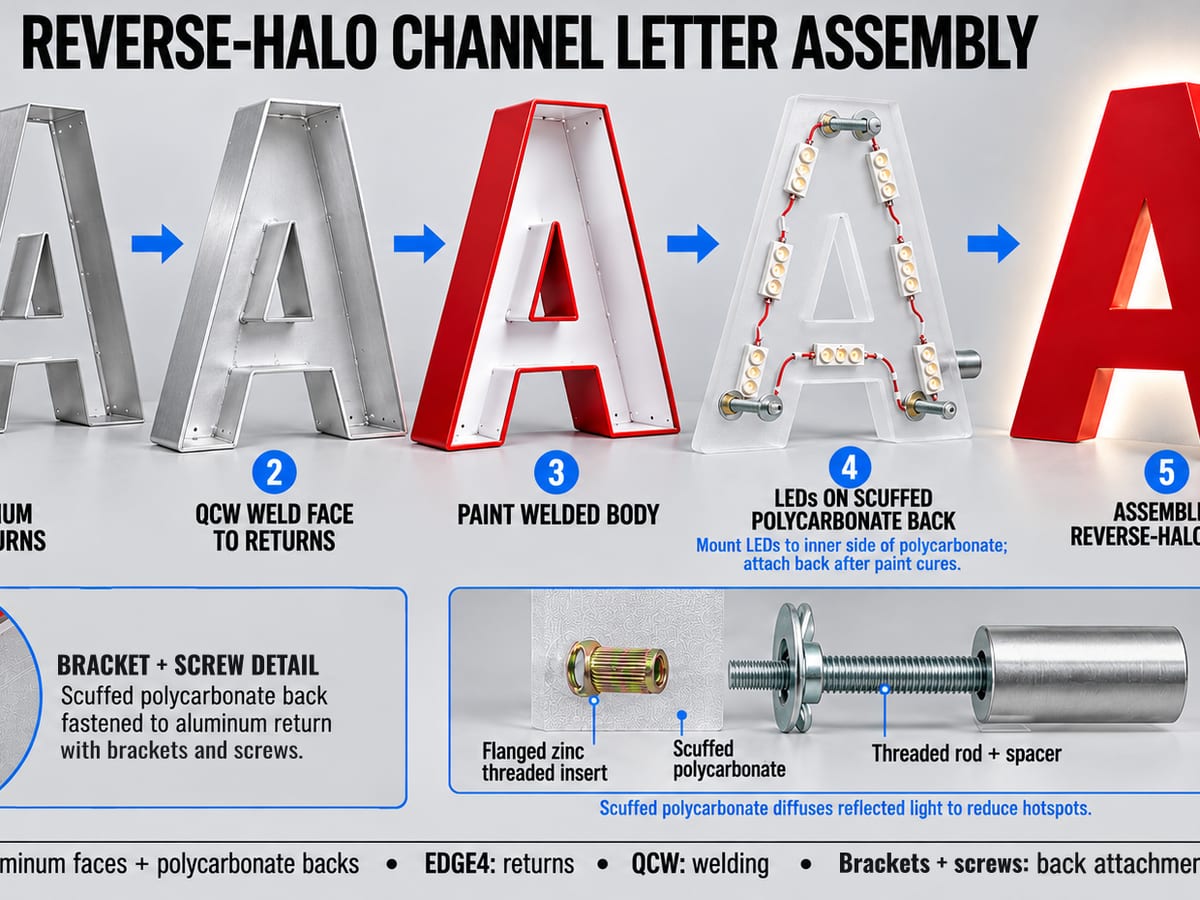
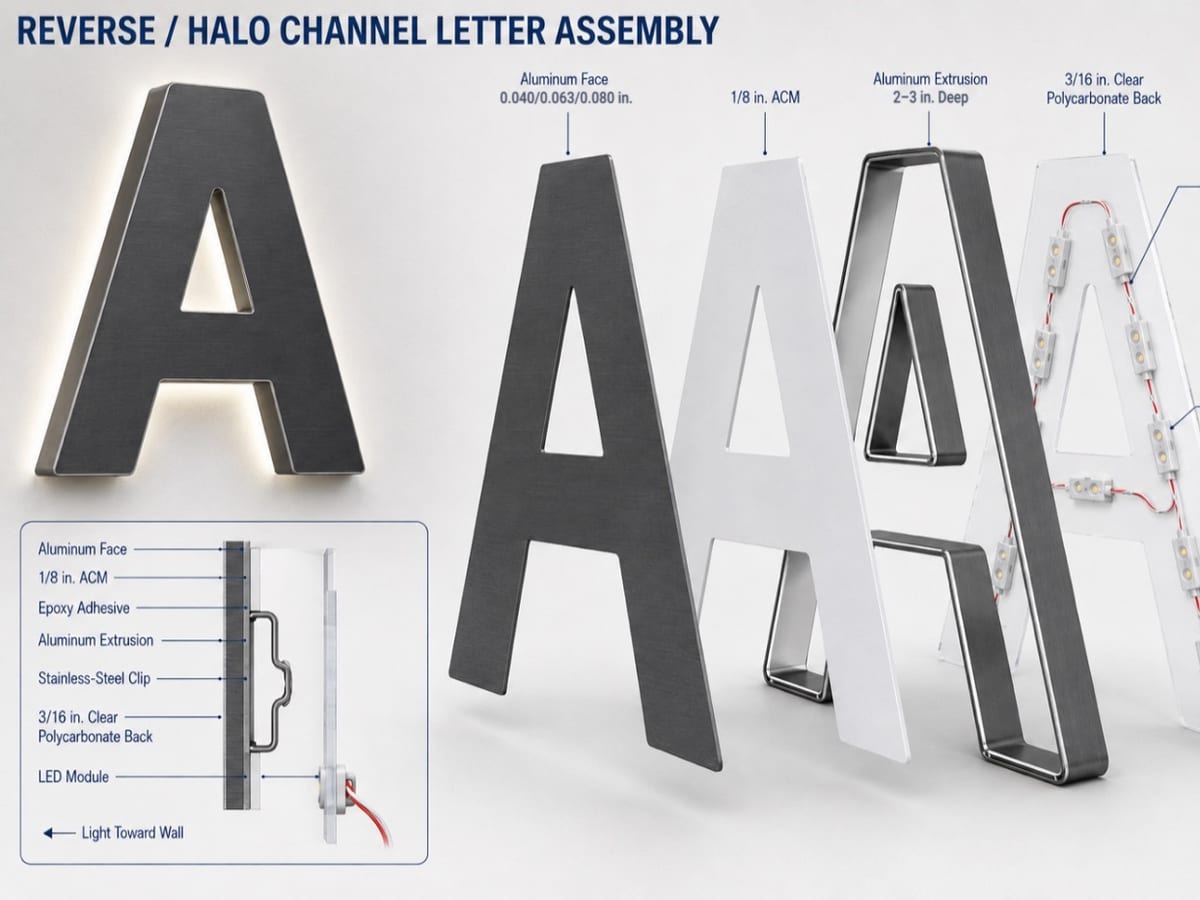
  • Reverse/halo letters without welding
  • Front- and back-lit combination letters
  • Plastic side-illuminated returns
  • Aluminum, stainless steel, galvanized steel, brass, and copper coil — without mechanical retooling between jobs

That's not a hypothetical shop — it's the documented capability of two machines that, combined, can cost less than one premium competitor system.

Dimension A single premium bending system Two Ascent systems (e.g. EDGE-3 + 5AS)
Investment Can exceed the combined price of two specialized Ascent machines Often less than one premium competitor machine
Construction methods covered Typically built around one core bending approach Conventional notching/flanging and trimless/F-trim/reverse-halo/side-lit
Changeover between letter types Often requires mechanical/tooling adjustment Software-driven — no hardware changes
Operator skill required Varies by system; some need an experienced specialist Low — software handles the precision, not the operator
Warranty terms Not always published in detail Clearly published: 2-year comprehensive + 1-year parts

"Trimless" isn't one thing

The 5AS's trimless and reverse/halo capability deserves its own mention, because the economics go beyond the machine price. The materials used to build trimless and reverse/halo letters without welding — Ascent's extrusion and stainless-steel fastening system — cost meaningfully less than the equivalent system from the competition.

The construction also holds up outdoors in a way that matters. Ascent's extrusion system uses stainless-steel fasteners rather than relying on adhesive alone, which is why it's cULus certified for indoor and outdoor use up to 66" in height. The closest premium competitor's construction relies on adhesive to bond the face and structural supports — and its own published guidance recommends not exceeding 38" for exterior letters, with a disclaimer that each installation needs its own independent structural evaluation.

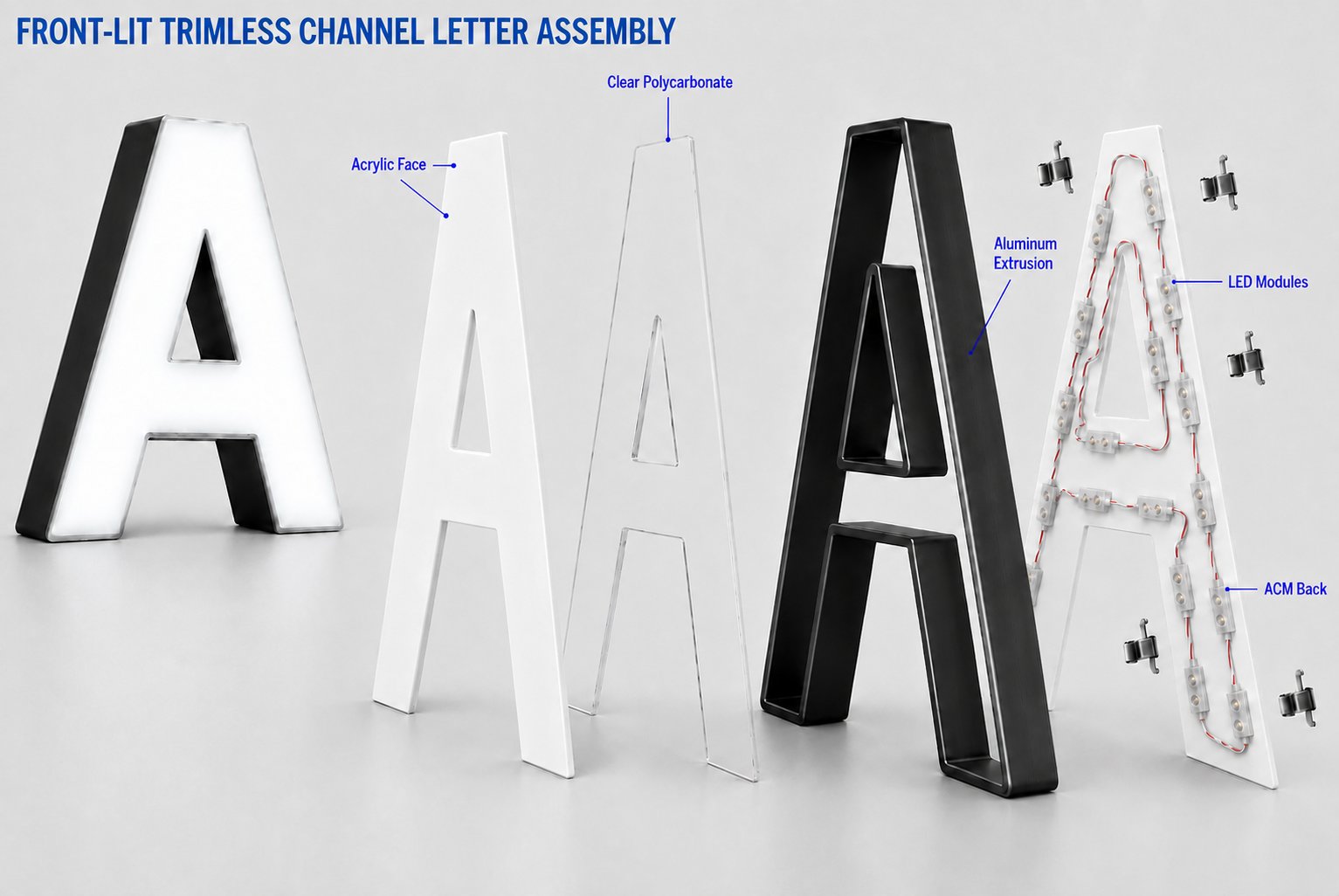
Not every letter marketed as "trimless" is built the same way, and the difference matters more than the marketing suggests. The 5AS produces a true front-lit trimless letter: the acrylic face fits directly into the aluminum extrusion, fastened mechanically, illuminated the same way a conventional front-lit letter is — just without a visible trim cap.

Much of the competition's "trimless" product is a different construction: a flat acrylic face bonded with adhesive to PVC strips inside the return, with the letter's exposed acrylic edge doing the illuminating. That's a legitimate letter style — but it's properly described as edge-lit or side-lit, not the same front-lit trimless construction. Treating the two as interchangeable makes it harder for a shop to know what it's actually specifying for a customer.

See the full construction breakdown in True Trimless Channel Letters: Ascent vs. the Competition.

One machine, two trim materials — and a third option that skips trim entirely

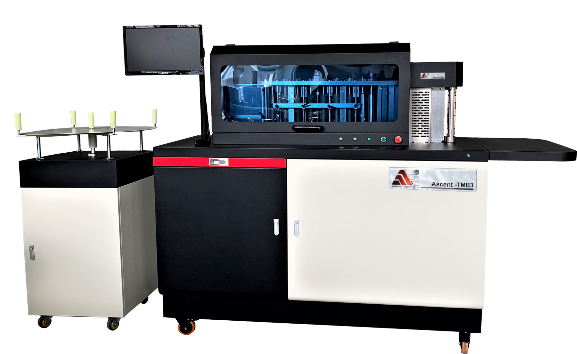
Trim machines tend to follow the same single-purpose pattern as bending machines. Most are built to process one trim material — plastic trim cap — and nothing else. The TMB3 does both: it processes standard plastic trim (3/4" and 1" trim cap) the same as any dedicated trim machine, but it can also take flat aluminum coil and convert it directly into trim, shaping it to the letter as it goes.

That matters beyond flexibility. Per foot, aluminum trim from the TMB3 costs about 25% less than plastic trim — for a shop running real linear footage of trim over a year, that's a recurring material-cost reduction, not just a one-time equipment advantage.

Between the TMB3 and the 5AS, Ascent actually offers three ways to finish a letter's edge rather than one fixed approach: the TMB3's aluminum trim for a lower material cost, the 5AS's F-trim for a slim, premium architectural profile, or the 5AS's trimless construction for letters that skip a visible trim border altogether.

What's included — and what stands behind it

None of this matters if the price grows after the fact, or if support isn't there when you need it. A few specifics:

  • Once an order is placed, the quoted price includes shipping, installation, and training — not a base number that grows once freight, setup, and operator training get added on separately.
  • The warranty is one of the strongest in the category: two years of comprehensive parts-and-labor coverage, plus a third year covering parts and materials.
  • Support is lifetime, from technicians based in Toronto, Buffalo, and Kentucky — not a call center in a different time zone.

The math worth doing before you buy

The question worth asking isn't "what does the most capable single machine cost?" It's "what does it cost to cover the range of letters my shop actually needs to produce, and how much of that cost is downtime I haven't accounted for yet?" A shop that needs both conventional and trimless/reverse-halo capability may find that two specialized machines, purchased together, cost less than one do-it-all system — and spend less time between jobs waiting on a mechanical changeover.

If you're not sure which combination fits your shop's actual job mix, the machine selection wizard walks through six questions and gives a specific recommendation. Or get in touch and we'll help you do the math for your specific volume and letter styles.

← All articles
More from Ascent

Related articles

Best Handheld Laser Welder for Sign Shops: A Buyer Guide
What to look for in a handheld laser welder for sign shops and channel letters: power, cooling, wire feeder, torch weight, and warranty compared.
True Trimless Channel Letters: Ascent vs. the Competition
How Ascent's true front-lit trimless channel letters differ from adhesive-bonded, edge-lit systems that other manufacturers also market as trimless.
QCW vs. CW Tabletop Fiber Laser Welders: Which Is Safer?
QCW pulsed lasers reduce heat, distortion, and burn-through on thin aluminum and stainless letters versus CW — but both remain Class 4 laser hazards.
TMB3 Aluminum Trim vs. Ascent-5AS F-Trim
TMB3 forms economical flat aluminum coil with PVC backing into trim-cap-style trim. Ascent-5AS processes a premium F-trim profile requiring polycarbonate.
How to Set Up a Laser Welding Workstation
A setup guide for handheld laser welding stations — table height, fixturing, fume extraction, safety zone layout, and cable management.
How to Train a Channel Letter Fabricator
Labor is the #1 cost in channel letter production. A guide to hiring the right person and realistic timelines for each machine in the workflow.
Laser Welder Fit-Up and Gap Control
A gap between welded parts isn't just a defect — it's a beam transmission hazard. How to achieve proper fit-up and fixture parts correctly.
Materials That Block a 1070nm Fiber Laser Beam
Not every material stops a fiber laser beam. Which flexible and rigid materials absorb or reflect 1070nm energy, and how to use them safely.
Laser Welder vs. MIG and TIG: Convincing Your Welder
An experienced welder's skepticism about switching to laser is rational. How to address it honestly — performance, safety, and the close.
How to Make a Channel Letter — The Ascent Way with TMB3
A step-by-step walkthrough of building a channel letter with the Ascent CNC Router, TMB3, and Stapler — including how TMB3 saves 20–50% on material.
How to Make a Channel Letter — The Ascent Way with EDGE3
A step-by-step walkthrough of building a channel letter with the Ascent CNC Router, EDGE-3, and Stapler — faster and more accurate than hand methods.
Making Aluminum Trim with the TMB3
How the Ascent TMB3 converts flat aluminum coil into trim cap on demand — why aluminum outlasts plastic and the cost savings in practice.
Buying Ascent Equipment: Purchase, Finance, or Section 179
For most sign companies, the decision isn't whether to buy — it's how to pay. Purchasing outright vs. financing, and how IRS Section 179 helps.
What Sign Manufacturers Are Buying in 2026
The sign industry's 2026 buying decisions are driven by labor shortages and profitability — who's buying and why Ascent fits.
Laser Cutter Consumables: What to Stock for CO₂ and Fiber
Consumables, replacement schedules, and spare parts for a dual-gantry CO₂ and fiber laser cutter — so downtime never catches you off guard.
Laser Safety for Industrial Laser Cutters
A guide to OSHA, FDA, and ANSI laser safety requirements for shops running industrial CO₂ and fiber laser cutting systems.
Safety Considerations for the Ascent QCW Laser Welder
A safety guide for the Ascent QCW fiber laser welder — Class 4 laser requirements, eye protection, PPE, controlled areas, fume extraction.

Let Ascent Experts Assemble All the Pieces of The Equipment Puzzle for your Company

Contact us