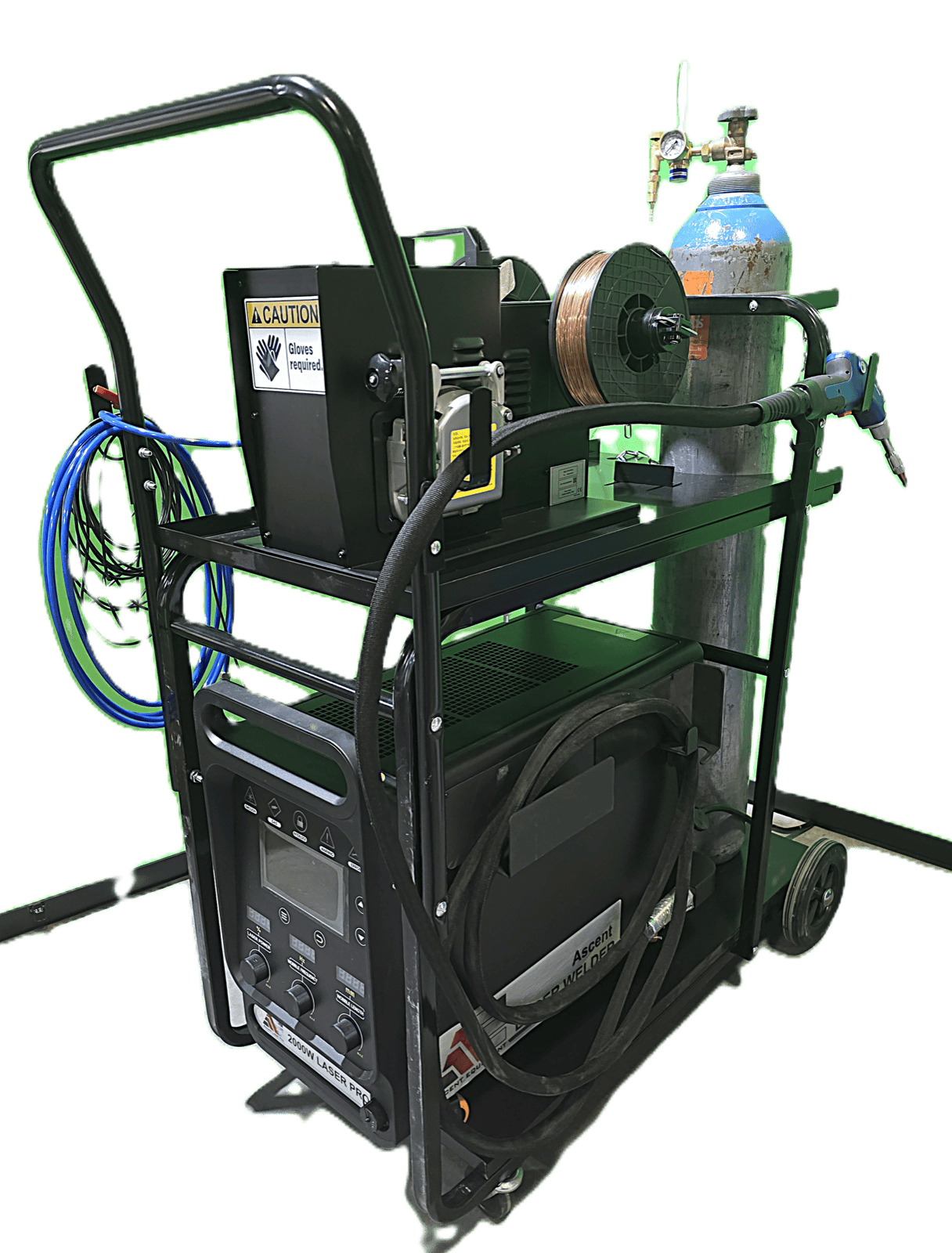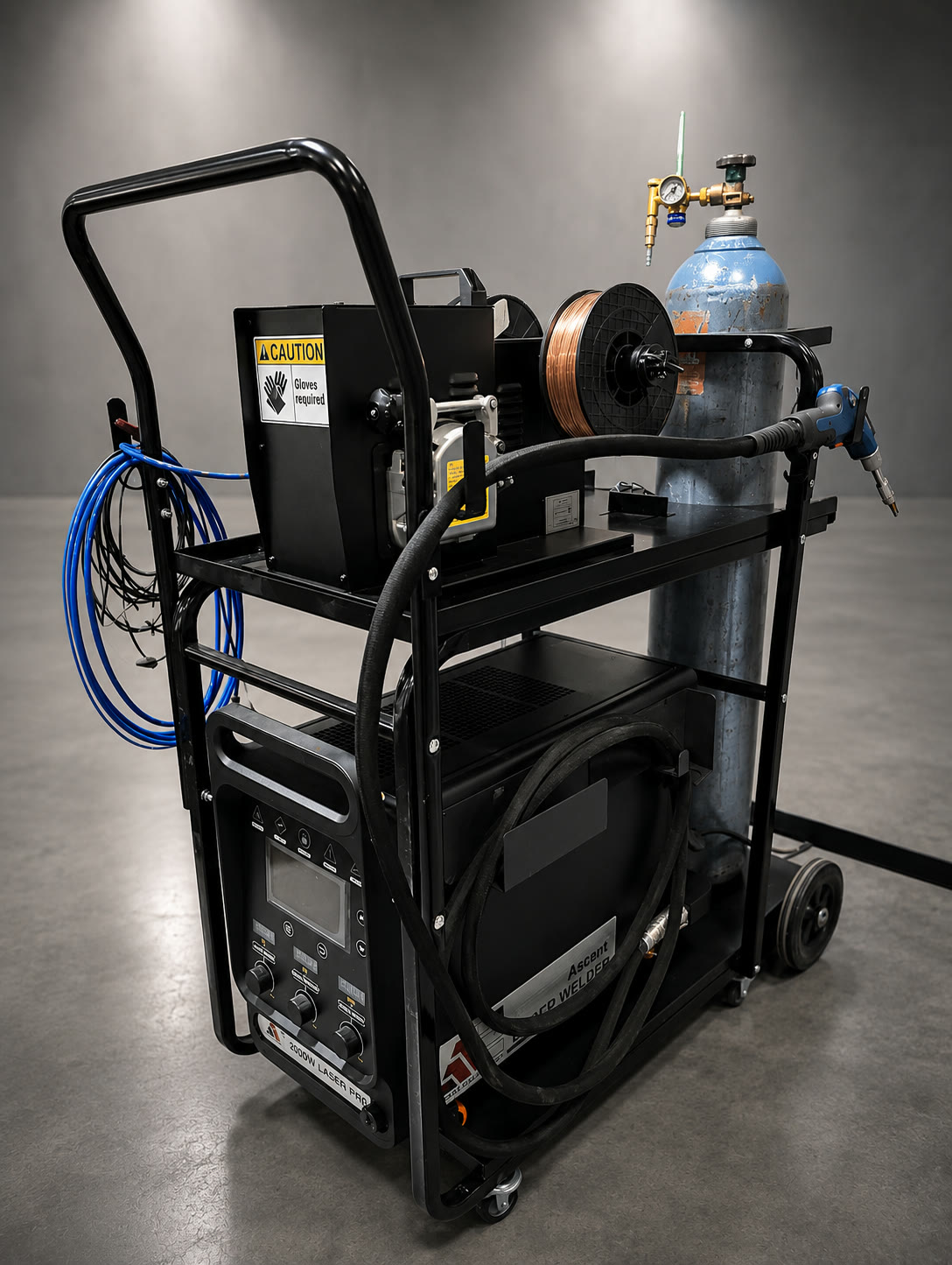
Handheld Laser Welder
2000W: USD $28,000 · 3000W: USD $34,000
Prices include shipping, installation, and training. For other power levels, contact us for a quote. Prices are in U.S. dollars. For Canada, the price is calculated in Canadian dollars at the exchange rate when the order is placed. Shipping to Canada is from Toronto, Ontario, and within the USA from Buffalo, New York, or Mount Sterling, Kentucky.
Faster, cleaner, smarter than MIG, TIG and arc welding
Handheld fiber laser welders for aluminum, stainless steel, and carbon steel, with refrigeration cooling, lightweight torches, training, and local support.
- Precision welding with minimal heat distortion
- Faster processing than traditional MIG / TIG / arc
- Versatile across aluminum, stainless, titanium and more
- Minimal maintenance: non-contact operation
- Reduced material waste and consumables cost
- Lightweight, ergonomic torch reduces operator fatigue
Handheld laser welding gives fabrication shops a faster way to join thin aluminum, stainless steel, and carbon steel with less heat distortion and cleanup than many traditional welding processes. The practical question is whether the machine suits the materials, joint designs, duty cycle, and safety controls in your shop.
Where Handheld Laser Welding Fits
MIG, TIG, and arc welding remain the right processes for many jobs. On thin sheet and repeatable joints, handheld laser welders can travel faster, put less heat into the part, and reduce grinding afterward. Fit-up and process control still matter, and the equipment must be operated as a Class 4 laser system.
Ascent technicians provide 3-4 hours of qualified training, enabling operators without prior aluminum welding experience to weld very thin aluminum materials. Operators remain responsible for completing required training, following approved process controls, and complying with all laser-safety requirements.
What 100% Duty Cycle Means
The Ascent handheld fiber laser offers a 100% duty cycle, enabling continuous operation without scheduled cooling breaks. The claim applies at the selected model's rated power, within the published ambient range of −20°C to +60°C (−4°F to +140°F), using the integrated dual-circuit refrigerant heat-pump cooling system. Duration is continuous operation rather than a timed on/off cycle. This is a manufacturer performance specification; an independent third-party duty-cycle test protocol is not currently published. Buyers should confirm the exact configuration and validation requirements for their application.
Key benefits of handheld laser welding machines
Precision welding
Achieve clean, accurate welds with minimal heat distortion.
Faster processing
Laser technology drastically reduces welding time compared to traditional methods.
Versatile applications
Suitable for a variety of metals and materials, including aluminum, stainless steel, titanium, and more.
Minimal maintenance
Non-contact operation prevents wear and tear, extending the machine's lifespan.
Reduced waste
Streamlined processes lead to less material wastage and greater cost savings.
Where the heat-affected zone matters most
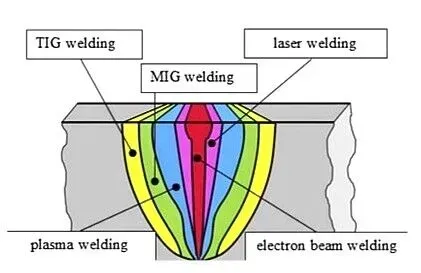
Handheld laser welding is used where a narrow heat-affected zone, fast travel speed, and limited cleanup matter most — which is exactly the case on thin-gauge channel letter returns, where too much heat warps the aluminum or blows through the material. The right result still depends on joint fit-up, settings, shielding gas, material condition, and operator training.
Efficiency meets safety
Welding safety is a top priority for operators, and handheld laser welding machines deliver on this front. When paired with a laser welding helmet, these machines create a safer work environment by reducing exposure to harmful fumes and intense heat. Additionally, their lightweight, ergonomic designs minimize operator fatigue, making them suitable for extended use.
Breaking down cost barriers
While laser welding technology was once considered an expensive investment, advancements in manufacturing and design have made handheld fiber laser welding machines more accessible. Companies now recognize the long-term cost benefits, such as:
- Reduced reliance on consumables like electrodes and filler materials.
- Lower maintenance costs due to non-contact operation.
- Improved energy efficiency compared to traditional methods.
Ascent offers several power and cooling configurations so buyers can match the welder to their material thicknesses and daily operating hours instead of paying for capacity they do not use.
Choosing the right welding equipment
Match the machine to the materials and thicknesses you actually run, and weigh torch weight and ergonomics for full-shift comfort — power output and build quality alone don't determine whether an operator can use it comfortably all day.
The role of shielding gas in laser welding
A critical component of the handheld laser welding process is shielding gas, which protects the weld area from contamination. Common gases like helium, argon, and nitrogen create a barrier around the molten metal, preventing oxidation and ensuring clean welds.
Shielding gas also enhances welding efficiency by:
- Maintaining a stable weld pool.
- Cooling the welding torch.
- Preventing the formation of plasma clouds, which can interfere with the laser beam.
Choosing a Machine for Your Shop
Start with the materials and thicknesses you weld most often, then look at daily run time, cooling method, torch weight, wire feeding, warranty coverage, and local service. Contact Ascent Equipment if you would like to compare those requirements with the available handheld welder models.
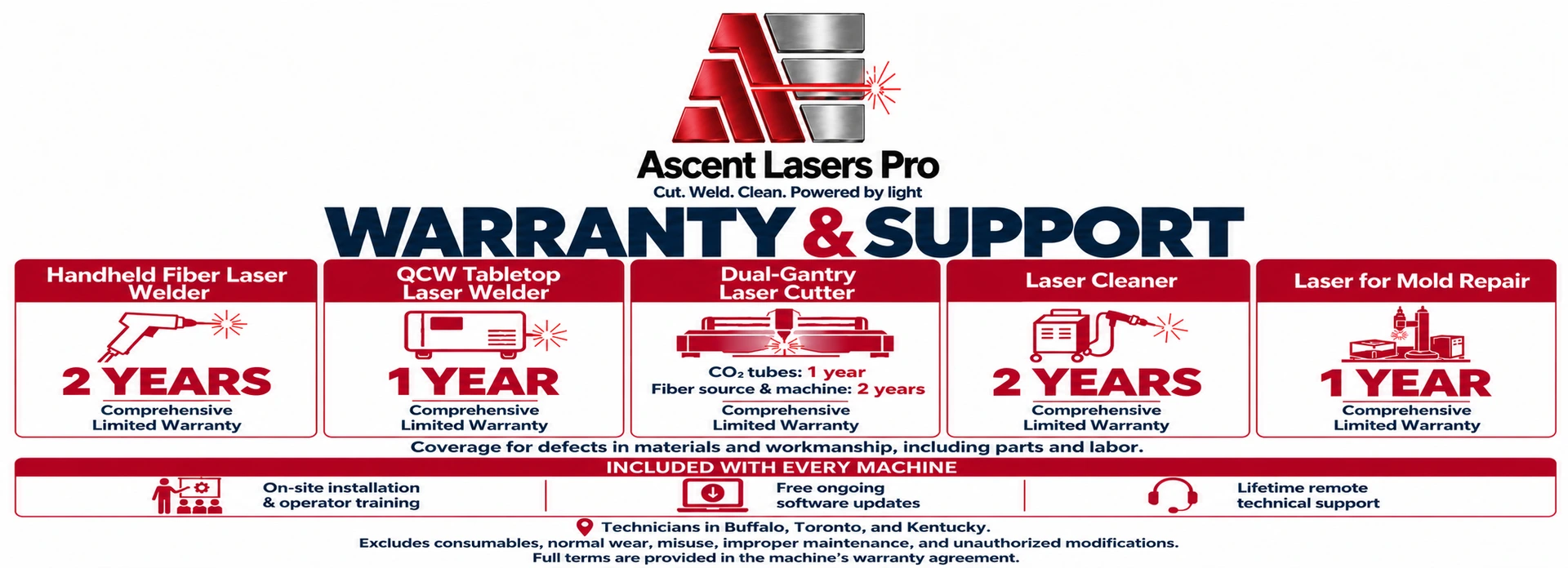
Warranty and support
Common questions about this equipment
What does the price include? Are there hidden fees?
What is your warranty?
What is unique about the Ascent handheld fiber laser welder compared to others in the industry?
How about laser safety?
Can a laser welder also cut metal, or is it welding-only?
What's the practical difference between the 1500W, 2000W, and 3000W welder models?
Does the welder need a water chiller, or is it air-cooled?
What is 'wobble welding' and why does it matter for channel letters?
What shielding gas do I need for laser welding?
How long do consumables (nozzles, lenses, wire) last, and what do they cost to replace?
What electrical service do I need to install a laser welder?
Do I pay duty or customs fees on an order shipped in Canada?
Can I weld two different metals together, like steel to aluminum?
Can the handheld welder be used outdoors or on a mobile job site, like for mold repair?
How do I maintain a fiber laser welder day-to-day?
Articles about this equipment