CO2 Acrylic Laser Cutting Machine
Accurate servo & screw transmission positioning
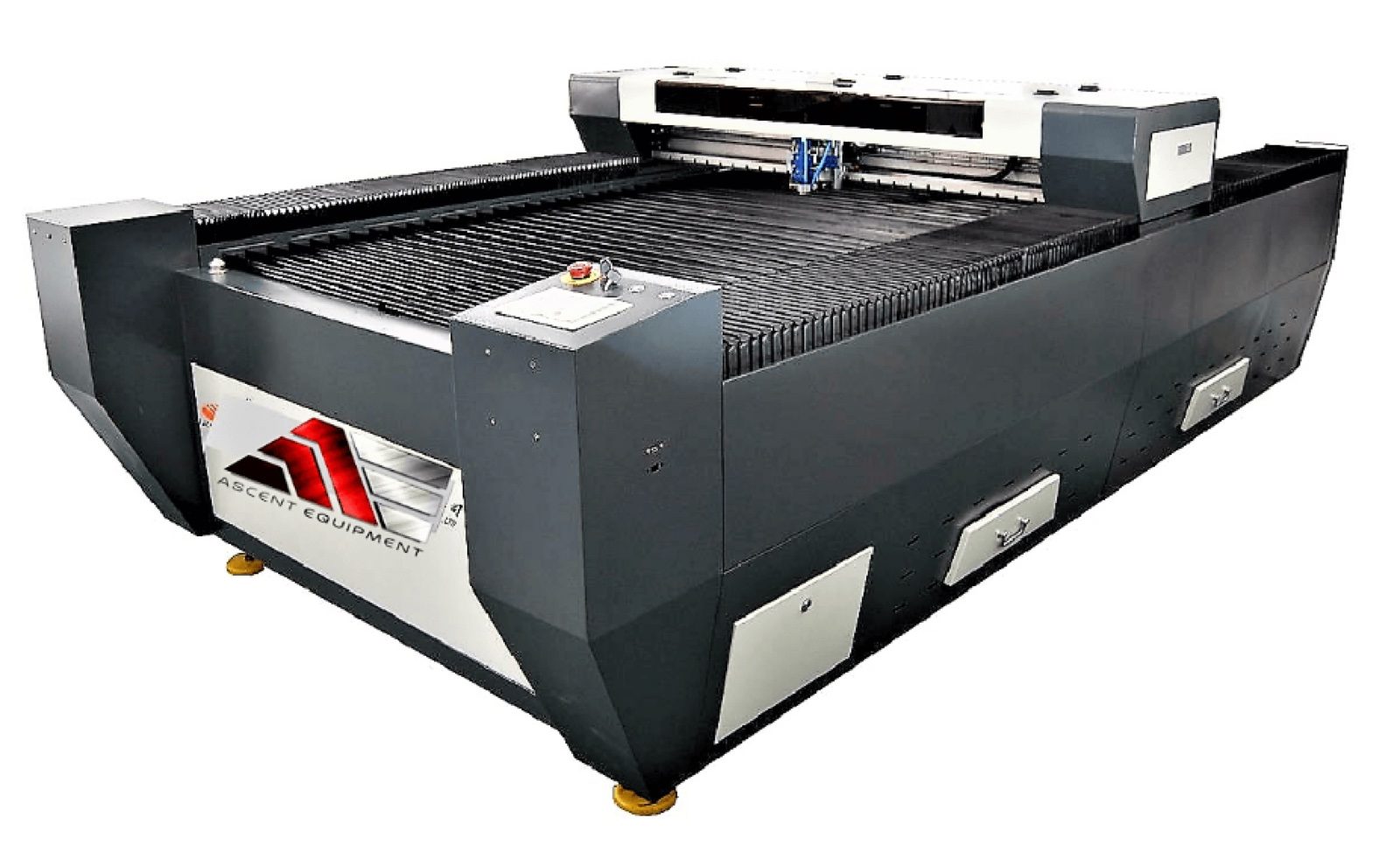
4'×8' 280W CO2 laser for cutting acrylic and other non-metals — built for sign makers in the USA and Canada.
- Anti-dust system to prevent dust accumulation
- Servo & Screw Transmission Positioning ensures stable operation
- Blade surface and shell side surface at the same height for convenient loading and unloading
- Laser cover with the laser head outside allows real-time process monitoring
- Improved electric panel
- Cuts acrylic, MDF, wood, glass, rubber, marble, granite, tiles, leather
Features of CO2 Acrylic Laser Cutter
The goal of the G series of laser equipment development is to fully utilize motion control performance and enhance the effectiveness of laser processing. This is achieved through software design, mechanical structure, electrical properties, and parts selection. The emphasis is always on providing excellent processing services. With a comprehensive quality management system in place, the stability, accuracy, and speed of the equipment are world-class. As a result, Excelsior G series products have become the preferred choice for industrial laser processing.
Advantages
- Anti-dust system to prevent dust accumulation
- Servo & Screw Transmission Positioning ensures stable operation
- Blade surface and shell side surface are at the same height, making it more convenient for loading and unloading
- Laser cover with the laser head outside allows real-time process monitoring
- Improved electric panel
Application
Suitable for cutting and engraving non-metal materials such as Acrylic, Plexiglas, MDF, standard glass, wood, rubber, marble, granite, tiles, and leather.
280W CO2 Acrylic laser cutting parameters (recommended)
| Material | Thickness (mm) | Speed (mm/s) | Power (%) | Gas (MPa) |
|---|---|---|---|---|
| Acrylic | 3 | 50 | 30 | Air pump |
| 5 | 30 | 40 | Air pump | |
| 8 | 15 | 60 | Air pump | |
| 10 | 12 | 65 | Air pump | |
| 15 | 7 | 70 | Air pump | |
| 20 | 3 | 70 | Air pump | |
| 25 | 2 | 75 | Air pump | |
| 30 | 1 | 85 | Air pump | |
| MDF | 3 | 40 | 50 | Air compressor 0.5 |
| 6 | 20 | 65 | 0.6 | |
| 8 | 15 | 70 | 0.6 | |
| 10 | 10 | 70 | 0.6 | |
| 12 | 8 | 75 | 0.8 | |
| 15 | 4 | 85 | 0.8 | |
| Wood | 5 | 30 | 65 | Air compressor 0.5 |
| 10 | 10 | 70 | 0.8 | |
| 12 | 8 | 75 | 0.8 | |
| 18 | 4 | 80 | 0.8 | |
| 25 | 2 | 85 | 0.8 |
Technical specifications
| Specification | Value |
|---|---|
| Working area (mm) | 1300 × 2500 mm |
| Working area (inch) | 4' × 8' |
| Laser source | CO2 Glass tube |
| Laser power | 80–280 W |
| Laser safety class | Class 4 laser |
| Software | RD WORKS |
| Resolution ratio | < 0.0125 mm (Accuracy ±0.05 mm) |
| Position system | Red light position system |
| Repeated positioning accuracy | < ±0.02 mm/s |
| Interface | USB |
| Supported graphic formats | DST, PLT, BMP, DXF |
| Motor | Servo & Screw Transmission Positioning |
| Operating humidity | 5–95 % |
| Cutting speed | 3500 mm/s |
| Includes | Exhaust fan, exhaust pipe, water chiller |
| Power | One phase 220 Vac |
Why choose Ascent Equipment for your acrylic laser cutting needs?
Ascent Equipment's Acrylic CO2 Laser Cutting Machines are built for precision and efficiency, for business owners and hobbyists alike.
Superior precision and quality
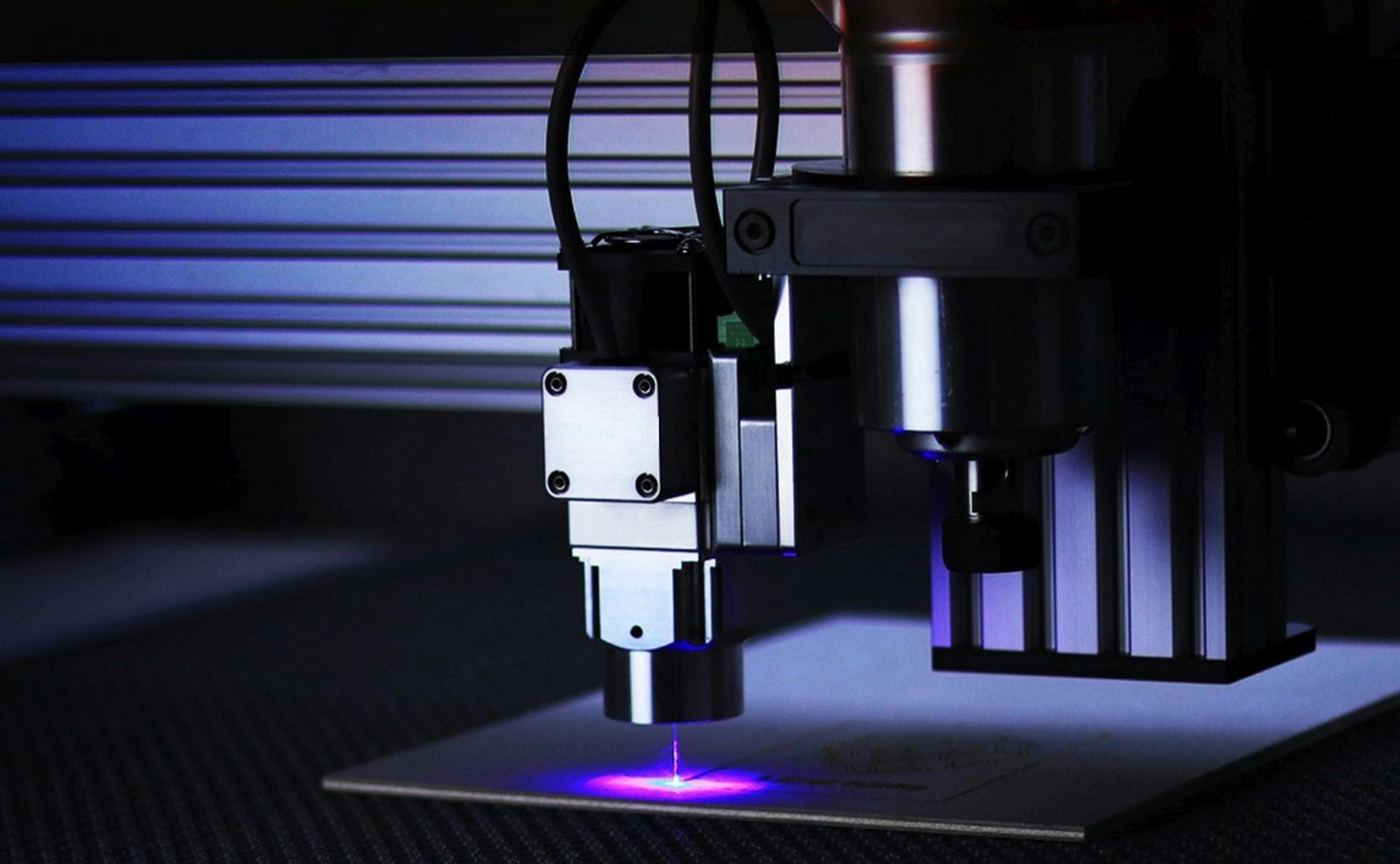
The machines are engineered for accuracy and detail, producing clean cuts and refined edges — important for intricate designs and for the finished product's overall quality.
Versatility and flexibility
These machines handle a wide range of acrylic thicknesses and types, so one tool covers decorative pieces, functional components, and custom designs without switching equipment.
Cost-effectiveness and efficiency
Our machines' durability and reliability mean fewer maintenance issues and lower long-term costs, and faster project completion reduces labor time as well.
Ascent Equipment's Acrylic CO2 Laser Cutting Machines offer precision, versatility, and cost-effectiveness for individual users and businesses alike.
Ascent Equipment is in the USA and Canada.
Beyond the buzz: understanding CO2 laser cutting technology
The CO2 laser cutter uses a concentrated laser beam to cut, engrave, and shape wood, acrylic, and metal. Here's how it works, what it's used for, and where it outperforms traditional cutting methods.
The science behind CO2 laser cutting
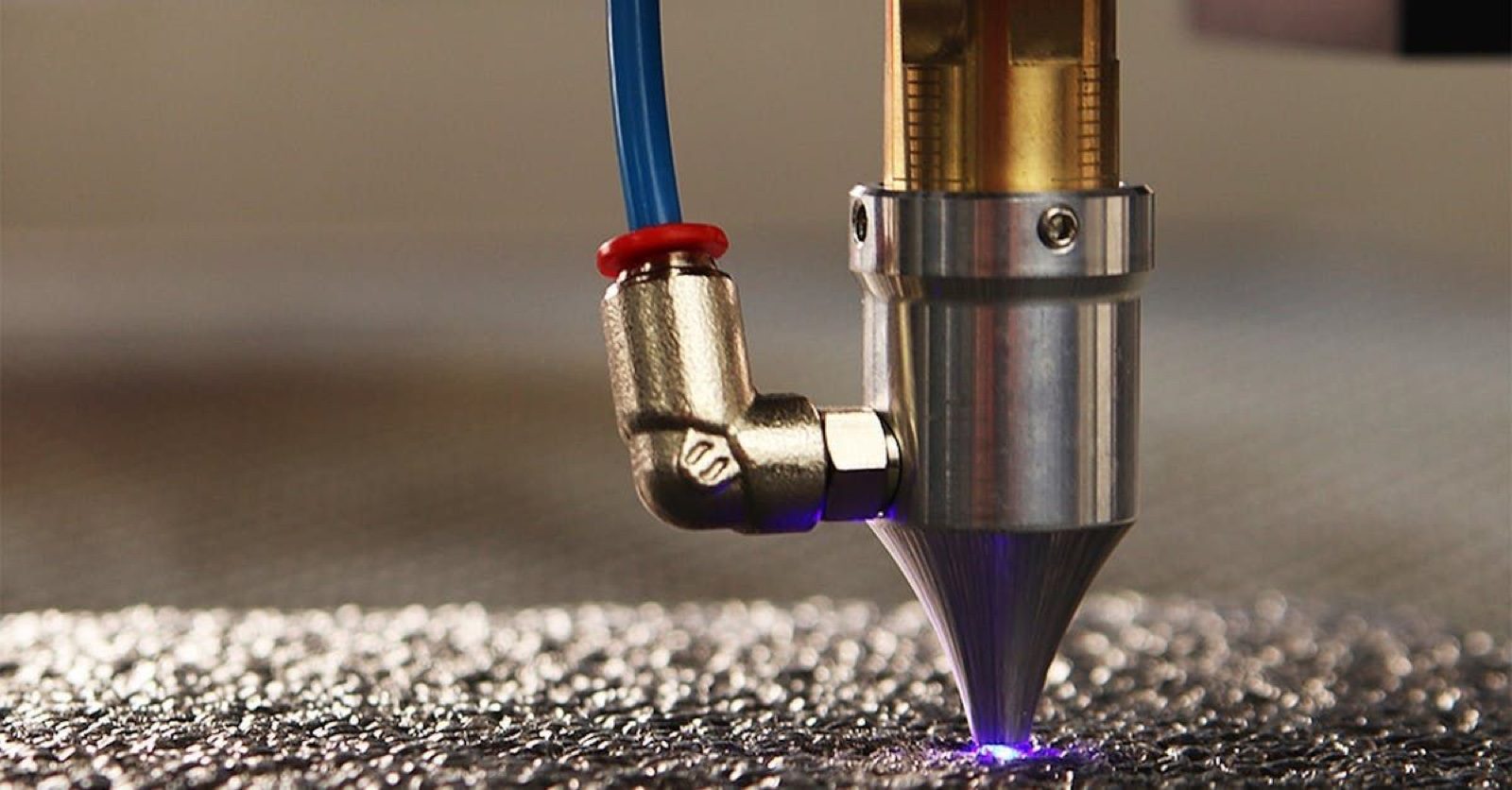
CO2 lasers create a high-energy light beam by stimulating carbon dioxide gas within a sealed tube. Mirrors and lenses point this beam onto the surface of the substance, heating it and either melting or vaporizing it. The laser is perfect for many uses, as its accuracy permits complex cuts and elaborate engravings.
Diverse applications of CO2 laser cutters
CO2 laser cutters find uses in many fields, from manufacturing and fabrication to arts and crafts. They cut and etch wood, acrylic, leather, cloth, and thin metal. Within the advertising sector, CO2 lasers provide striking displays and signs. They precisely cut complex motifs and patterns in the textile industry.
Advantages of CO2 laser cutting over traditional methods
CO2 laser cutting has several benefits over traditional cutting technologies. First, it is highly accurate and precise, producing sharp, smooth edges and fine details. Second, it is a non-contact method, which lowers the possibility of material damage. Third, CO2 lasers are versatile and can cut and engrave various materials. Finally, they provide a fast working speed, increasing productivity and efficiency.
Choosing the right CO2 laser cutter for your needs
The kind and thickness of the materials you will be dealing with, the intended cutting speed, and the degree of necessary precision all affect the suitable CO2 laser cutter you should use. To fit your requirements, Ascent Equipment provides a selection of CO2 laser cutters with differing power levels and cutting areas. Our knowledgeable staff can help you through the selection process so that you can pick the ideal machine for your company or creative endeavor.
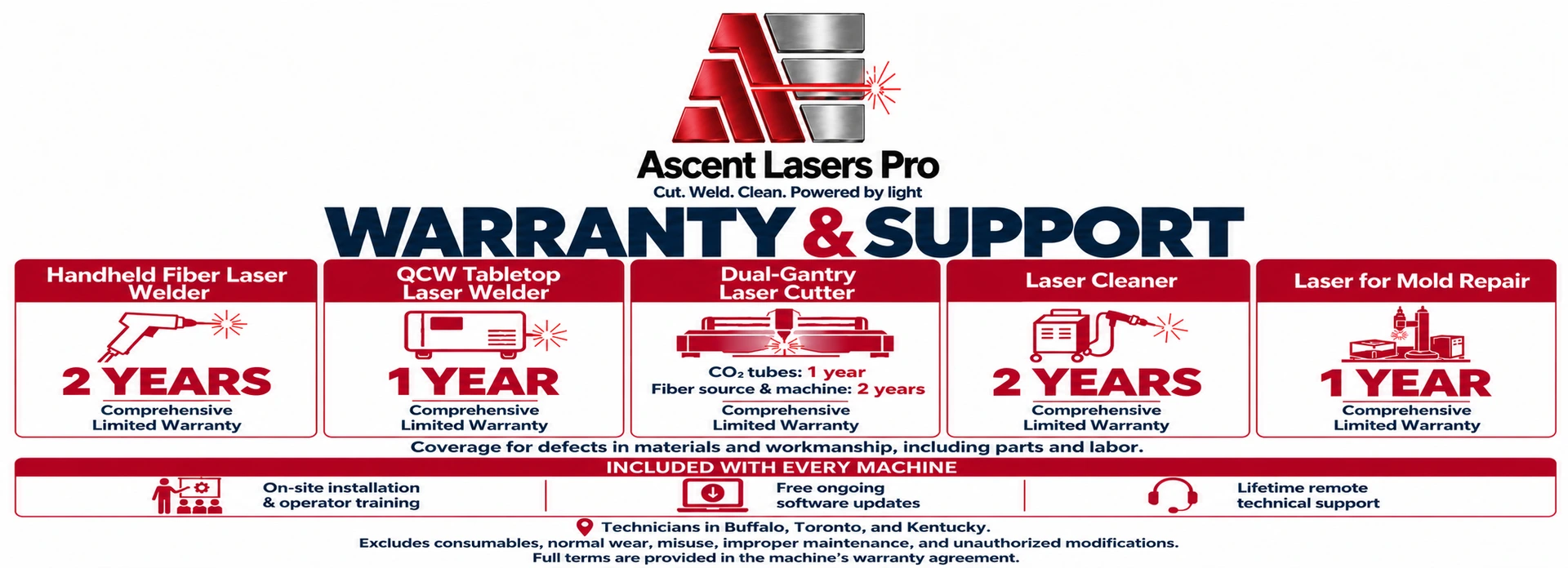
Warranty and support
Frequently asked questions
What is the best way to clean acrylic before laser cutting?
A clean surface is required for effective laser cutting. To remove dust, dirt, or fingerprints, we suggest a mild detergent and water solution with a soft cloth. Avoid strong chemicals or abrasive cleansers since they might harm the acrylic surface. To remove stubborn residue or protective film, use isopropyl alcohol and a lint-free cloth. Remember to completely dry the acrylic before putting it into your CO2 laser cutter.
How do I determine the optimal laser power and speed settings for different acrylic thicknesses?
Finding the sweet spot for power and speed is crucial for achieving clean cuts. Start by consulting your CO2 laser cutter's manual or the manufacturer's recommendations for specific settings. Generally, thicker acrylic requires higher power and slower speeds, while thinner sheets can be cut with lower power and faster speeds. Always test different settings on scrap pieces to fine-tune the parameters and achieve the desired results without over-burning or melting the acrylic.
Why is ventilation important when laser cutting acrylic, and how can I ensure proper airflow?
Laser-cutting acrylic emits fumes and particles that may impair the quality of your cuts and the longevity of your equipment. A powerful exhaust system is required to eliminate these wastes effectively. To keep your exhaust filters working correctly, examine and clean them regularly. Consider employing the air assist option, which distributes pressurized air into the cutting path, decreasing smoke and debris while enhancing cut quality.
Common questions about this equipment
What does the price include? Are there hidden fees?
What is your warranty?
Which laser do you recommend for cutting metals?
Which laser do you recommend for cutting acrylic and wood?
Which laser cutter do you recommend for the sign industry?
How about laser safety?
Articles about this equipment