QCW Laser Welder — Tabletop / Handheld Combination
For welding small to medium channel letters
USD $28,500
The price includes shipping, installation, and training. Prices are in U.S. dollars. For Canada, the price is calculated in Canadian dollars at the exchange rate when the order is placed. Shipping to Canada is from Toronto, Ontario, and within the USA from Buffalo, New York, or Mount Sterling, Kentucky.
The world's first easy conversion between tabletop and handheld
A QCW fiber laser welder that changes between tabletop and handheld use for aluminum and stainless steel channel letters, with installation and training.
- 300W QCW delivers peak pulse power up to 3,000W
- Pulse laser beam: ideal for narrow channel letter strokes
- Minimized heat-affected zone (HAZ)
- The QCW laser welder can weld aluminum ranging from 0.020" to 0.063", also a face thickness of 0.080" plus a return thickness of 0.063", and stainless steel up to 0.040".
- Easy to convert between tabletop and handheld use
- Includes 3-4 hours of qualified operator training, with process-control and laser-safety responsibilities emphasized
See it in action
Combination of tabletop and handheld
The best solution for small to medium channel letters
The world's first
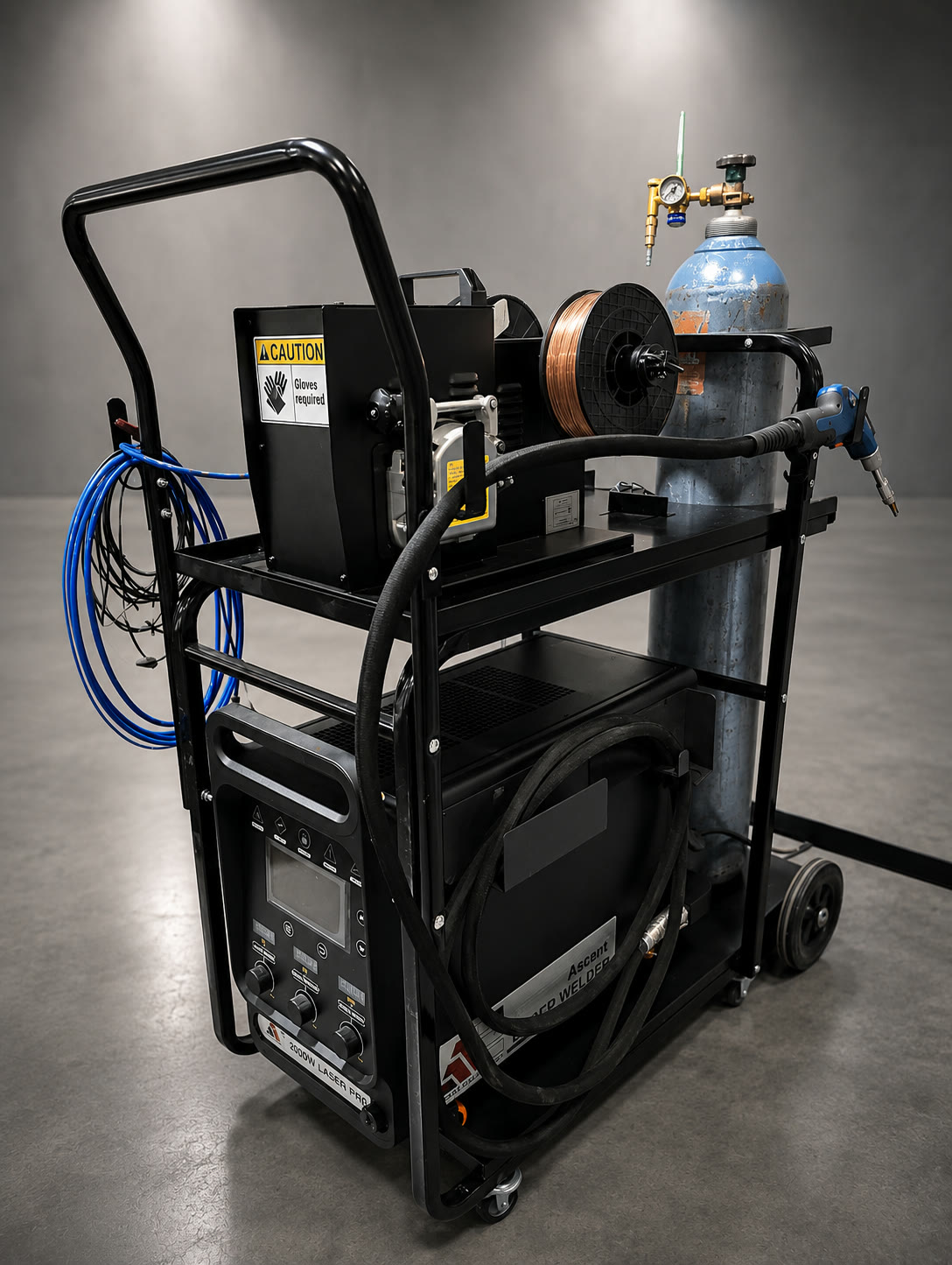
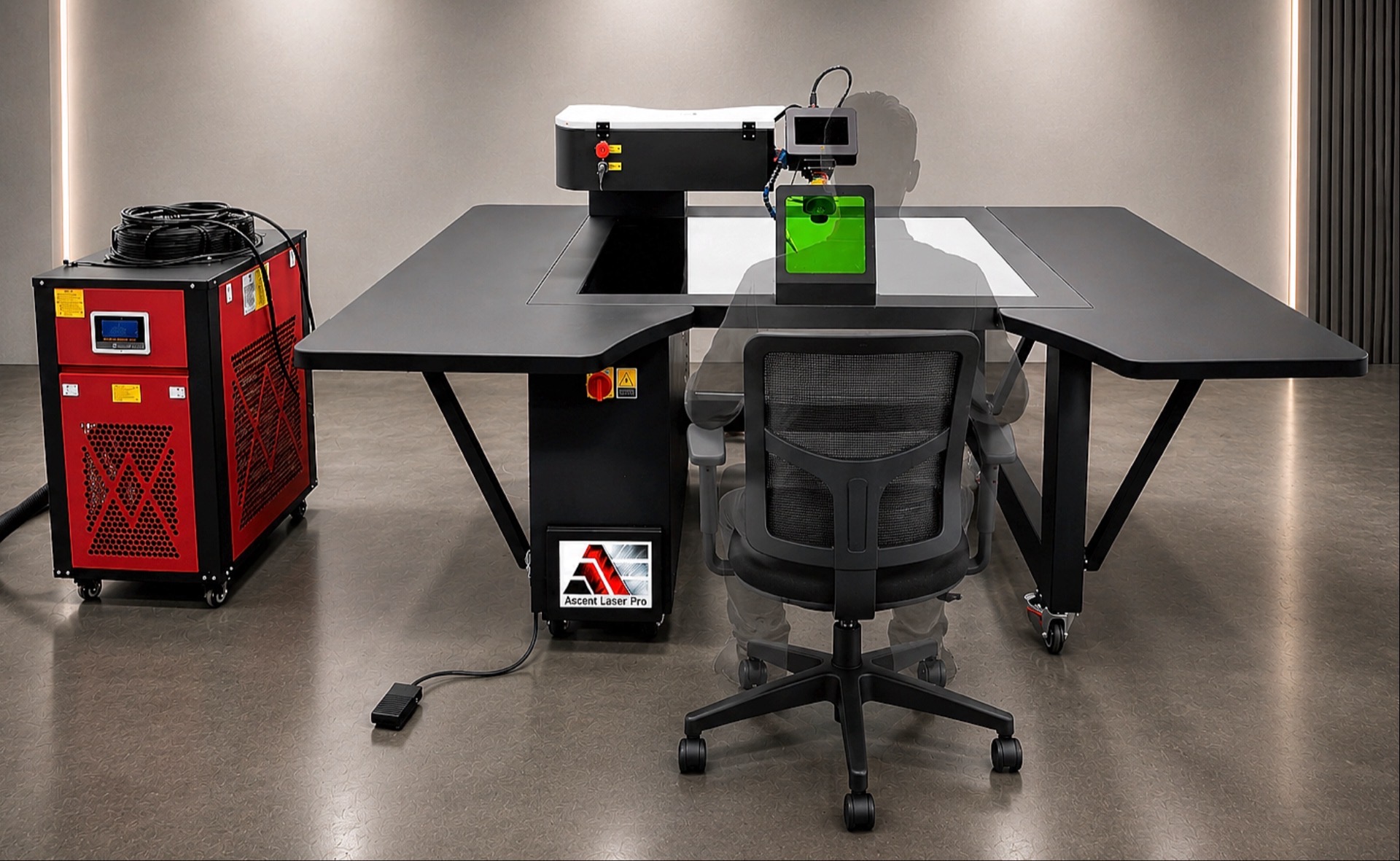
The Ascent QCW changes between tabletop and handheld configurations. At the bench, the operator can fixture small channel letters for controlled, repeatable welds; in handheld mode, the same machine can handle work that does not fit the tabletop setup. It welds aluminum sheet from 0.020" to 0.063" thick, with faces up to 0.080" and returns up to 0.063", plus stainless steel up to 0.040" thick.
From the creative mind of Ascent engineers comes this laser welding machine for sign making, replacing the YAG laser — a laser welder for stainless steel letters as well as aluminum, galvanized steel, and brass.
Ascent technicians provide 3-4 hours of qualified training, enabling operators without prior aluminum welding experience to weld very thin aluminum materials. Operators remain responsible for completing required training, following approved process controls, and complying with all laser-safety requirements.
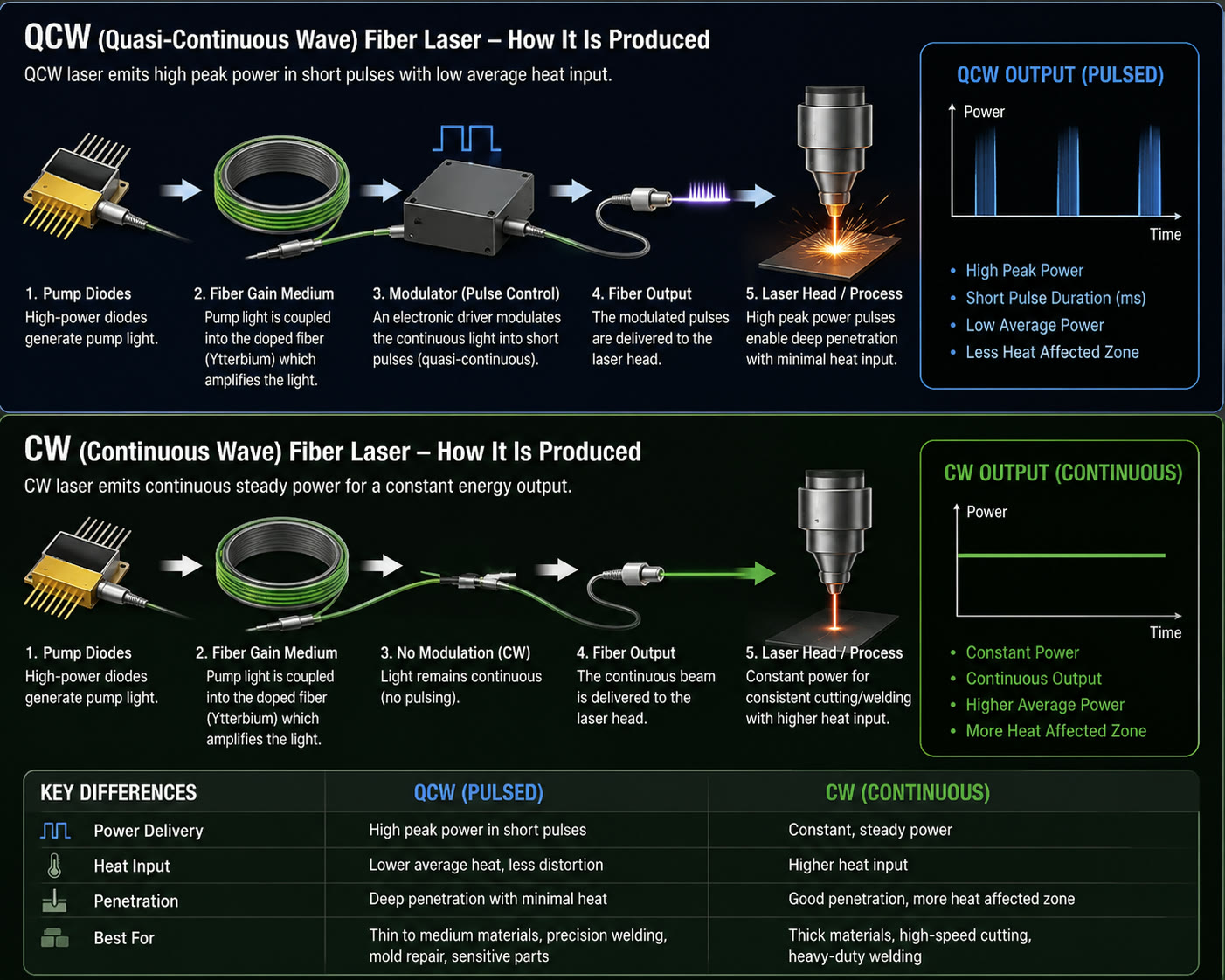
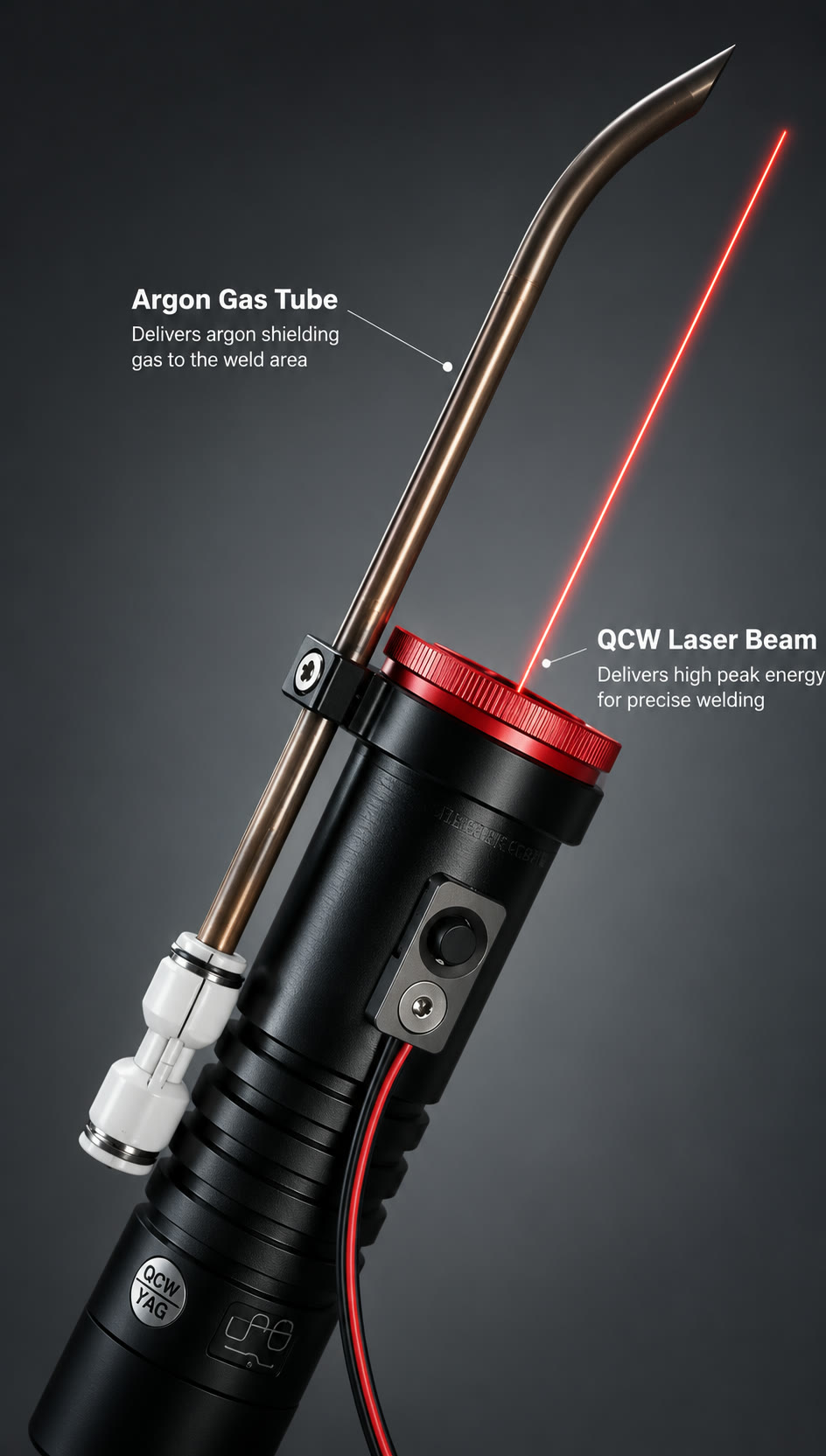
QCW (Quasi-Continuous Wave) laser welding is a technique that utilizes a high-peak-power laser to weld materials using short pulses. This method offers several advantages, including a minimized heat-affected zone and greater flexibility compared to continuous wave (CW) laser welding. QCW can deliver peak pulse power up to roughly ten times its average power — 300 W will produce pulse power up to 3,000 W.
Advantages of QCW laser welding
- 300W QCW delivers peak pulse power up to 3,000W — a true channel letter spot welder for precise, narrow joints.
- Features a pulse laser beam, ideal for the narrow strokes of channel letters.
Minimized heat-affected zone (HAZ)
QCW lasers deliver energy in pulses, allowing the material to cool between pulses. This approach reduces thermal input and minimizes the heat-affected zone. Suitable for thin materials.
As a pulsed laser welder for thin aluminum, the reduced thermal input makes QCW welding ideal for thin materials, where excessive heat can cause distortion or damage. It is suitable for aluminum from 0.020" to 0.063" thick — including face thicknesses up to 0.080" and return thicknesses up to 0.063" — and stainless steel up to 0.040". Additionally, it can be used with painted coils.
Skills: Achieving optimal results with QCW laser welding can be mastered quickly.
YAG vs. QCW: which tabletop welder is right for channel letters?
When choosing a tabletop welder for channel letters, the primary decision is between two laser types:
- YAG lasers struggle with aluminum.
- QCW lasers offer high peak power, continuous/pulse flexibility, and excel with aluminum.
For aluminum channel letters, QCW is the clear winner.
What a specialized channel-letter welder needs
The best tabletop laser welders built for advertising and signage share three features:
- Flat glass working surface, so glossy metal coils don't scratch.
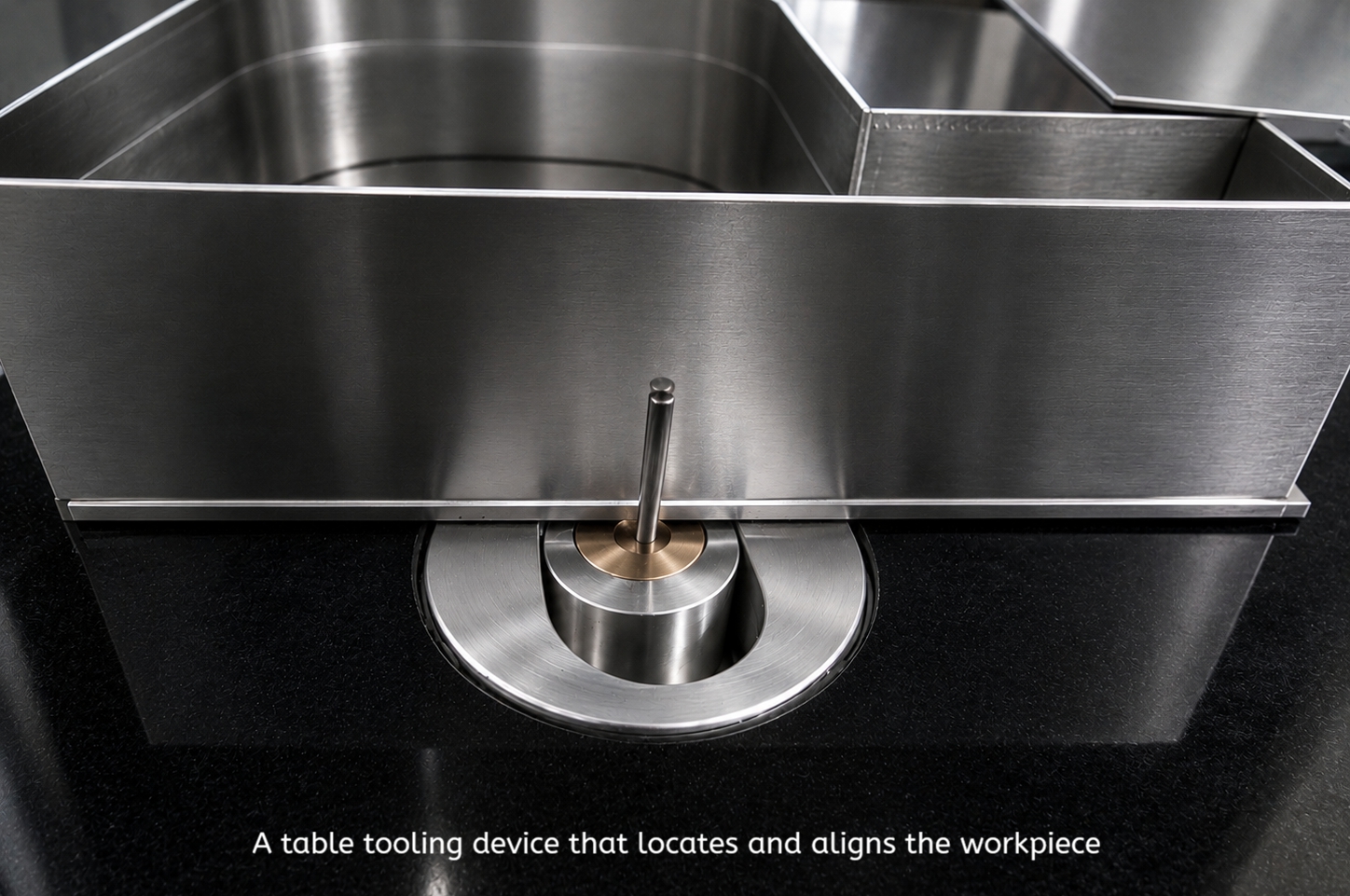
- Micropositioning rods for precise, repeatable placement.
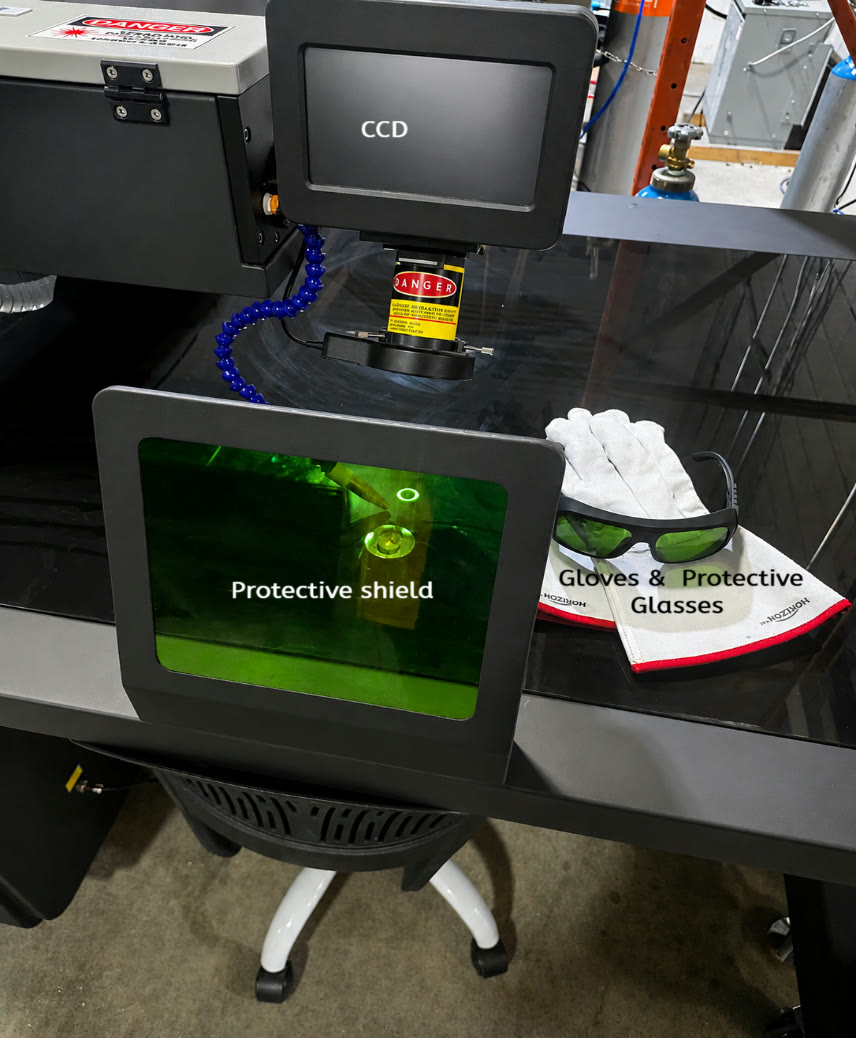
- Dedicated CCD monitor for safely aligning narrow letter corners.
A closer look
Warranty and support
Common questions about this equipment
What does the price include? Are there hidden fees?
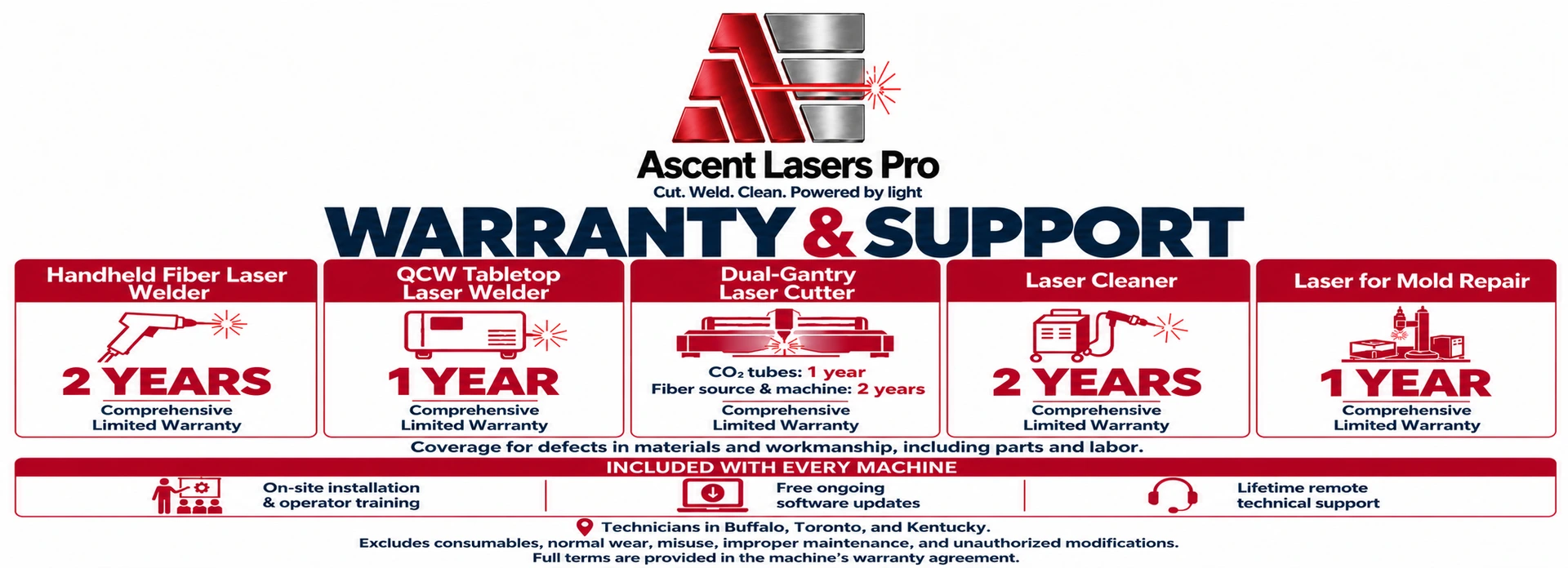
What is your warranty?
What is unique about the Ascent tabletop laser welder compared to others in the industry?
How about laser safety?
Should I buy the QCW tabletop or the standard handheld welder?
Can the QCW tabletop weld letters too large to fit on its worktable?
Does the CCD camera system require special training to use?
What is the smallest letter stroke width the QCW can weld?
Articles about this equipment