
QCW vs. CW Tabletop Fiber Laser Welders
If you’re doing detailed tabletop welding—especially with thin aluminum or stainless-steel channel letters—QCW usually comes out on top.
Here’s a quick comparison:
QCW Fiber Laser: Gives you energy in short, controlled pulses. That means high peak power, but with lower average power. Less heat soaks into your part, so you see less warping, discoloration, and way less chance of burning right through the metal. Perfect for thin, delicate stuff. You get precise starts and stops, and these machines are often air-cooled and use less energy.
CW Fiber Laser: Puts out a continuous beam. The average power stays high and all that sustained energy leads to more heat. Thin parts end up at risk of warping or burning through. CW is better if you’re working with thick materials or need fast, nonstop production. Usually, you’ll need beefier cooling equipment, too.
Why QCW Is Better for Tabletop Welding
QCW hits the target with short, high-energy pulses—sometimes the peak power is ten times the average. The material gets a quick shot of energy and a break to cool off before the next one. That means:
- Cleaner, sharper welds
- Smaller areas affected by heat
- Less warping or staining
- Lower chance of burning through
- More control, especially on teeny details or corners
- Works really well on thin aluminum and stainless steel
IPG Photonics, a major force in fiber lasers, notes QCW output can hit those high peaks with less heat piling up in your workpiece. That makes it a smart choice for welding thin, delicate parts or even shiny metals like aluminum.
Don’t Forget: Safety Still Matters
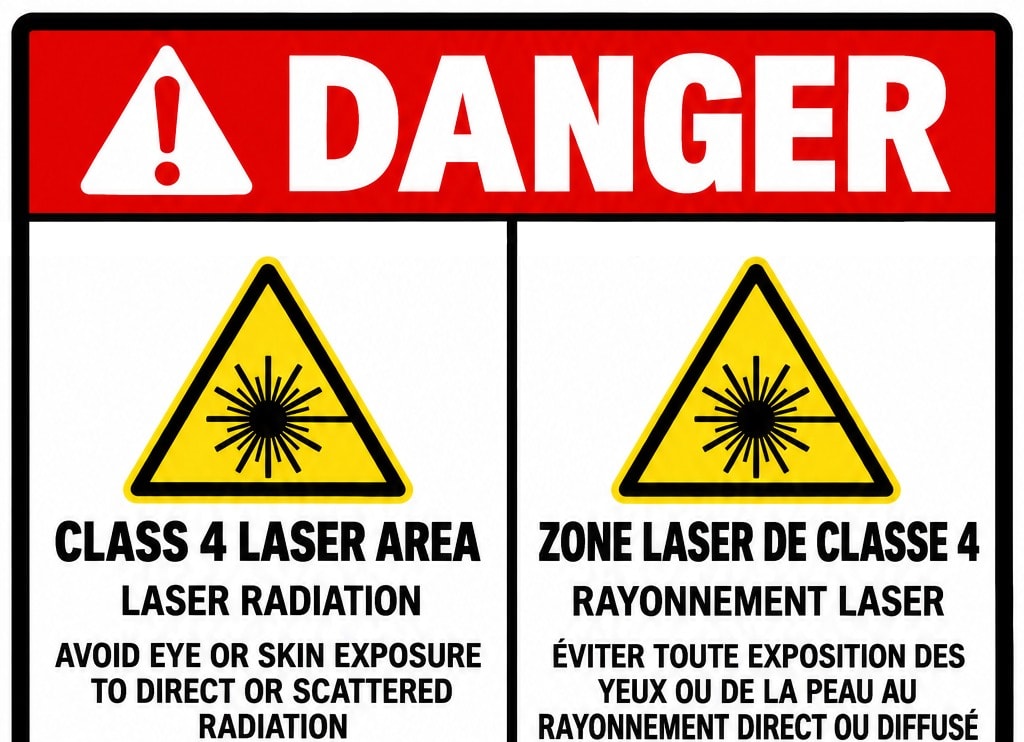
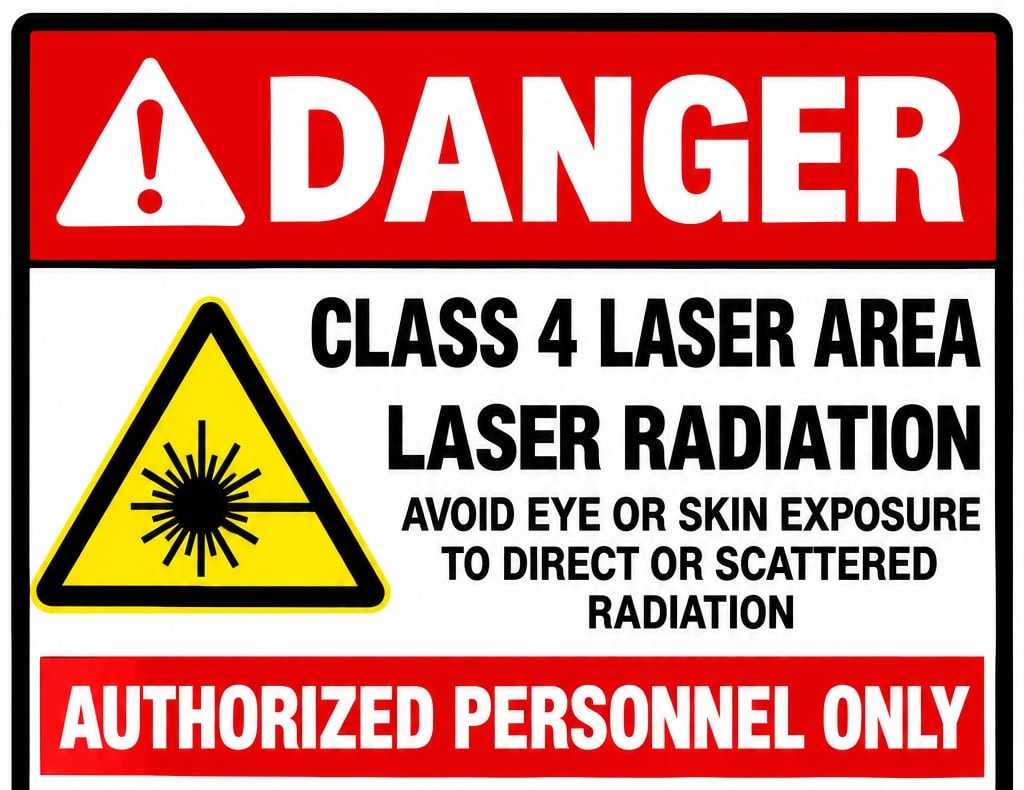
QCW lets you get more precise welds with less heat, but don’t kid yourself—it’s not eye-safe. A high-power QCW or a CW welder are both Class 4 laser systems. Either one will injure eyes or skin instantly, whether you catch the direct beam, a shiny reflection, or even stray light. They’re both serious fire hazards, too. So full enclosures, interlocks, proper fume extraction, ventilation, training, and safety gear are non-negotiable. OSHA laser safety rules still apply across the board.
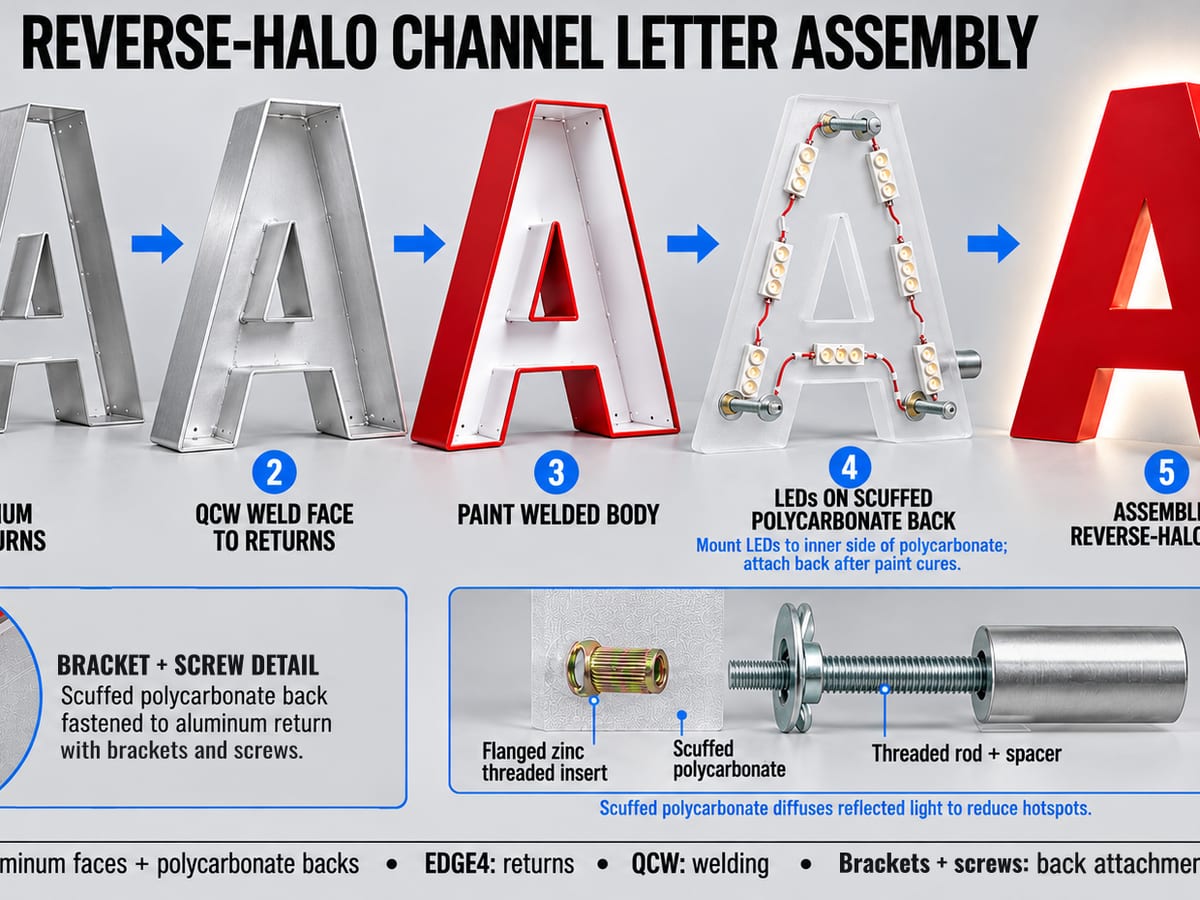
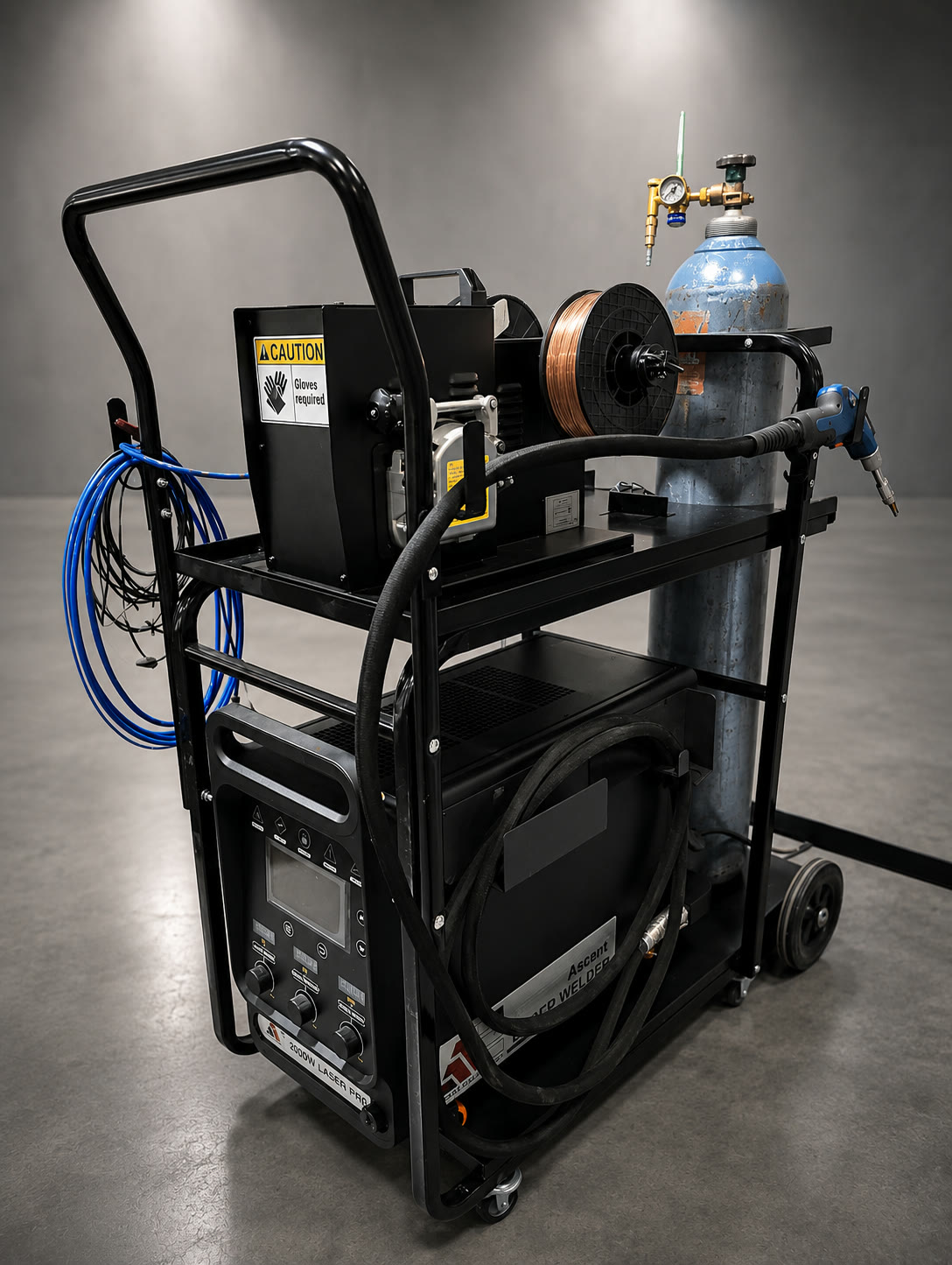
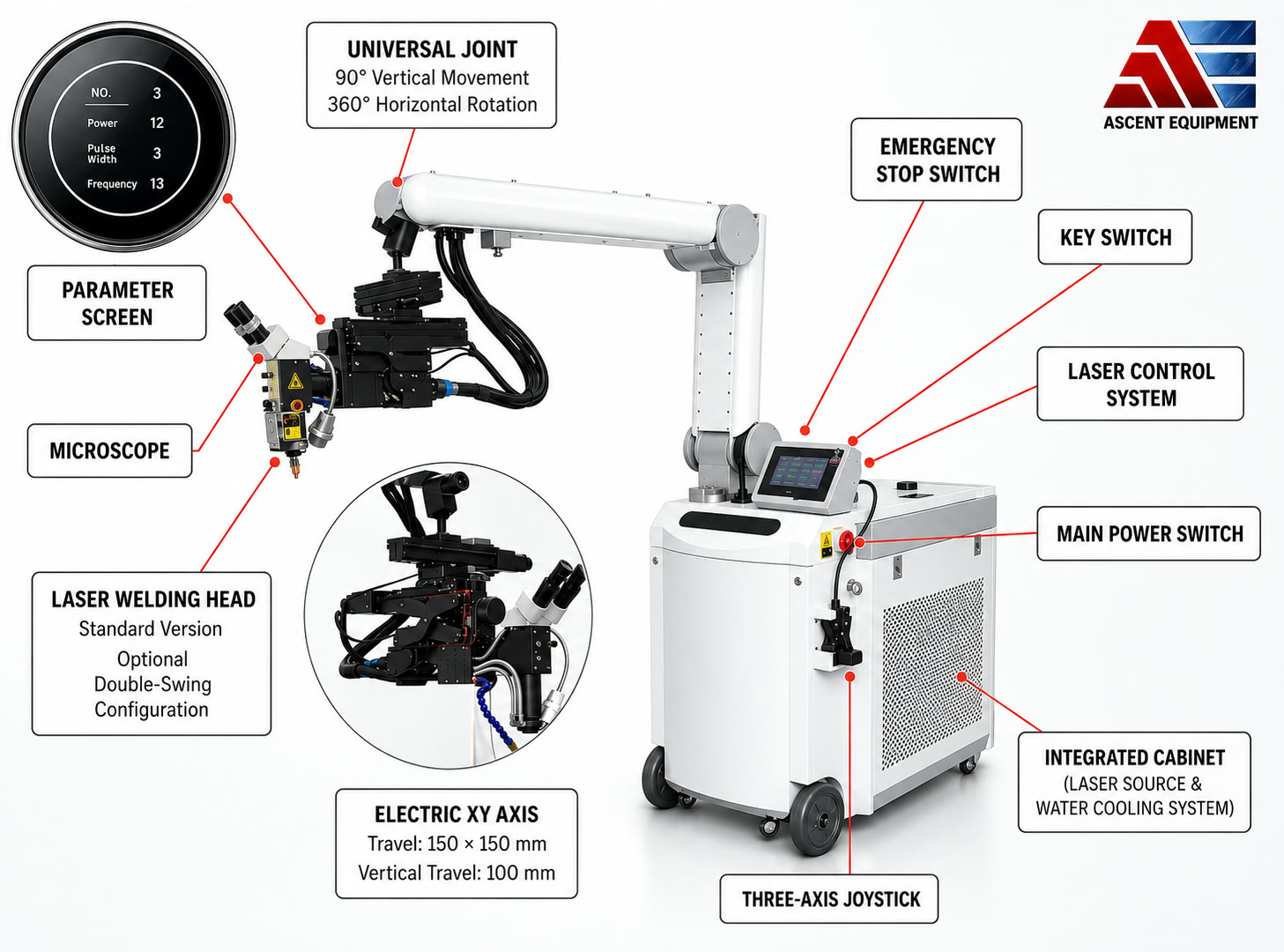
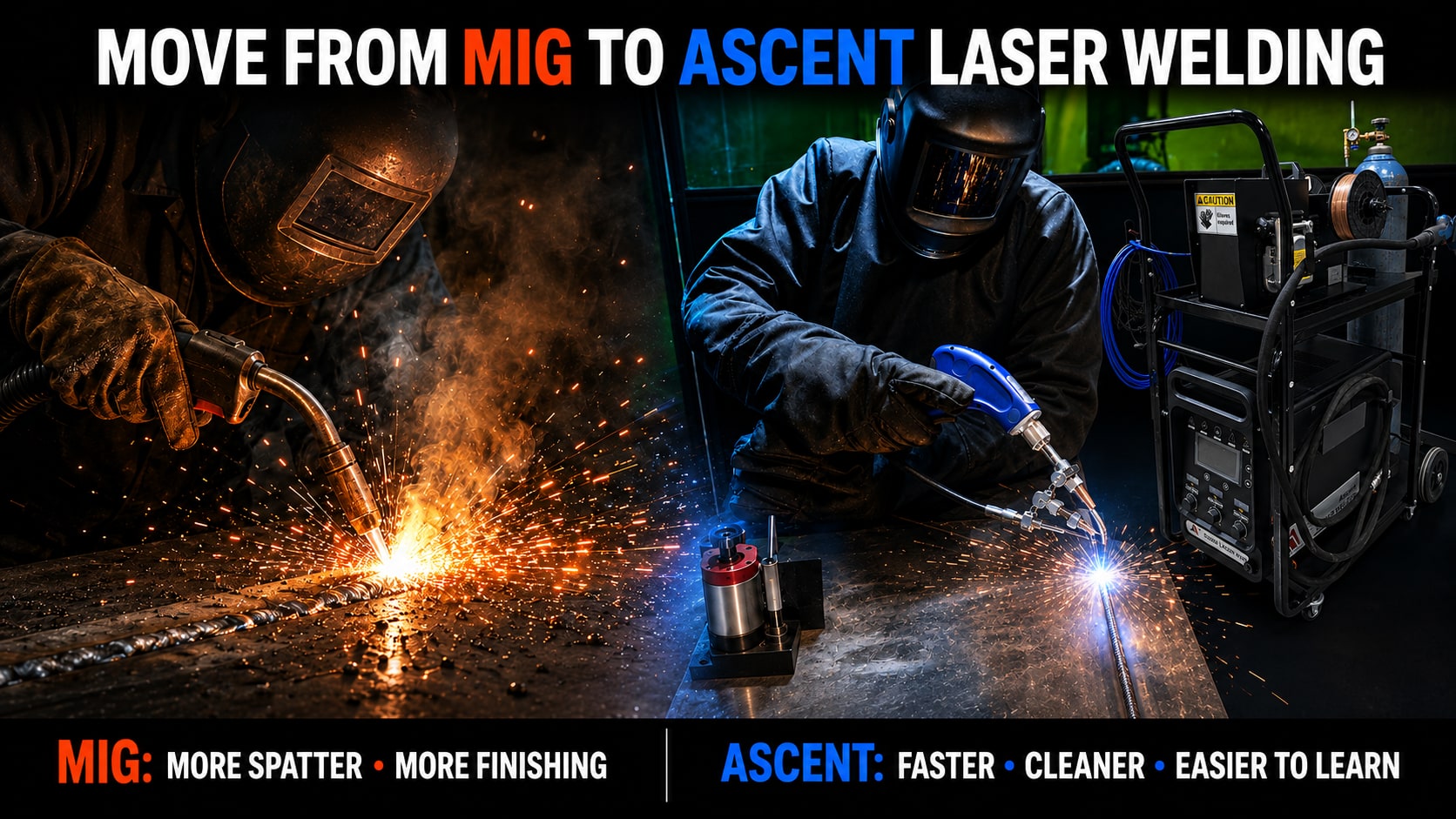
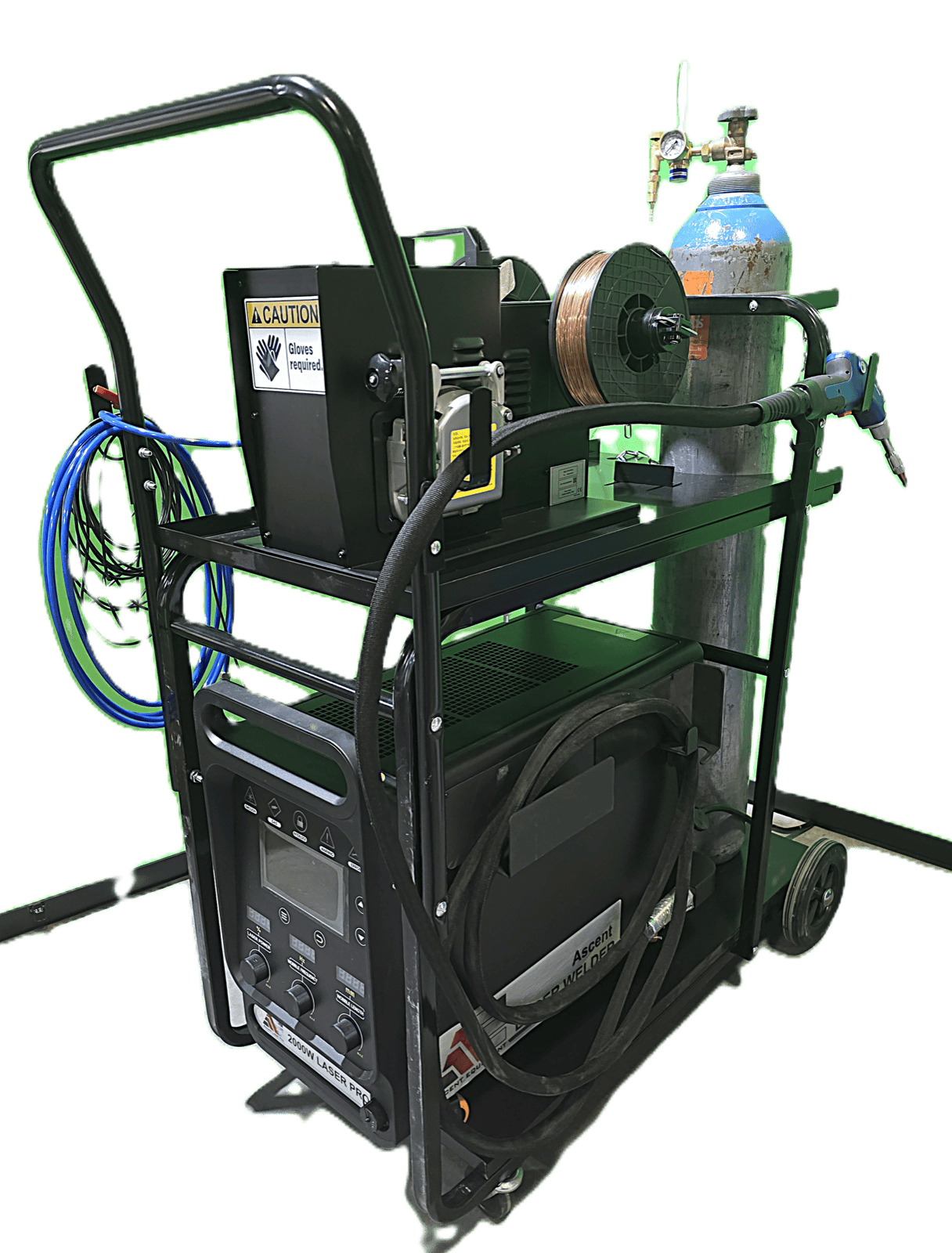
Compared with old-school CW lasers, the Ascent QCW Tabletop Fiber Laser Welder gives you more control and less heat. That makes it easier to weld thin channel letters without distortion or burning up the material. When you run the machine with proper Class 4 protections, QCW works as a precise, efficient, and highly controlled solution for tabletop welding.
QCW vs. CW Safety with CCD Camera Viewing
Let’s say both systems are set up with a fixed work area and the operator watches via a CCD camera instead of peeking directly. Yes, QCW’s pulsed energy helps keep the process cooler—fewer hotspots, less risk of burn-through on thin metal. But safety basics don’t change: unless you’ve got a fully enclosed, certified Class 1 system, you still need Class 4 precautions.
Here’s the quick safety matchup:
- QCW Laser: Pulses with pauses, so average heat and part temperatures usually run lower.
- CW Laser: Constant high-power, so parts heat up fast.
- Thin metal: Less chance of burn-through and warping with QCW, but CW ups the risk.
- Fire: Potentially lower for QCW since it doesn’t keep hammering the part with nonstop heat.
- Eye/skin safety: Both are hazardous—don’t let your guard down.
- Reflections: Both are dangerous, especially on shiny metals like aluminum or stainless.
- CCD viewing: Keeps your eyes out of the danger zone, but isn’t a standalone safety system.
What Actually Makes CCD Viewing Safer?
A well-designed CCD system lets you keep an eye on your weld without looking into the fire. But don’t mistake the camera for a safety device. The machine still needs:
- Totally enclosed, laser-safe chamber
- A door that shuts down the laser if you open it
- Laser-rated camera filter
- Interior designed to absorb or safely block misdirected beams
- A beam stop or shield under the weld
- Emergency stop and key controls
- Proper fume extraction
- No view window—unless it’s certified for your laser’s wavelength and safe exposure
Bottom line: CCD keeps your eyes safe, but only if the rest of the enclosure and controls do their job.
So, Is QCW Safer?
QCW’s lower average energy and pulsed approach do make distortion, overheating, and burn-through less likely. It’s definitely safer for the parts you’re welding. But this doesn’t make it safe for skin or eyes. Those pulses still carry enough power to cause instant, severe injury.
If you really want better safety, put everything inside a locked, fully enclosed chamber and only allow CCD-camera viewing. When you engineer and certify the machine so you can’t get zapped during normal use, you turn it into a Class 1 laser product on the outside—even though it’s got serious Class 4 power inside.
The Ascent QCW Tabletop Fiber Laser Welder pairs QCW’s controlled pulsing with enclosed, CCD-only operation. Compared with pure CW systems, you get less constant heat, which means less distortion, burn-through, and fire risk. The operator lines up and checks every weld through the camera, while the interlocked enclosure keeps all dangerous laser light locked inside. The internal laser’s still Class 4, but a proper enclosure creates a much safer work environment.
That’s exactly how the Ascent QCW Tabletop/Handheld Laser Welder is designed—enclosure and CCD monitoring for detailed channel letter welding. If you need advice on blocking a 1070nm beam, setting up your station, or anything else safety-related, check out our resources or reach out for some shop-specific help.
— Dov “Dave” Rom, President and Chief Engineer, Ascent Equipment
About the Author
Dov “Dave” Rom heads up Ascent Equipment as president and chief engineer. With over ten years spent designing CNC bending machines, channel-letter benders, laser cutters, and laser welders for sign shops across North America, Dave knows the ins and outs of modern sign making. He shares his knowledge on equipment, automation, and how to make fabrication more efficient every chance he gets.