
QCW Tabletop vs. Handheld Fiber Laser Welder: Which Is Right for Your Sign Shop?
If your primary business is channel letter manufacturing, these two machines are not competitors — they complement each other. They are designed for different applications.
Quick Comparison
| Feature | QCW Tabletop Laser Welder | 2000W Handheld Fiber Laser Welder |
|---|---|---|
| Laser Type | QCW (Quasi-Continuous Wave) Pulsed | Continuous Wave (CW) Fiber |
| Best For | Small to medium channel letters | Medium to large fabrications |
| Precision | ★★★★★ | ★★★★☆ |
| Speed | Fast for small parts | Extremely fast on larger welds |
| Heat Input | Very low | Higher |
| Thin Aluminum | Excellent | Good |
| Distortion | Minimal | Low |
| Learning Curve | Very easy | Easy |
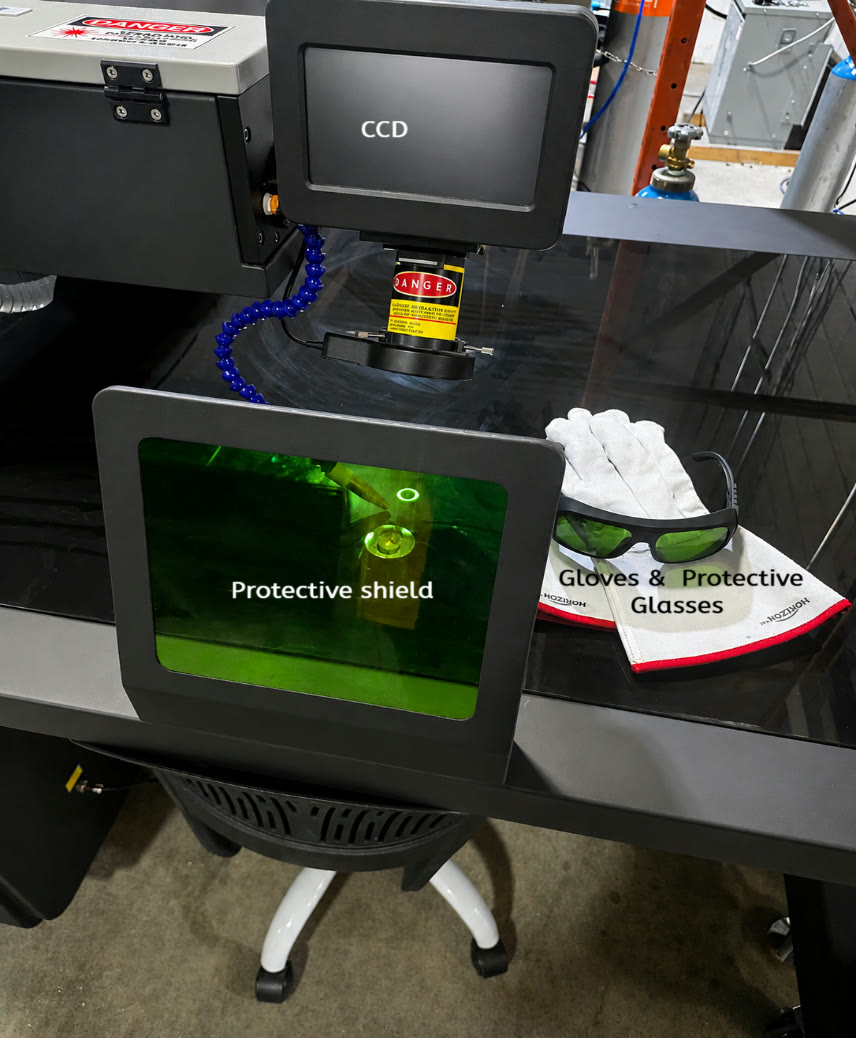
| Portability | Tabletop + converts to handheld | Fully handheld |
| Multi-function | Precision welding | Welding, cleaning, and light cutting |
Ascent QCW Tabletop/Handheld Combination
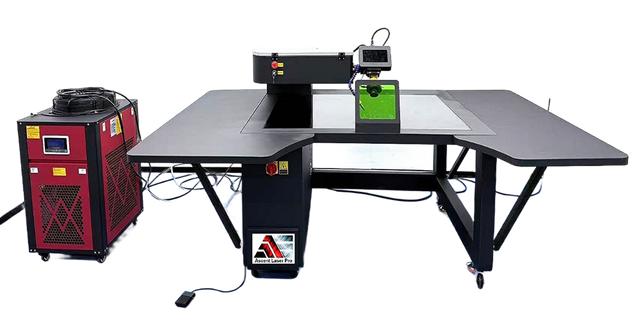
This machine was designed specifically for small and medium channel letters, where precision is more important than raw power.
Advantages:
- Very small heat-affected zone (HAZ)
- Minimal discoloration
- Virtually no distortion
- Easy to weld tiny inside corners
- Ideal for aluminum from approximately 0.020"–0.063"
- Excellent on thin stainless steel
- Converts from tabletop to handheld in minutes
- Extremely easy to learn for sign-shop employees
Why QCW Is Different
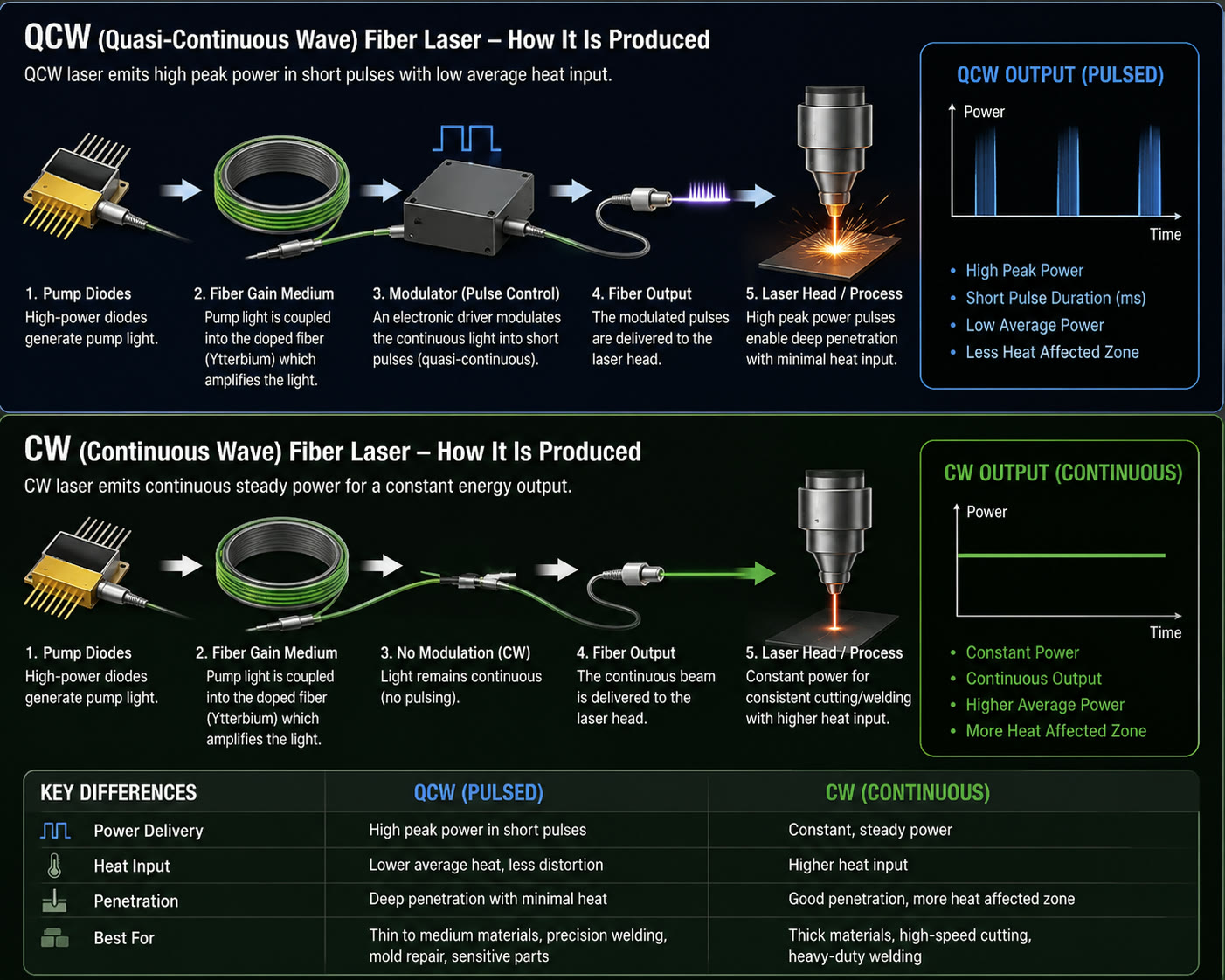
QCW delivers short, high-energy pulses rather than continuous energy. Think of it like:
A TIG welder making perfect tack welds hundreds of times per second — instead of a continuous flame heating the entire joint.
The result is:
- Less warping
- Cleaner welds
- Almost invisible seams
- Less grinding
For narrow channel letter returns, this is a major advantage.
Ascent Handheld Fiber Laser Welder
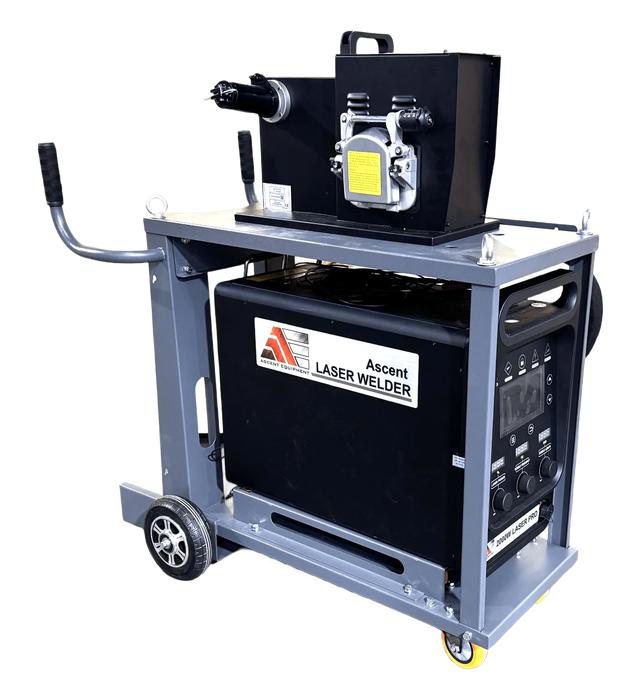
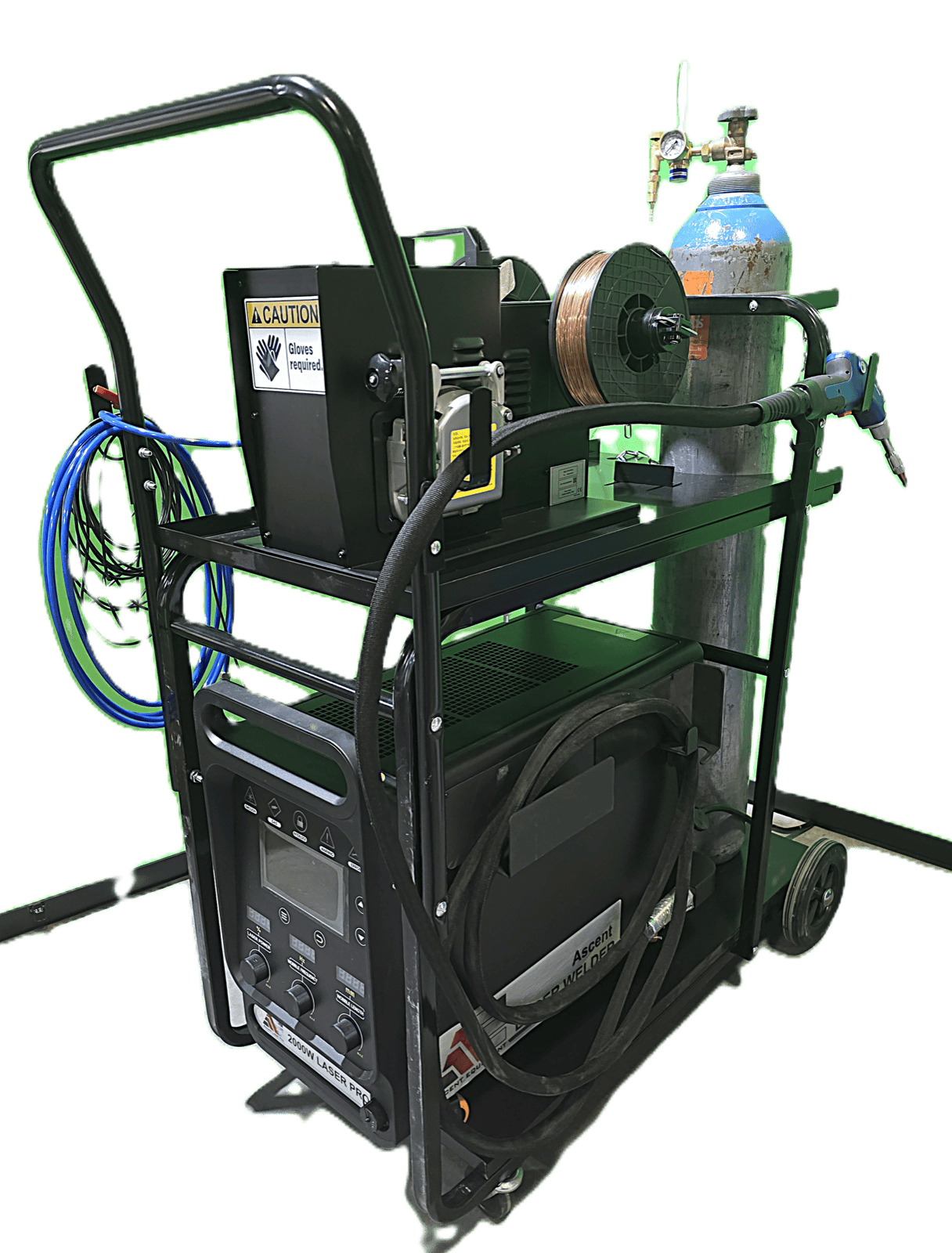
The handheld is designed for production welding. It excels when welding larger channel letters, cabinets, raceways, frames, structural aluminum up to 0.27", stainless fabrication, and thicker materials.
Advantages:
- Very high welding speed
- Deep penetration
- Minimal grinding
- Large working area
- Can perform: welding, rust removal, laser cleaning, and thin sheet cutting
- Lightweight ergonomic torch
- Continuous-duty refrigeration cooling system for long production runs
Typical Applications
| QCW Tabletop | 2000W Handheld | |
|---|---|---|
| ✅ 3"–4" letters | ✅ 18" letters | |
| ✅ 6" letters | ✅ 36" letters | |
| ✅ 8" letters | ✅ 60" letters | |
| ✅ Jewelry-like precision | ✅ Aluminum cabinets | |
| ✅ Illuminated letters | ✅ Stainless fabrication | |
| ✅ Reverse halo returns | ✅ Raceways and architectural signs |
Heat Comparison
QCW: Tiny pulses. Very little distortion.
2000W CW: Continuous energy — much faster, more penetration. Still far less heat than MIG or TIG, but more total heat input than QCW.
Production Speed
Small letters: QCW is actually faster because of less setup, easier positioning, almost no finishing required, and easier inside corners.
Large fabrication: The 2000W handheld wins. It can be 2–4 times faster than TIG welding while producing clean welds with minimal finishing.
Which Shop Should Buy Which?
Buy the QCW if you mainly manufacture:
- Channel letters and reverse halo letters
- Premium architectural letters
- Small aluminum and stainless channel letters
- Painted aluminum letters
This is the ideal choice for sign shops focused on precision channel-letter production.
Buy the 2000W Handheld if you manufacture:
- Sign cabinets and raceways
- Pylon signs and steel frames
- Heavy aluminum fabrication
- General sheet metal work and custom metal fabrication
Buy both if you are a full-service sign shop.
If your shop manufactures everything from small premium channel letters to large sign cabinets, the two machines complement each other extremely well:
- QCW Tabletop for precision work on small and medium channel letters with minimal heat and distortion
- 2000W Handheld for high-speed welding of larger fabrications, cabinets, frames, and structural components
This combination covers nearly the entire range of welding needs in a modern sign shop while maximizing productivity and weld quality. Contact us to discuss the right configuration for your production mix.