
A skilled aluminum TIG welder is one of the harder people to hire in a sign shop right now, and one of the more expensive. That's the real labor-cost problem behind aluminum channel letters. It has less to do with welding speed and more to do with how scarce, and expensive, a genuinely qualified welder has become.
Laser welding changes who is able to do that job.
The training claim, stated carefully
With about four hours of hands-on Ascent training, many dependable production employees, even those with no previous welding experience, can learn to produce acceptable welds on common thin-aluminum sign components, using approved settings, fixtures, and proper supervision.
That's a narrower claim than "anyone can weld," on purpose. Four hours covers learning basic operation on predefined sign components. It doesn't cover full laser-safety training, welder certification, or qualification for every joint and material combination a shop might encounter. Training time will also vary by operator and application.
Why the laser process is easier to learn
Traditional aluminum TIG welding asks the operator to coordinate the torch, the filler wire, and often a foot-pedal amperage control, all while continuously judging the molten weld pool by eye. Thin aluminum makes this harder, since it conducts heat quickly and can distort or burn through with very little warning.
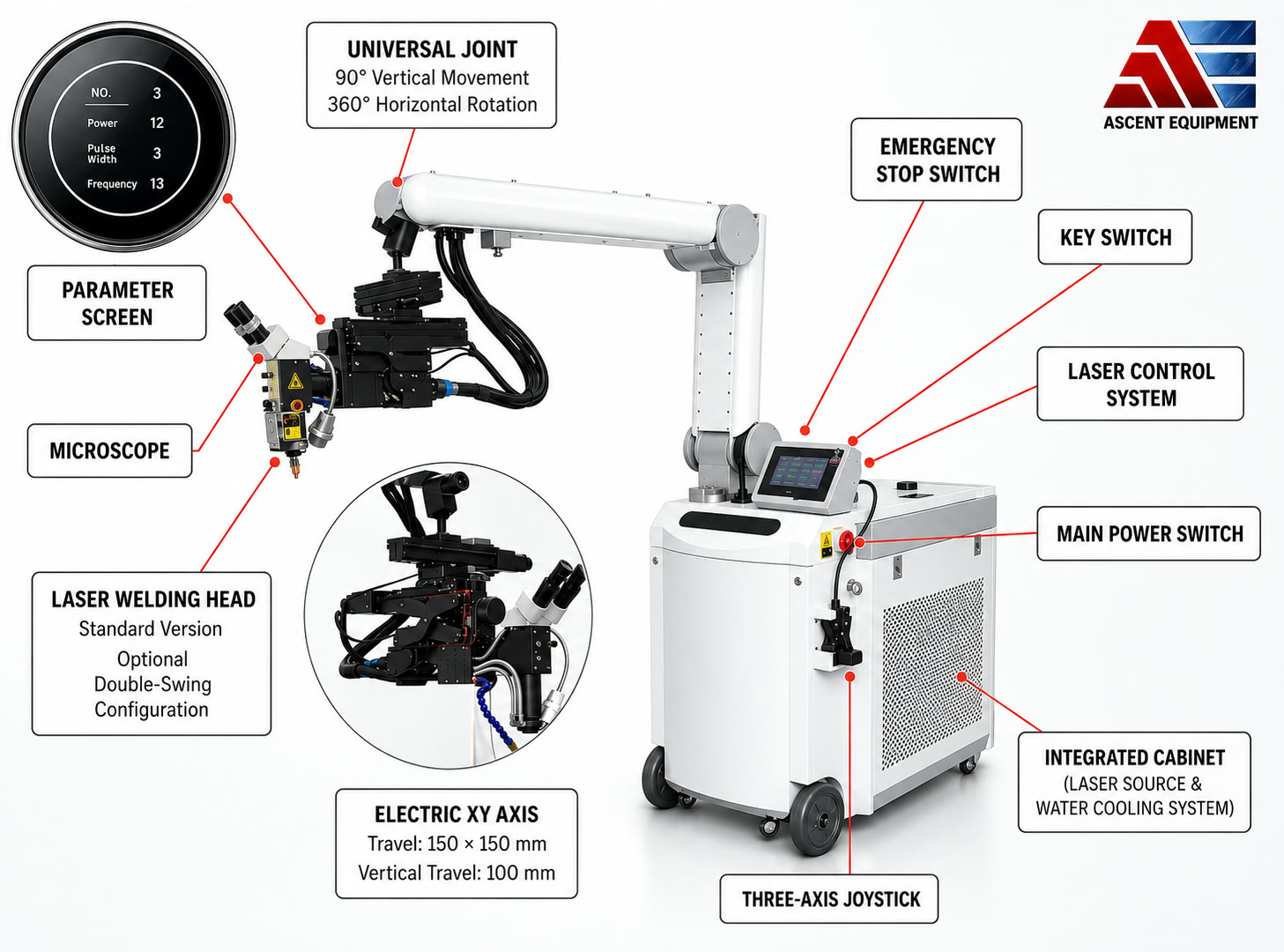
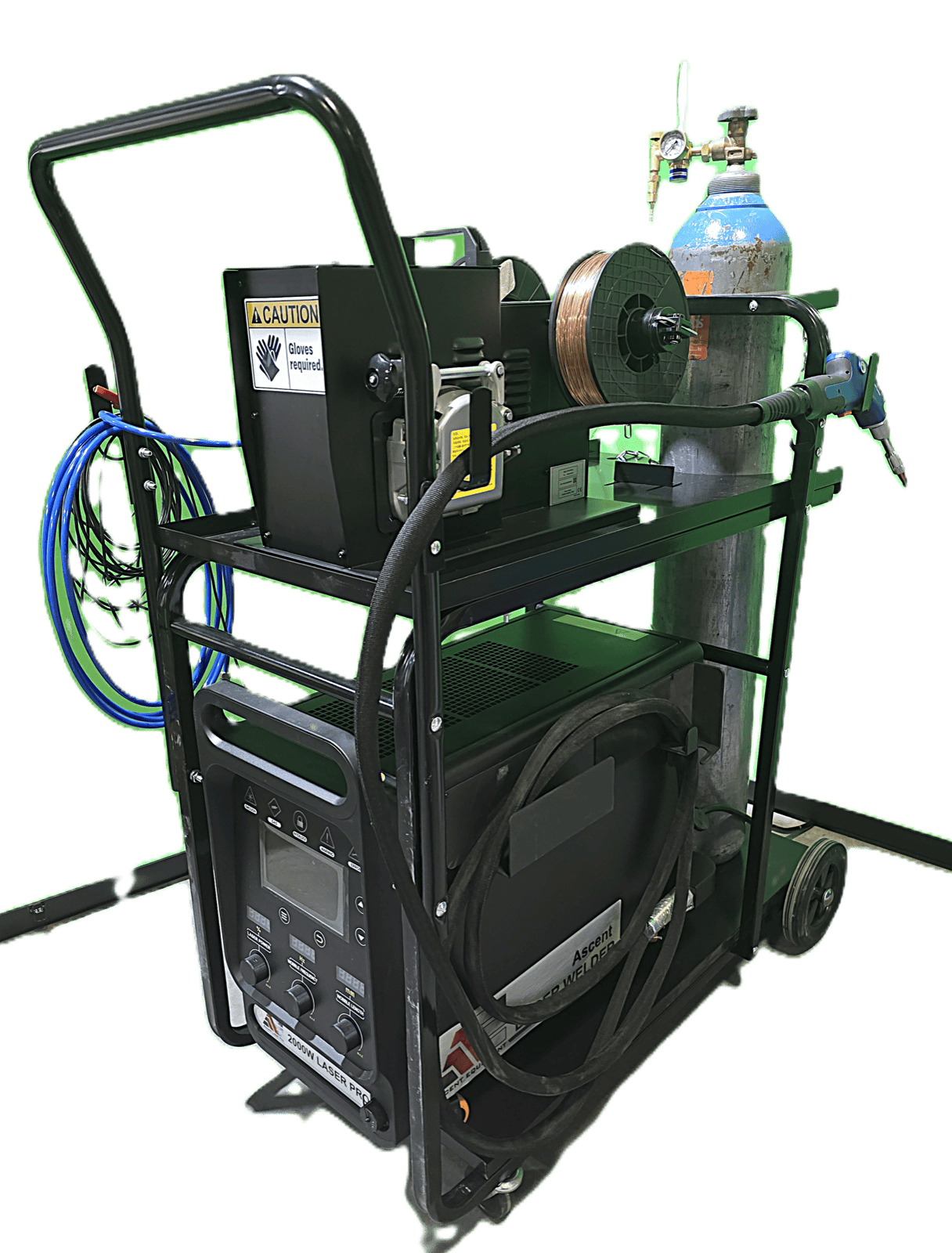
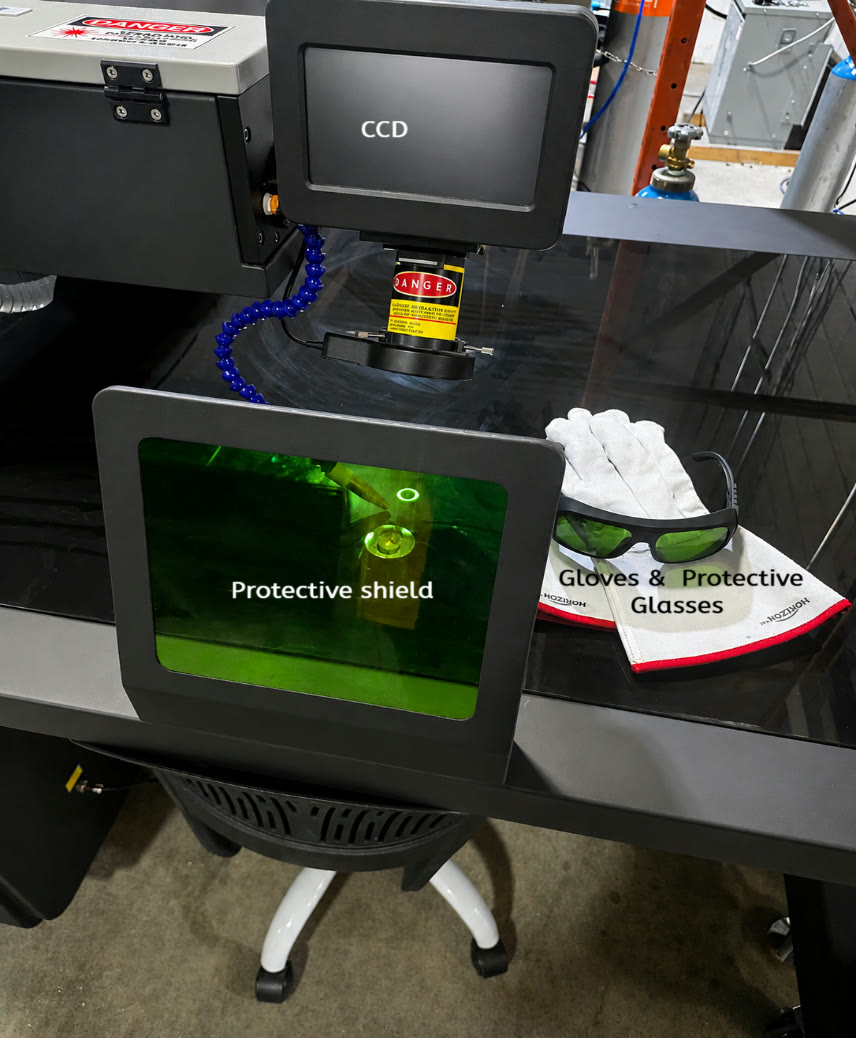
The Ascent laser welder removes several of those variables from the operator's hands:
- Approved parameters can be preset for the material and thickness
- The wobble head produces a controlled, consistent seam
- The operator mainly controls torch position, angle, and travel speed
- Less heat transfers into the surrounding material
- The process demands less simultaneous hand-and-foot coordination
- Repeatable sign components can be welded using established settings and fixtures
That's why a dependable production employee can pick up the fundamentals much faster than someone working toward becoming a skilled aluminum TIG welder: there's simply less to master before the results are usable.
What this actually costs, in dollars
Wage data makes the underlying economics concrete. A dependable production worker and a highly skilled aluminum TIG welder aren't paid the same, and the gap is large enough to change how a shop should staff aluminum welding.
| Factor | Dependable production worker | Highly skilled aluminum TIG welder |
|---|---|---|
| Typical wage | $22/hour | $24–$32/hour |
| Estimated loaded employer cost | $33/hour | $35–$48/hour |
| Previous welding experience | Not required | Several years, commonly |
| TIG hand coordination | Not developed | Highly developed |
| Process variables managed manually | Limited | Heat, arc length, torch angle, filler, and travel speed |
| Best suited to | Repetitive, predefined sign components | Broad fabrication and demanding custom welds |
At the top of the range, that loaded-cost gap is $15 per hour, or $30,000 a year over 2,000 paid hours. In Canada, the same comparison is about CAD $32 against CAD $60 per hour. According to the Bureau of Labor Statistics, the national median wage for welders, cutters, solderers, and brazers is about $25.84 per hour, and the highest-paid 10% earn above roughly $37.27 per hour. Specialized aluminum TIG welders can command more than that depending on certification, location, and industry.
Reducing labor cost means changing who does the job
The savings come from staffing the job differently: a shop no longer needs a highly paid specialist for the aluminum components that make up most of its channel-letter volume. A dependable production employee, trained for a few hours on the Ascent system, can take on that repetitive work, while the shop's skilled welder, if it has one, stays available for the custom and structural jobs that actually require that level of experience.
That distinction matters for how a shop should think about staffing. It's a labor-cost problem solved by reassigning the task, and nobody involved has to take a pay cut for it to work.
For a closer look at what laser welding changes versus TIG and MIG on the shop floor, see how it compares to TIG welding for channel letters, or check the full specs on the Ascent refrigeration laser welder page.