
Ascent True Trimless Letters vs. the Competition
“Trimless” gets thrown around a lot in the sign world. Plenty of companies will yank off the trim cap and call it “trimless,” but honestly, taking off that trim cap isn’t the whole story. What matters is how the actual letter is put together underneath.
Let’s break it down:
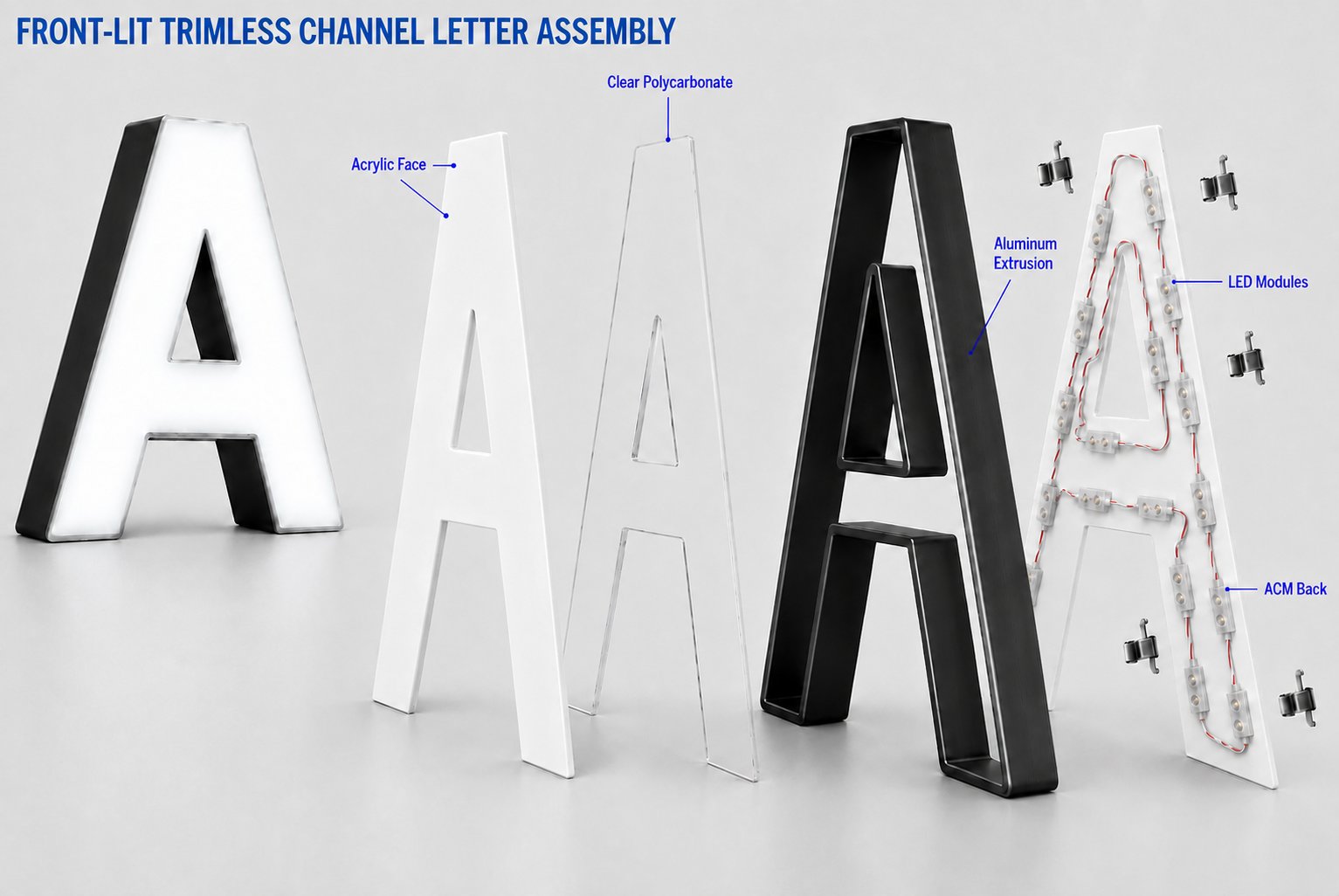
Face Construction: With Ascent’s True Trimless Letters, we use a stepped acrylic face that fits snug into an aluminum extrusion. That’s a clean design. The competition? They usually go with a flat acrylic face, glued onto PVC strips sitting inside the return.
Acrylic Edge: Our acrylic edge stays tucked inside the extrusion—practically invisible. Some other designs? You end up with exposed acrylic edges, or even a lit-up border around the whole letter.
Main Illumination: We use LEDs that light up the front face, just like you’d expect from a normal channel letter. The other guys sometimes do that, but you’ll also see a lot of side-lit or edge-lit effects—so most of the glow isn’t coming head-on.
Face Attachment: On an Ascent system, the face lines up perfectly because of how we design the extrusion and profile. No glue needed. Competing systems? They tend to glue everything together.
Structural Assembly: We lock everything in with stainless-steel nails and mechanical clips. The competition glues it all, face and supports included.
Appearance: With Ascent, you end up with a classic, front-lit channel letter—just without the trim cap. Competitors often produce something that looks more like an edge-lit or dimensional letter, with the glowing edge as the main effect.
Material Availability: You can get Ascent profiles from us or source them directly in volume—they’re not proprietary. Some competitors only offer proprietary materials.
Size Guidance: Ascent’s trimless letters are cULus certified for indoor or outdoor sizes up to 66 inches. A lot of competing systems max out at a 38-inch exterior, and sometimes restrict you to letters around 30 inches.
Why does this all matter?
A true front-lit trimless channel letter should work just like any standard channel letter—bright, even lighting across the whole face. The only difference? No trim cap on the edge.
That’s what Ascent’s system gives you—a purpose-built extrusion that secures the acrylic face inside the aluminum return. Clean look, solid construction, consistent lighting.
A lot of “trimless” systems out there create something different. When light spills through thick or exposed acrylic edges, that’s really an edge-lit or side-lit effect. Taking off a trim cap doesn’t magically turn that into a real front-lit trimless channel letter.
So, here’s the bottom line: Ascent makes a true front-lit, trimless channel letter using a mechanically integrated stepped face and aluminum extrusion—no glue, no gimmicks. Most other “trimless” systems are adhesive-heavy specialty setups that can make a similar look, but when the perimeter lights up, that’s honestly edge-lit, not the same thing as what you get with Ascent.
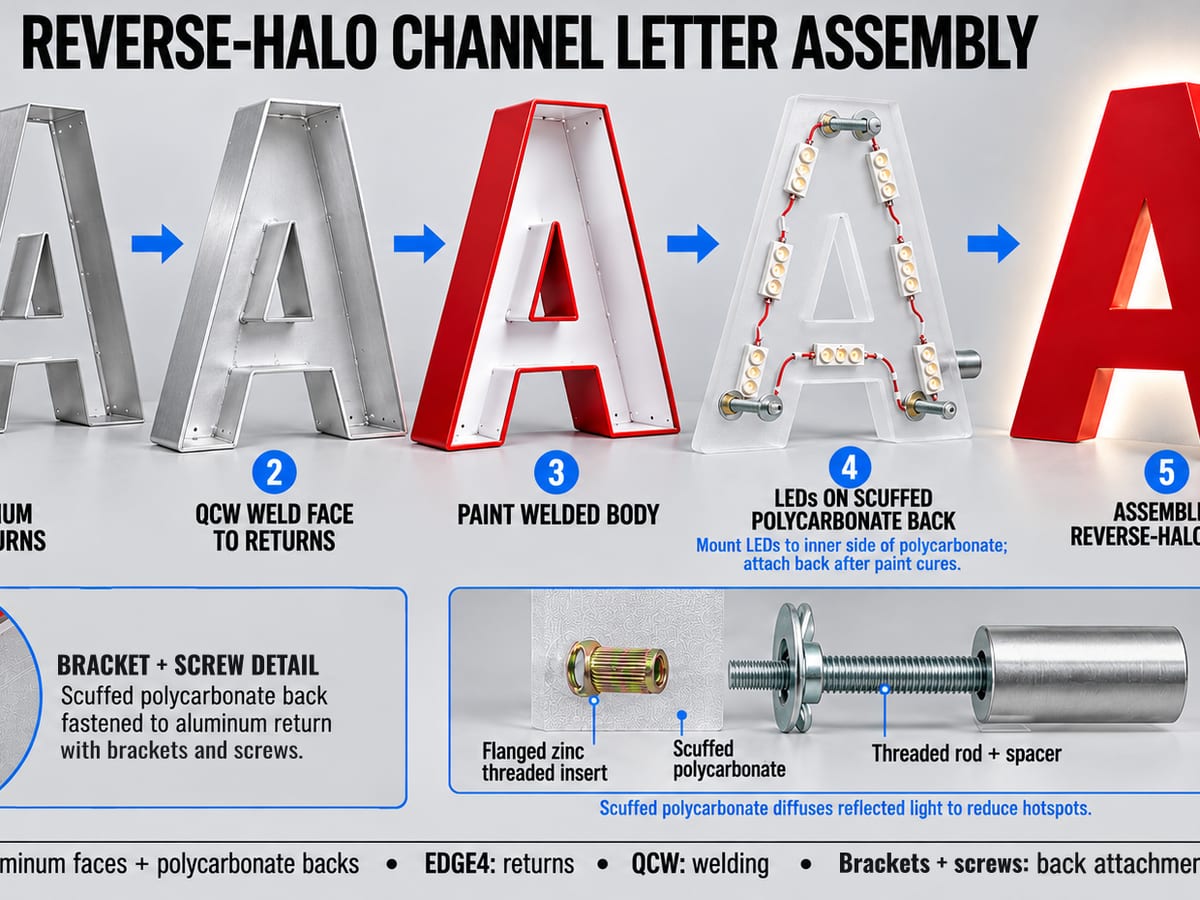
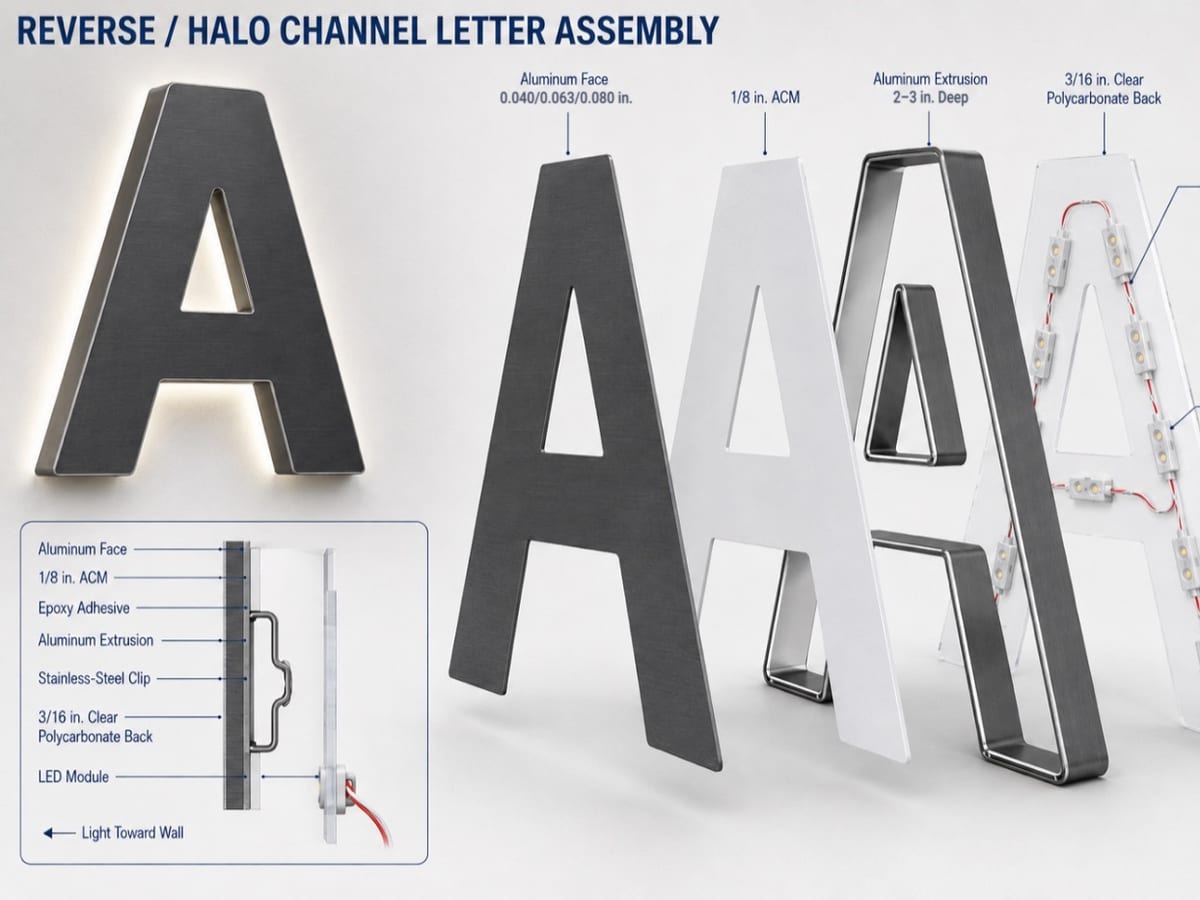
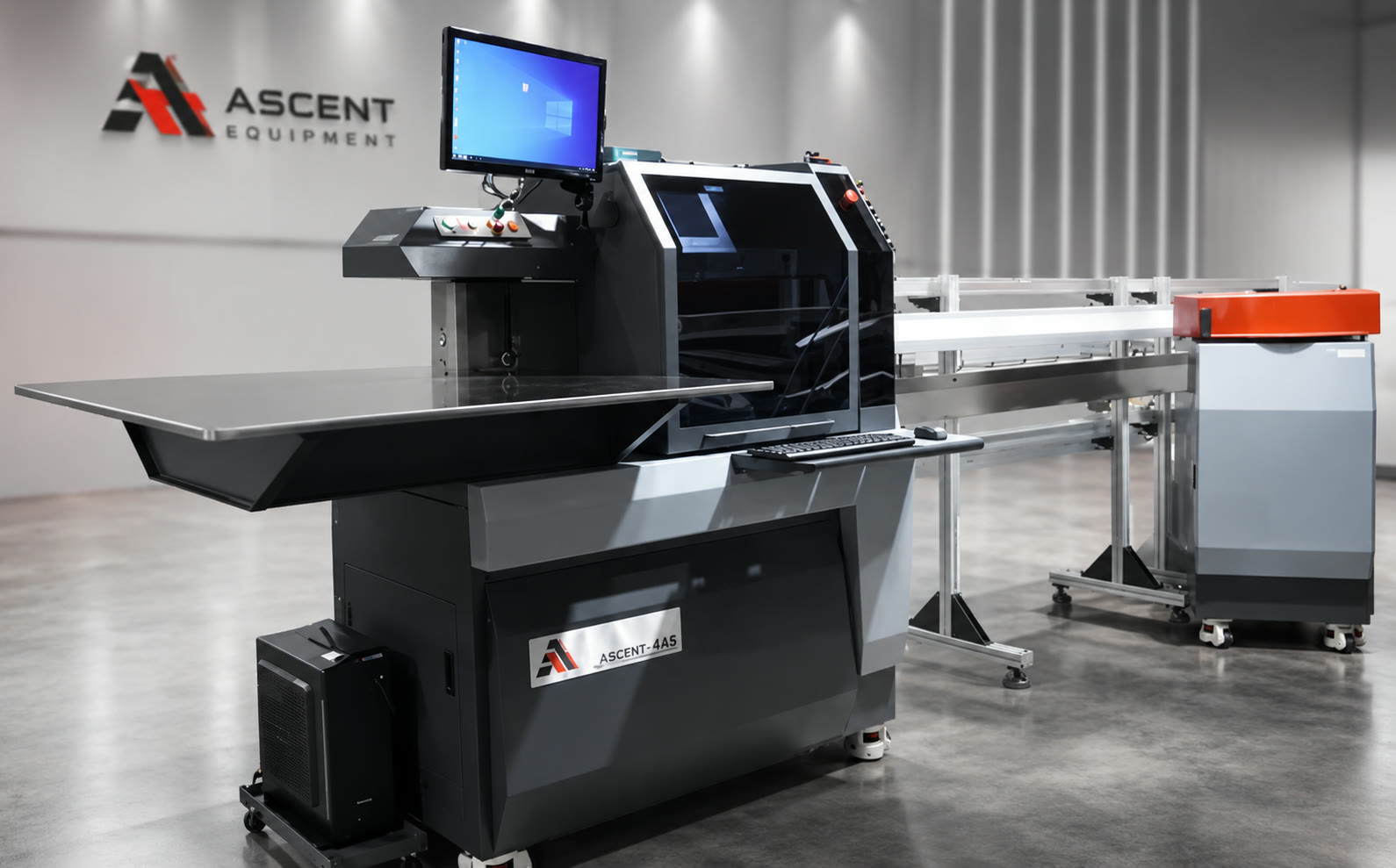
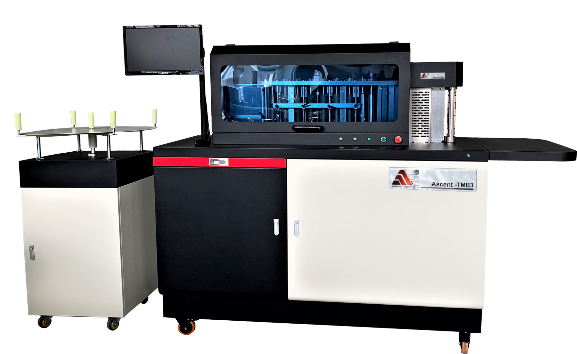
If you want all the construction details—including reverse halo, aluminum trim-cap, and side-lit types built on our 5AS and 4AS bending machines—just check out our channel letter types page. Or reach out and let us know your style and size, and we’ll talk specifics about what our system can deliver for your project.
About the Author:
Dov “Dave” Rom runs Ascent Equipment as president and chief engineer. He’s spent more than ten years designing CNC bending machines, channel-letter benders, laser cutters, and welders for the North American sign industry. Over the years, Dave’s helped shops all over the US and Canada modernize their production lines. He writes regularly about equipment selection, automation, and how sign shops can make their operations more efficient.