
Best Handheld Laser Welder for Sign Shops
The best handheld laser welder is rarely the one with the highest wattage. Start with the metals and thicknesses you weld, your daily production volume, and how long the machine will run without a break. Those three answers narrow the field quickly. The rest of this guide covers the details I would compare next, in the order that matters most in a sign shop.
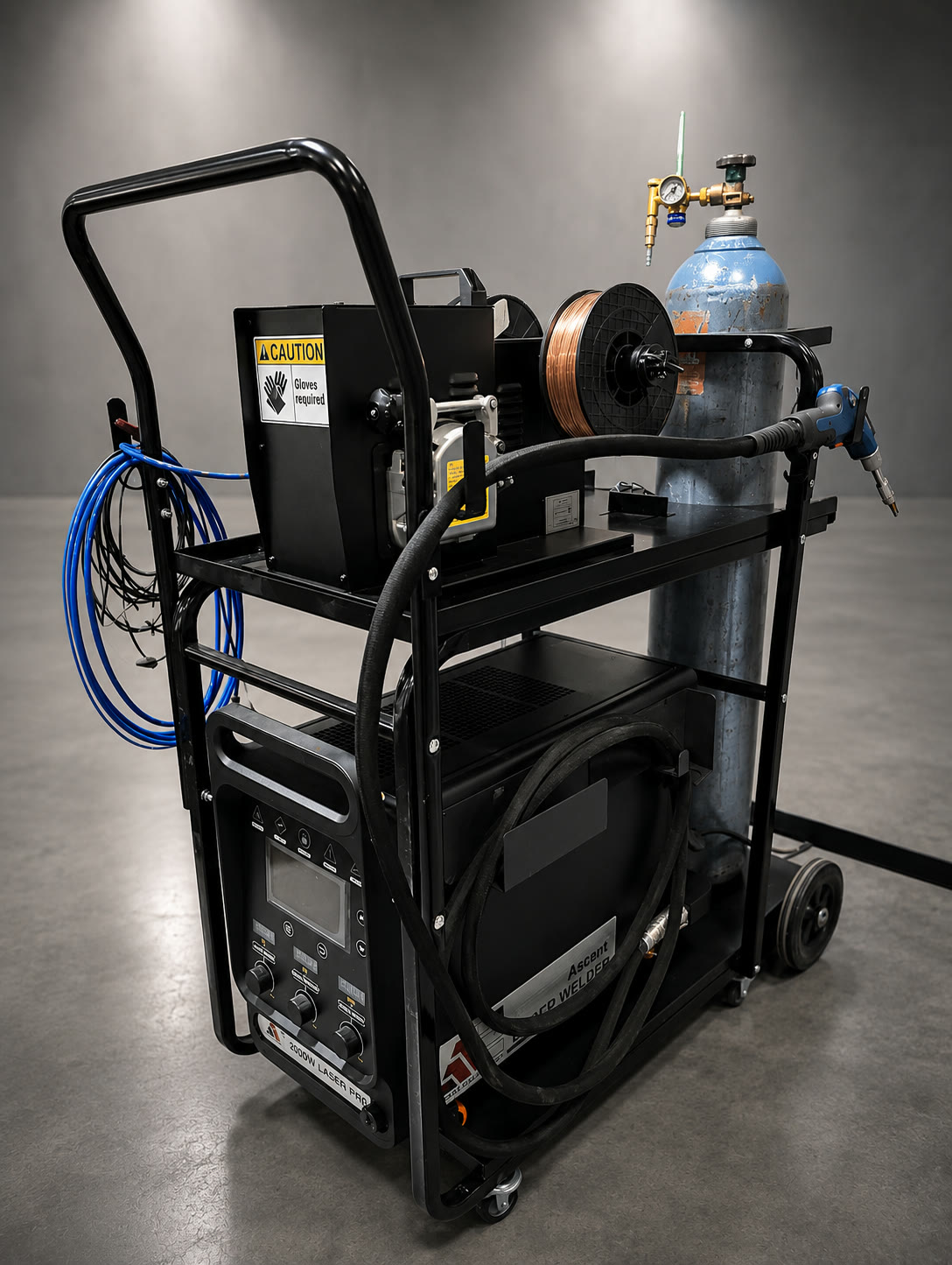
The most important considerations per se:
1. The cooling system - especially relevant for high-volume production
The options for cooling down a handheld laser welder, which can get to hundreds of degrees Celsius at the tip, are typically:
- Air-cooled. They are typically the cheapest to make and often have reduced power output rated for intermittent use, with performance dropping off at higher ambient temperatures.
- Water-cooled. They generally perform better under continuous use but require maintenance of the chiller and water circuit
- Refrigerant (heat pump) - a closed-loop refrigerant circuit, similar to central air conditioning, is used to cool the welder. They tend to have consistent performance across a wide temperature range without requiring maintenance. Refrigerant-cooled lasers are a relatively new entrant into the welding field; as of now, Ascent's refrigeration welders are the only handheld laser welders we know of that use a refrigerant-based cooling system.
If you have a welder which you plan on using for more than a couple hours per day, its cooling system is often more important than the power rating.
2. Output power - pick it based on materials and not on nameplate ratings
Laser power dictates penetration and determines how thick materials you can weld at a given speed. As a general reference:
- 900-1200W - light gauge aluminum/stainless, low-volume shops
- 1500-2000W - most common across channel-letter shops and other sign-fabrication businesses; handles standard gauge metals and is a decent all-rounder for various materials
- 2500-3000W+ - heavy fabrication or higher mix of materials, including production work in metals other than aluminum
Going beyond the recommended power is often unnecessary and adds costs and weight (see below).
3. Wire feeder - critical for production welding
A wire feeder is necessary for all welds which are not perfectly formed butt joints, and there are very few of those in the real world. You'll want a feeder which has minimal hysteresis and can utilize standard welding wire, not a proprietary spool.
4. Wobble head - a must-have for structural welding
A wobble head essentially allows a laser welder to put out a wider weld without tracking at a slower speed by moving the beam in an oscillating pattern; this, in turn, allows for larger fit-up errors and less precise welds on the part's contours. Particularly important for channel letters, which often feature contoured returns.
5. Weight - a figure that emerges at the end of the shift when asking "how long can I hold this thing?"
A welder which is light and nimble enough to weld 3 sets of letters during a lunch break will fatigue the operator unnecessarily during a production shift. Ask for the actual weight in grams, not marketing blurbs about "lightweight" - particularly in this category, multiple manufacturers currently list their torches as "the lightest". A lighter torch also allows for better precision welding on contours, improving weld quality.
6. Laser safety compliance
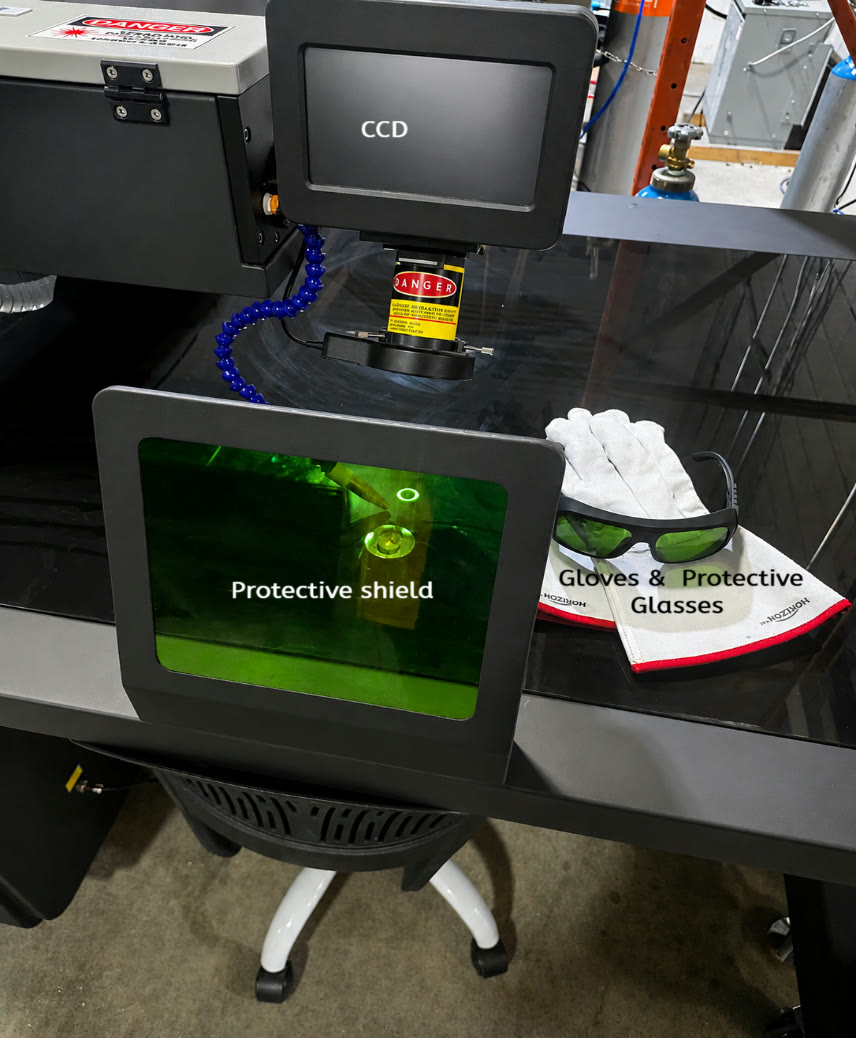
Whatever you buy, ask what it's rated for. Operators need safety glasses rated OD 7 or 8, and in the US, the welder itself needs to be manufactured to meet FDA/CDRH laser-product performance requirements under 21 CFR Parts 1000 and 1040. A vendor who can't answer this directly is worth a second look.
7. Warranty and support
Some of the companies in this equipment category are essentially white-label dealers for equipment made in China; while not necessarily inferior, their support infrastructure is necessarily limited compared to manufacturers. How far are service technicians located, and can you get tech support over the phone during your shop's working hours? General warranty ranges from 1-2 to 5 years for major components but ask about detailed terms.
Priorities for channel-letter welding in particular:
Besides the considerations listed above, channel-letter welding has a set of requirements which are not always present in other fabrication types:
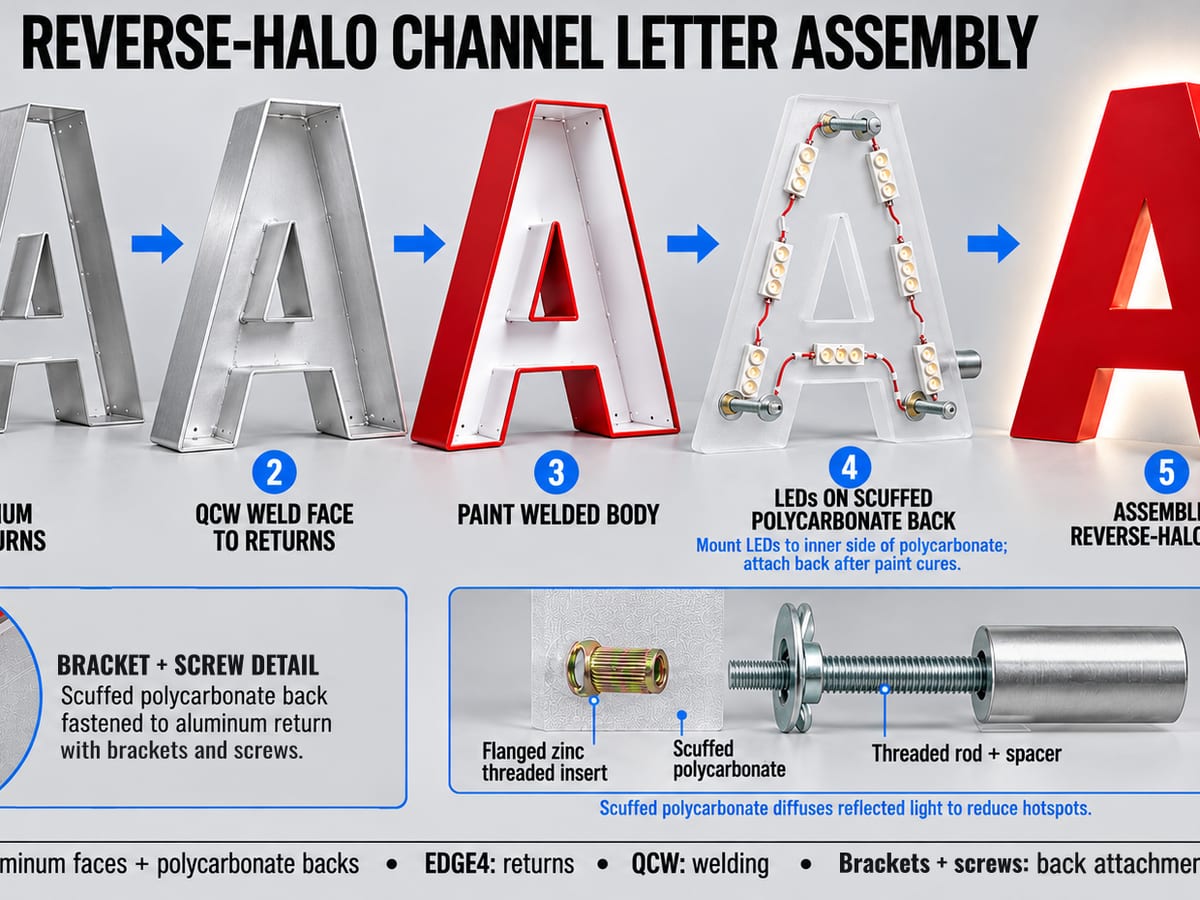
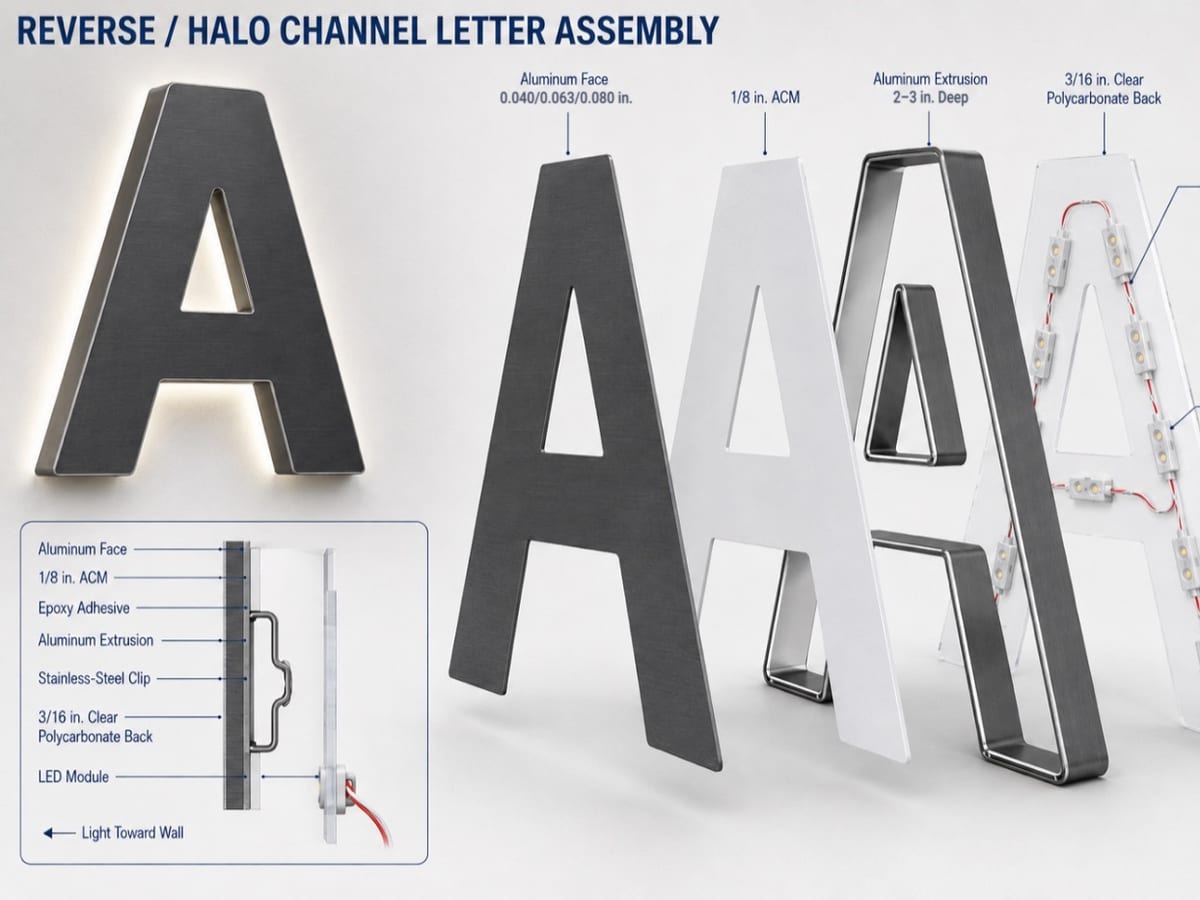
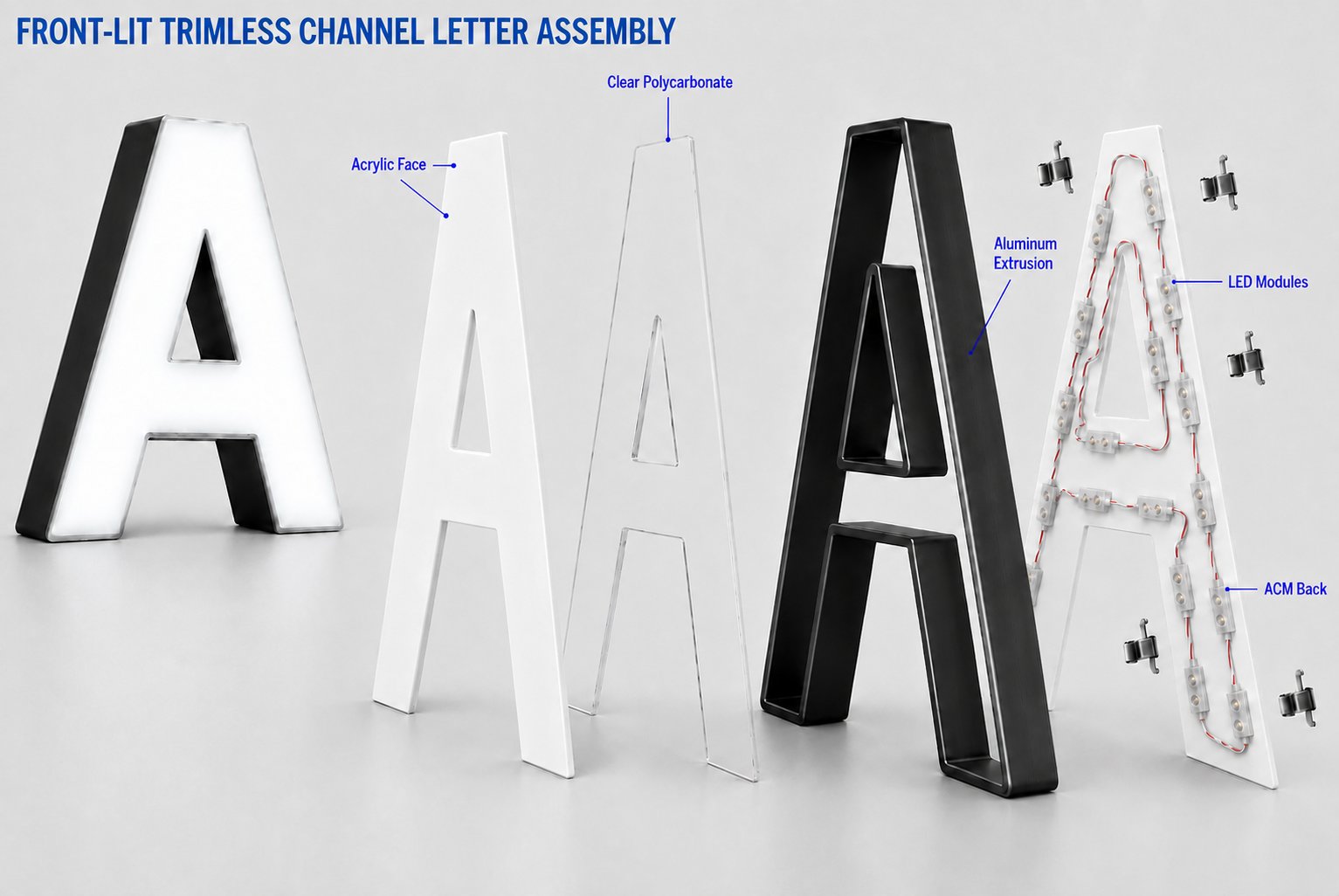
- Thin material: most channel-letter returns are made from 0.030" to 0.080", with some halo and reverse-letter styles being even thinner. Light-gauge material has its own welding challenges, and a welder must be able to consistently track on these materials.
- Curved seams: while letters themselves are rarely curved, their returns are often contoured, requiring a wobble head to weld large-radius folds
- Production volumes: a high-volume channel-letter shop making a set of letters per day cannot afford to shut down due to a laser welder needing to cool down in the middle of a shift - this is where cooling system choice begins to matter
- Operator skill: many sign shops prefer to hire and train their own welders rather than rely on welding contractors. Anything which allows an operator to weld more consistently and simply is an advantage
Ascent's considerations:
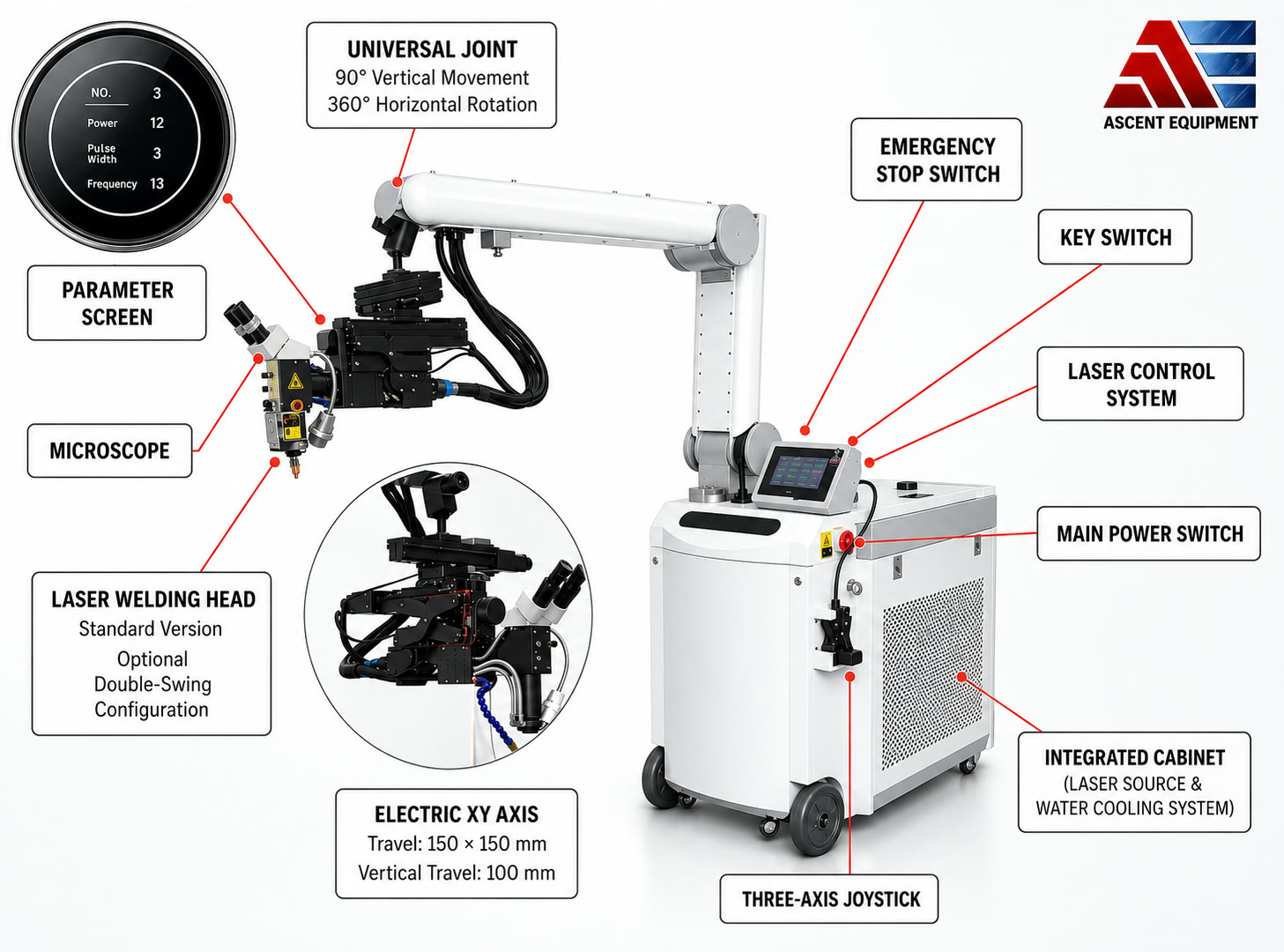
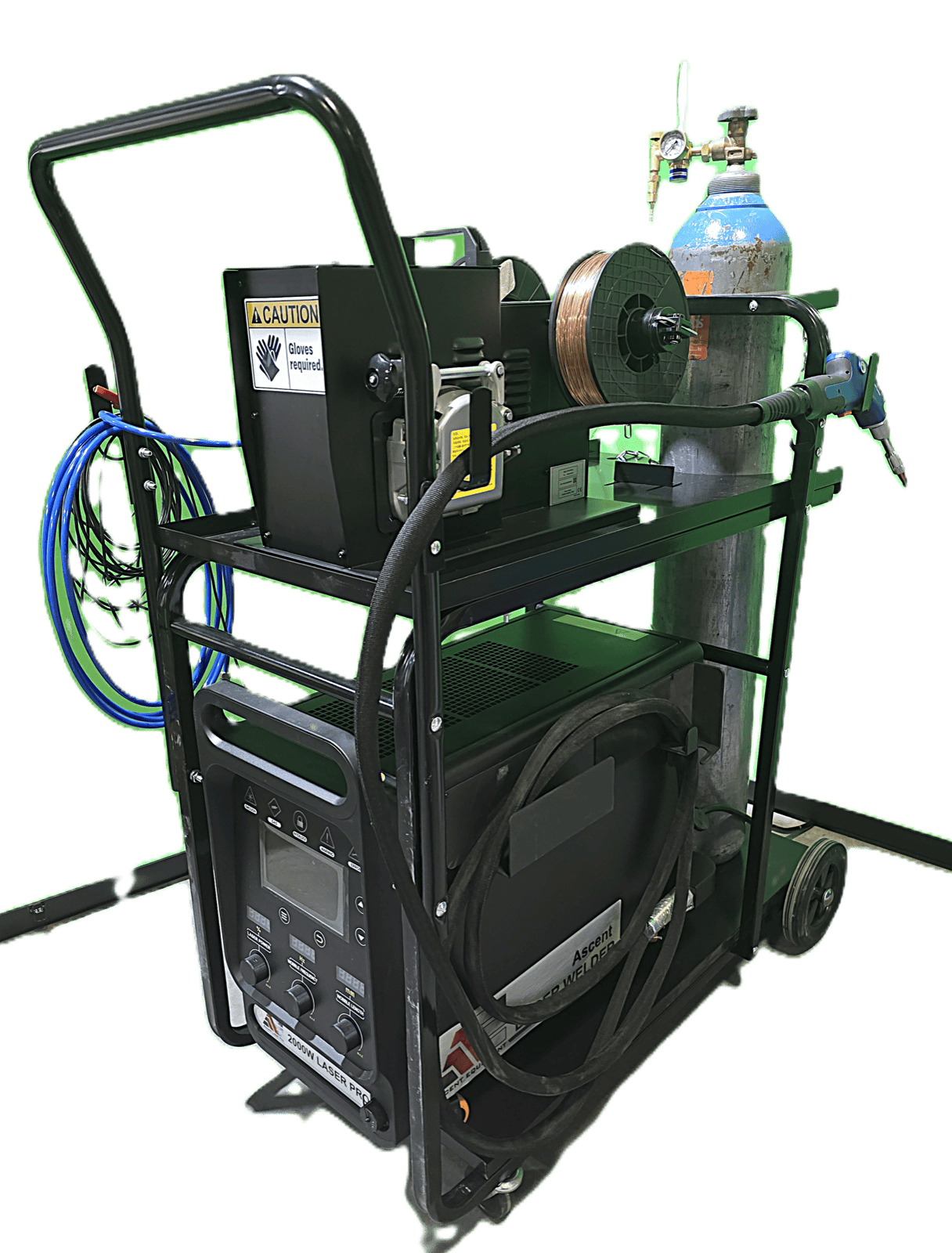
Ascent refrigeration fiber laser welders (1500W, 2000W and 3000W) use a refrigerant-based heat pump cooling system to keep power output stable from −20 °C to +60 °C without the need for a chiller or water circuit.
They also have a 1.32 lb (600g) wobble-head torch and a dual wire feeder that you can alternate between 1 wire or 2 wires for production welding. The company provides extensive on-site installation, operator training, and warranty support; the parent company's engineers are based in Buffalo, Toronto, and KY and provide lifetime remote technical support for the equipment sold.
Another alternative: The QCW tabletop of the machine provides an option that can switch between table-mounted CCD and handheld modes; its unique QCW (quasi-continuous wave) technology design for small to medium channel letters
A new STR Series was introduced for 2026 but isn't on sale yet. More details can be found at the refrigeration fiber laser welders and QCW pages.
Frequently Asked Questions:
Most common questions about this equipment category
Common questions about this equipment
What’s the best handheld laser welder for channel letters?
Do I really need a 3000W welder?
How much does a handheld laser welder typically cost?
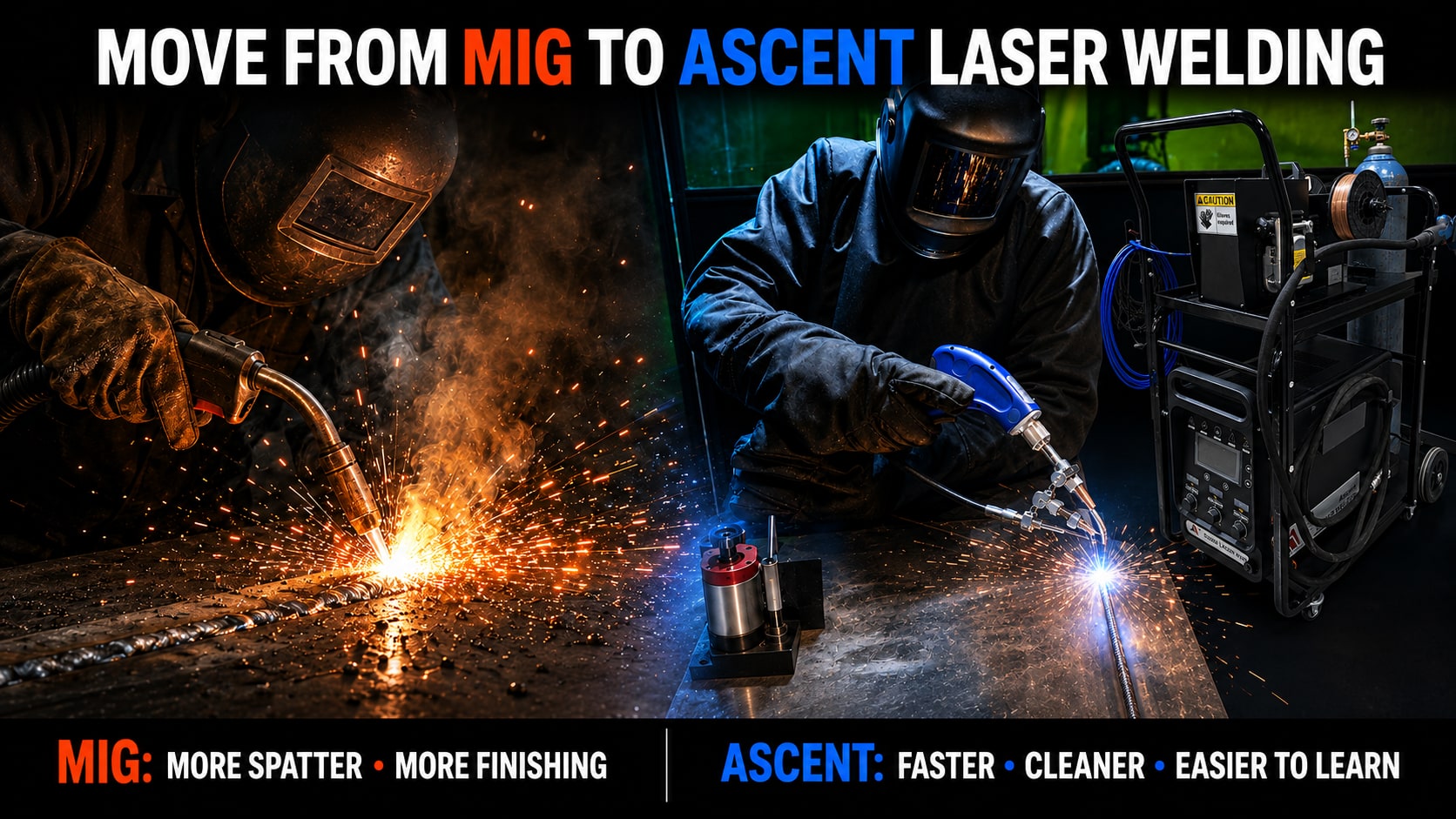
Can a handheld laser welder replace my MIG/TIG welder?
Do you provide installation and training?
Are laser welders actually worth buying for a sign shop?
Request a quote for the laser welder best suited for your materials and volumes
About the author
Dov "Dave" Rom
President & Chief Engineer - Ascent Equipment
Dov Rom (aka Dave) is President & Chief Engineer at Ascent Equipment. Dov has been designing CNC bending machines, channel-letter benders, laser cutters, and welders for the sign-making industry for over 15 years. He has worked with hundreds of sign shops across the United States and Canada to help them automate their production and increase their shop's profitability. Dov frequently writes about equipment selection, automation, and production optimization for the sign and display industries.