
Most sign shops buy plastic trim cap by the box, install it manually, and accept that it will eventually fade, crack, or pull away from the face. There's a better material — aluminum — and the Ascent TMB-3 makes it from flat coil on demand, at a lower cost per foot than the plastic alternative.
Here's how it works, why the material is better, and the detail that makes aluminum trim as easy to glue as plastic.
See it in action
What the Ascent TMB-3 Does
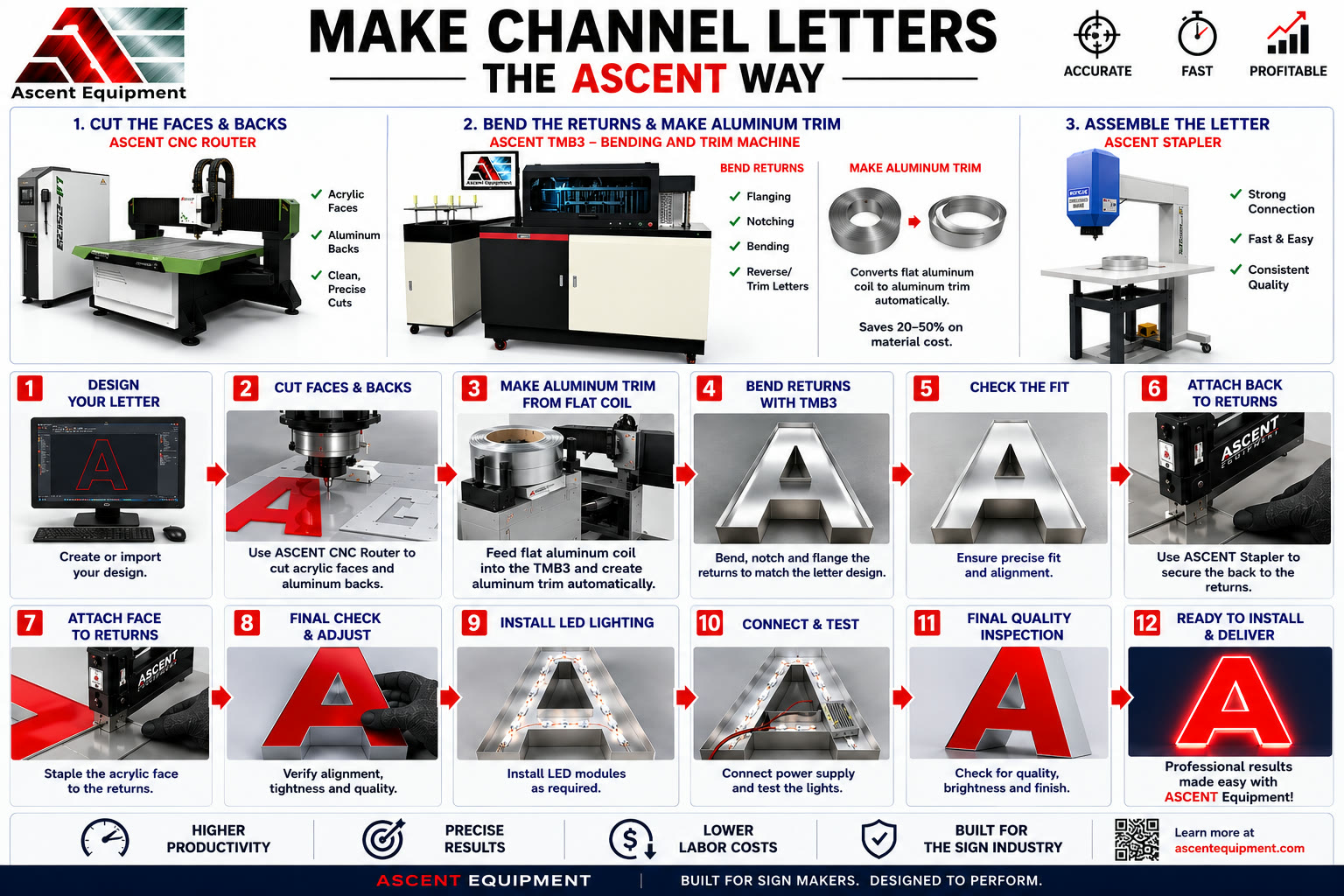
The Ascent TMB-3 is a CNC bending and trim machine that does two things in the same workflow: it bends the aluminum channel letter return, and it profiles flat aluminum coil into finished trim cap — automatically, to the shape of each letter.
You feed flat aluminum coil into the machine. The Ascent TMB-3 forms it into the trim profile, cuts it to length, and notches it at the correct positions — front and back — using its 360° cutter. The result is trim that fits the letter precisely, produced on demand, without pre-ordering lengths or profiling shapes by hand.
Why Aluminum Trim Is Better Than Plastic
Plastic trim cap is the industry default, but it has three problems that aluminum doesn't:
Fading. Painted or pigmented plastic trim fades under UV exposure. White becomes yellow. Red becomes pink. The sign that looked great at installation looks dated within a few years.
Cracking. Plastic trim becomes brittle over time, especially through freeze-thaw cycles. Cracks at corners and along seams are common on older installations.
Distortion. Heat causes plastic to expand and contract. On a south-facing sign in a hot climate, that movement shows up as buckled trim or gaps at joints.
Water intrusion. A poorly fitted plastic trim cap channels water directly into the letter body.
Wind load on large letters. Letters over roughly 48" may need fabricated retainers, since plastic trim cap can fail under wind loading and thermal expansion at that size.
Aluminum doesn't do any of these things. The material is stable, UV-resistant, and dimensionally consistent across temperature ranges. A sign trimmed with Ascent TMB-3 aluminum trim looks the same in year ten as it did at installation.

The PVC Cover — Why It Matters for Gluing
The question shops ask when they first hear about aluminum trim is: how do I attach it? With plastic trim, the standard method is contact cement — the same adhesive used everywhere in the shop. Aluminum is a different substrate and normally requires a different approach.
The Ascent TMB-3 aluminum coil solves this with a PVC coating on the bonding surface of the trim. The PVC layer gives the contact cement the same surface it expects when bonding plastic trim — so you apply the adhesive exactly the same way you always have, with the same products, the same technique, and the same bond strength.
No new adhesives. No new process. No learning curve. The aluminum trim installs the same way plastic trim does — the shop just ends up with a better material on the finished sign.
Cost Comparison: Aluminum vs. Plastic Trim
The material savings are real and consistent:
- Aluminum coil from Ascent costs less per foot than standard plastic trim cap
- Typical savings range from 20 to 50% on material cost, depending on the plastic trim being replaced
- Because the Ascent TMB-3 forms trim to length on demand, there is no waste from ordering the wrong pre-cut lengths
- Trim is produced only for the letters being built that day — no overstock, no obsolete inventory sitting on a shelf
On high-volume production, the material savings accumulate quickly. On a shop producing 100 trimmed letters per week, the difference between aluminum and plastic trim cost adds up to a meaningful number over the course of a year.
Colors and Stock
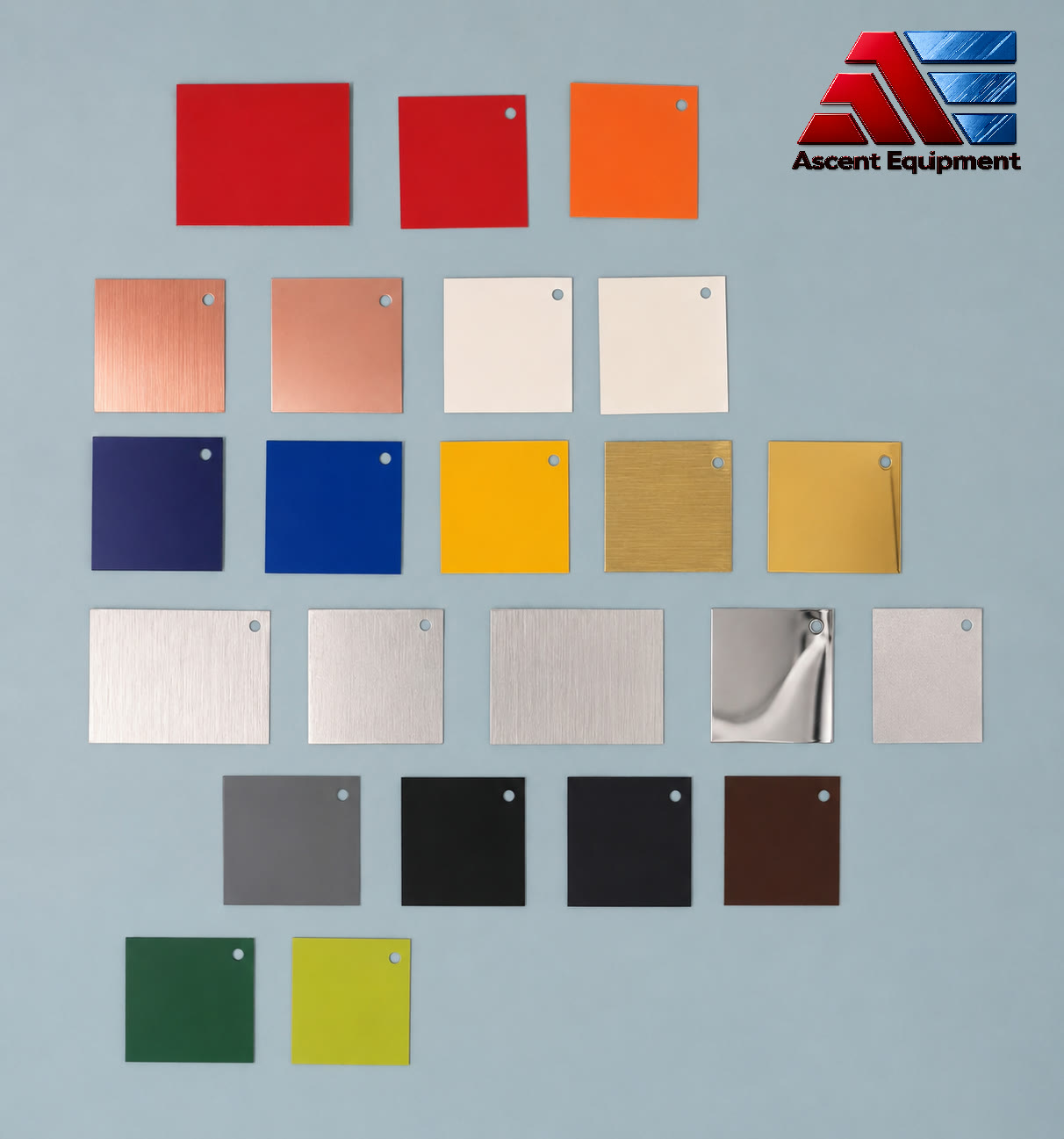
Ascent stocks aluminum coil in white, black, and red for standard production needs. A wide range of additional colors and finishes is available — including brushed aluminum, gold, copper, navy, and more — for national programs or branded color-match requirements.
Custom colors are available for national account programs where consistent brand color across multiple locations is required.
What the Ascent TMB-3 Handles
The Ascent TMB-3 is not a dedicated trim machine — it's a full bending and trim machine. In the same production workflow:
- Bends the channel letter return from 0.040" aluminum coil, including flanging and notching for clean corners
- Produces the aluminum trim from flat coil, profiled to 3/4" or 1" trim cap dimensions
- Handles reverse halo letter returns ready for welding
- Processes standard plastic trims (3/4" and 1" trim cap) if a job calls for it
- 360° cutter positions notches accurately at both the front and back of the trim for clean, tight corner joints
One machine. Two materials. Both at the same production station.
What Changes on the Shop Floor
If your shop is buying plastic trim cap, you're paying more per foot for a material that will fade, crack, and distort — and manually managing lengths and inventory. The Ascent TMB-3 replaces that with aluminum trim formed on demand, at lower cost, using the same contact cement you already stock.
The PVC-coated coil is what makes the transition transparent. The adhesive process doesn't change. The skill requirement doesn't change. What changes is the material quality on the finished sign and the cost per foot on the material line of every job.
Learn more about the Ascent TMB-3 on the product page, or contact us to discuss production volume and pricing.