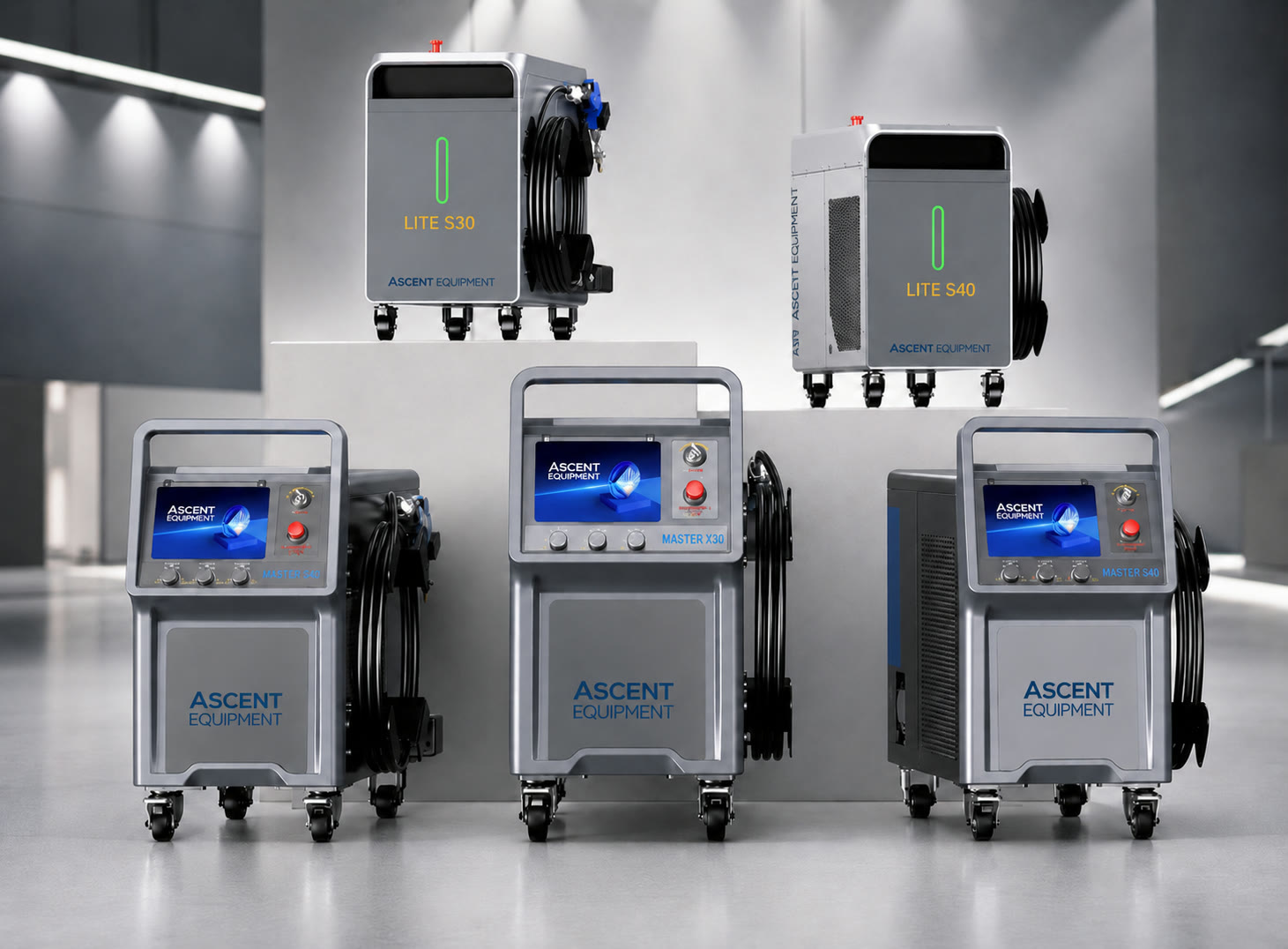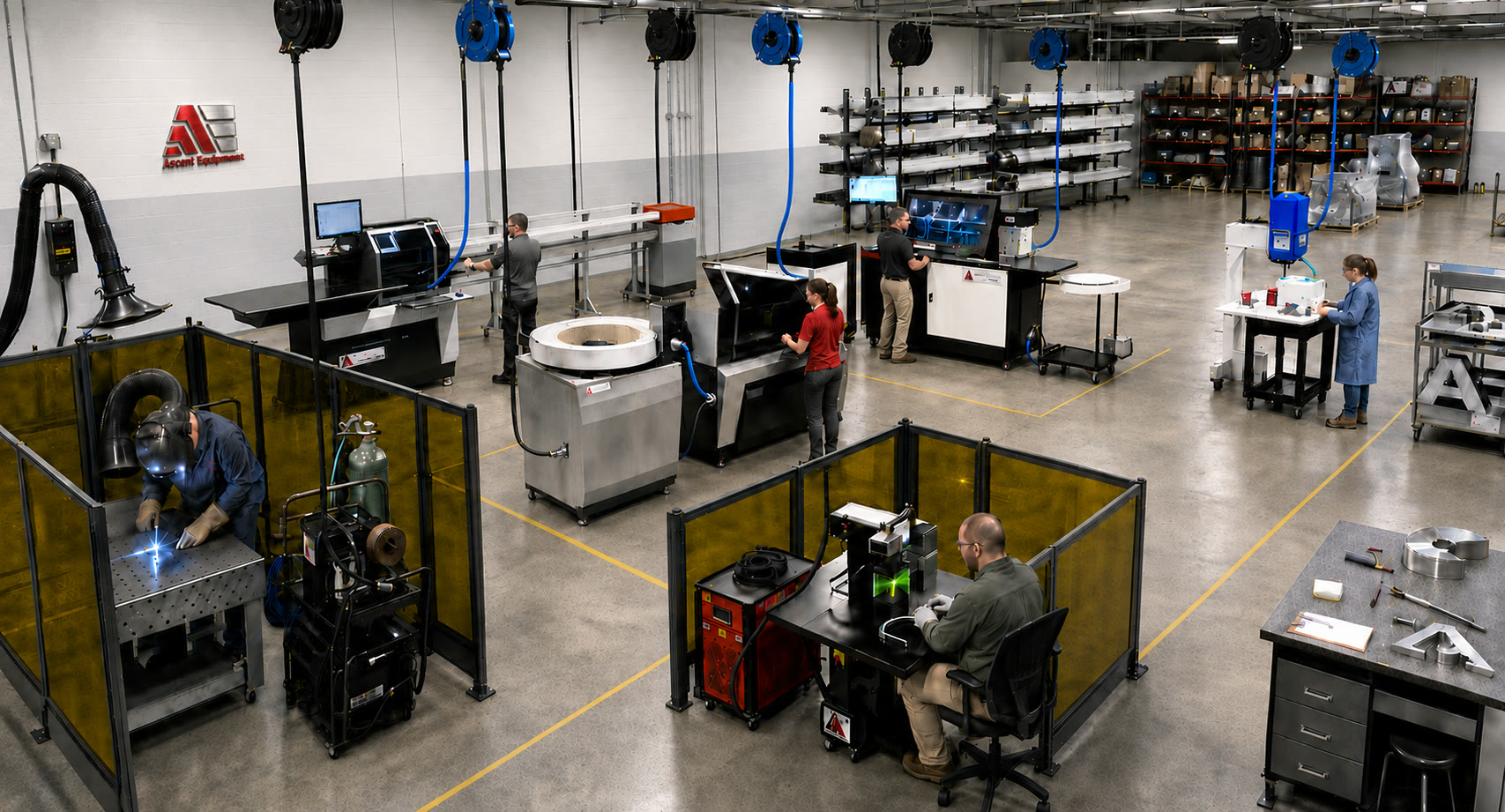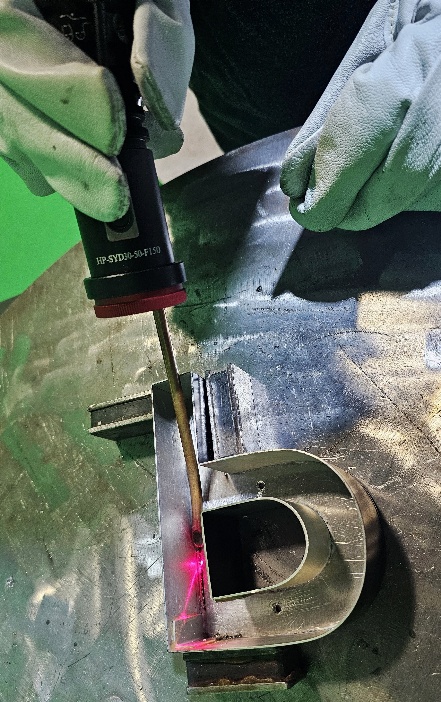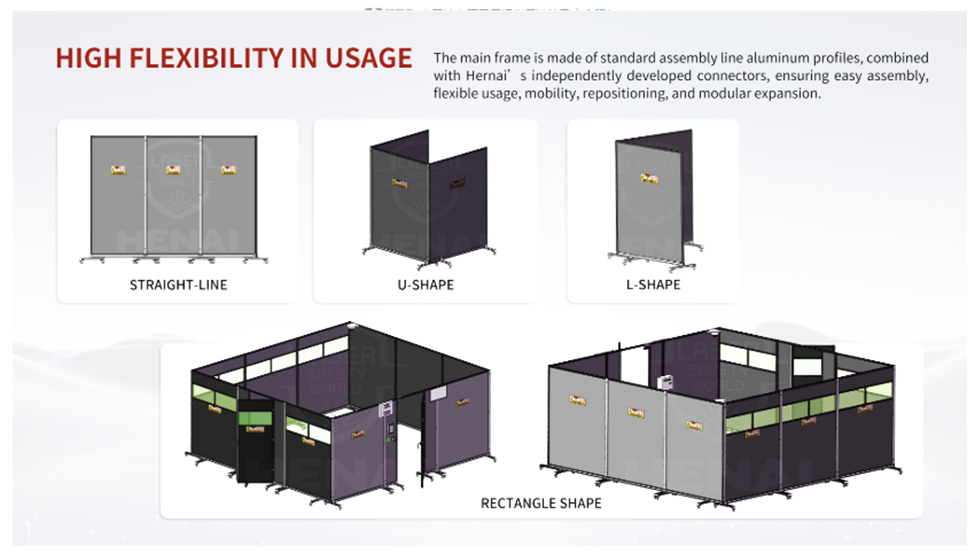

Ascent Equipment lasers are built in accordance with OSHA standards and are manufactured to comply with FDA/CDRH laser-product performance requirements. But compliance doesn't end at the machine — it extends to the facility, the operators, and the procedures that govern how the machine is used every day.
For industrial laser cutters in the United States, there is no single "laser safety law." Compliance comes from a combination of OSHA, FDA/CDRH, and ANSI standards. This guide explains what each body requires and what your shop needs to have in place.
The Regulatory Framework
| Organization | Requirement | Applies To |
|---|---|---|
| OSHA | Workplace safety and employee protection | Employers and operators |
| FDA / CDRH | Laser product performance requirements (21 CFR Parts 1000 & 1040) | Laser manufacturers and importers |
| ANSI Z136.1 | Safe Use of Lasers — laser safety program | Any facility operating lasers |
| ANSI Z136.9 | Safe Use of Lasers in Manufacturing | Manufacturing facilities |
| ANSI B11.21 | Safety requirements for laser processing machines | Machine builders and users |
OSHA recognizes ANSI Z136 standards as the accepted guidance for laser safety in the workplace. Meeting ANSI Z136 requirements is the clearest path to OSHA compliance for laser operations.
OSHA Requirements
OSHA expects employers to:
- Protect workers from laser exposure
- Provide appropriate personal protective equipment (PPE)
- Train employees on hazards and safe operation
- Maintain written safe operating procedures
- Use engineering controls whenever possible — before relying on PPE
Relevant OSHA regulations include 29 CFR 1910.132 (Personal Protective Equipment), 29 CFR 1910.133 (Eye and Face Protection), and the General Duty Clause, which requires employers to provide a workplace free from recognized hazards.
FDA / CDRH Requirements
Industrial laser cutters sold in the U.S. must comply with the Federal Laser Product Performance Standard under 21 CFR Parts 1000 and 1040. Typical Class 4 laser cutters are required to include:
- Protective enclosure
- Key switch
- Emergency Stop
- Safety interlocks
- Beam indicator
- Warning labels
- Remote interlock connection
- User manual
- Certification label
Ascent Equipment laser cutters ship with all required safety features and documentation to meet these requirements. Product reports for Ascent laser equipment were submitted to the FDA and received a unique Accession Number.
Laser Safety Officer (LSO)
For Class 4 laser operations, ANSI recommends appointing a Laser Safety Officer — a designated person responsible for:
- Hazard evaluation
- Operator training and authorization
- PPE selection
- Safety audits
- Incident investigations
- Written procedures
This is considered best practice for any manufacturing facility running industrial laser equipment. The LSO does not need to be a full-time role, but the responsibilities must be assigned to a qualified individual. Ascent Equipment strongly recommends that the LSO receive professional training from an accredited facility.
Engineering Controls
A compliant industrial laser cutter should include the following built-in safety features:
- Fully enclosed beam path
- Door safety interlocks
- Emergency stop buttons
- Key-operated power switch
- Beam shutter
- Status indicator lights
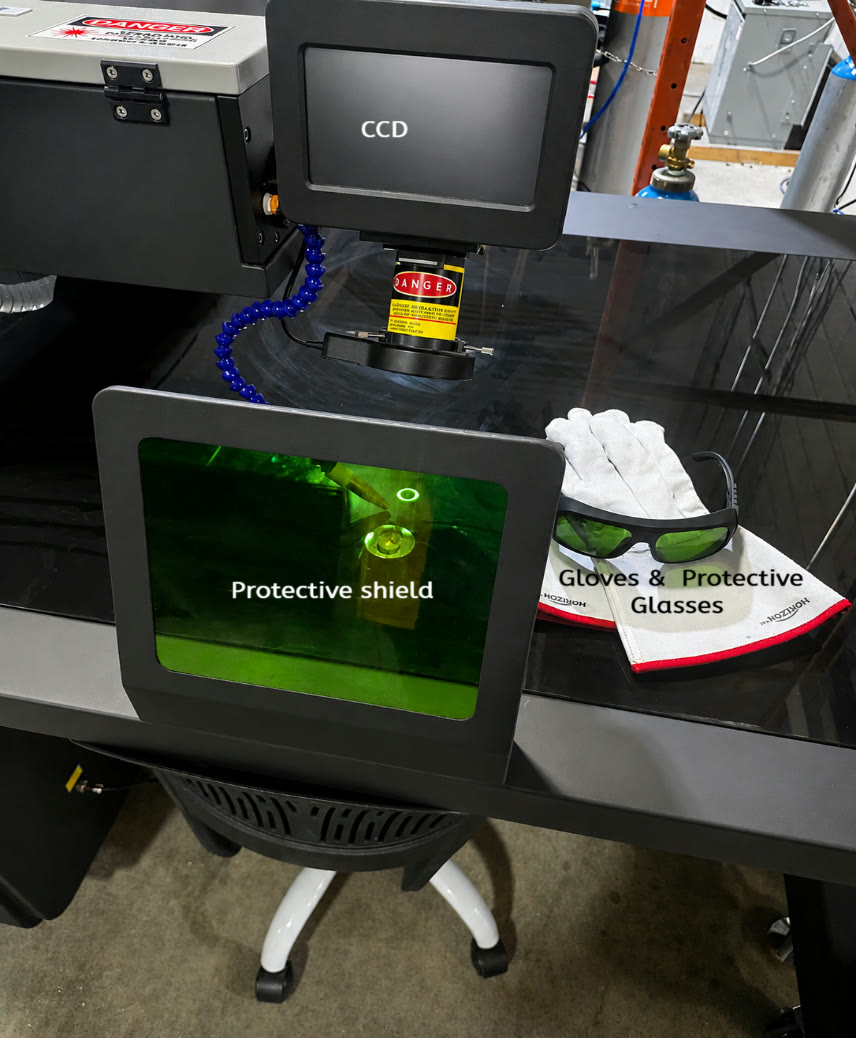
- Protective viewing windows rated for the laser wavelength
- Smoke and fume extraction
- Fire-resistant enclosure
- Electrical lockout/tagout capability
Engineering controls are the first line of defense — they protect operators passively, without relying on individual behavior.
Administrative Controls
Engineering controls must be backed by workplace procedures. Employers should implement:
- Written Standard Operating Procedures (SOPs)
- Operator authorization system
- Initial and annual safety training
- Maintenance procedures
- Visitor controls when the machine is running
- Preventive maintenance schedule
- Incident reporting process
Personal Protective Equipment (PPE)
PPE requirements vary by task. At minimum, operators should have:
Required:
- Laser safety eyewear matched to the laser wavelength and optical density
- Safety glasses for mechanical hazards
- Heat-resistant gloves when handling hot parts
- Safety shoes
Laser eyewear selection is critical. Eyewear must be specified for the exact wavelength in use — approximately 10.6 µm for CO₂ lasers or 1064–1080 nm for fiber lasers — and must have an adequate optical density (OD) rating for the machine's power level. Generic safety glasses do not provide laser protection.
Fire Safety
Laser cutting involves high-intensity heat and combustible materials. Every facility should have:
- Class ABC fire extinguisher nearby (CO₂ type recommended)
- Automatic fire suppression (strongly recommended for unattended operation)
- No combustible material storage near the machine
- Clean cutting bed — debris accumulation is a fire risk
- Routine inspection of gas lines and fittings
- Emergency shutdown procedure posted at the machine
Ventilation
Cutting generates hazardous fumes and particulates that must be captured at the source. A compliant ventilation system includes:
- Local exhaust ventilation (LEV) — not general room ventilation
- Appropriate filtration: HEPA for particulates and activated carbon for chemical fumes, depending on materials being cut
- Regular filter replacement schedule
- Exhaust discharge compliant with local environmental regulations
Never rely on opening a door or window to handle laser cutting fumes. Materials like coated aluminum, painted metals, and plastics can release compounds that require proper filtration to capture.
Required Safety Signage
Facilities running Class 4 lasers typically require the following signs posted at the machine and entry points:
- DANGER — Class 4 Laser Radiation
- Authorized Personnel Only
- Laser Eye Protection Required (where applicable)
- Emergency Stop Location
- Fire Hazard
- Hot Surface
Daily Operator Checklist
Before starting any cutting session, operators should verify:
- Emergency stop tested and functional
- Safety interlocks functioning
- Viewing window undamaged and clean
- Exhaust system operating
- Air assist functioning
- Cooling system operating and at correct temperature
- Lens clean and undamaged
- Work area clear of combustibles
- Correct material loaded and confirmed safe to cut
- Fire extinguisher accessible and charged
Running this check takes under two minutes and prevents the majority of operational incidents.
Materials That Should Never Be Cut
The following materials produce toxic, corrosive, or otherwise hazardous fumes when laser cut and must not be processed:
- PVC (polyvinyl chloride) — releases chlorine gas
- Vinyl — same chlorine hazard as PVC
- PTFE (Teflon) — releases highly toxic perfluorocarbon gases
- Unknown plastics — composition cannot be verified
- Chlorinated materials of any kind
- Certain composites — unless material safety data has been verified
- ACM (aluminum composite material) — core composition varies; verify before cutting
When in doubt about a material, request the safety data sheet (SDS) and confirm with your LSO before cutting.
Ascent Equipment Documentation Package
Every Ascent Equipment industrial laser cutter comes with a professional documentation package that includes:
- Laser Safety Manual
- Operator Safety Manual
- Standard Operating Procedure (SOP)
- Daily Inspection Checklist
- Preventive Maintenance Checklist
- Emergency Response Procedure
- Lockout/Tagout Procedure
- Training Record Forms
- Safety Audit Checklist
These documents are designed to help your facility achieve and maintain compliance from day one.
The information provided is for educational purposes. It is the customer's responsibility to verify requirements with local authorities and regulatory bodies. Ascent Equipment highly recommends that the Laser Safety Officer receive professional training from an accredited facility.
Questions about laser safety compliance or Ascent laser systems? Contact us or visit our laser cutter product pages for full specifications.