
In most cases, channel letter production is limited by two things: design complexity and the capabilities of the equipment being used.
Why are we qualified to answer? Since 2013, we have designed CNC bending machines and laser systems specifically for the sign industry. That experience has given us a clear picture of where production bottlenecks occur and how to solve them.
The Three Main Channel Letter Types
Channel letters generally fall into three main categories:
- Legacy trim cap — the traditional and most widely used style.
- Reverse halo — letters that project light from the back for a halo effect.
- Trimless — a newer style with a cleaner, more modern appearance.
Basic Construction of Each Type
Legacy Trim Cap: Typically uses aluminum returns with flanges, acrylic or polycarbonate faces, and a plastic trim cap to finish the edge.
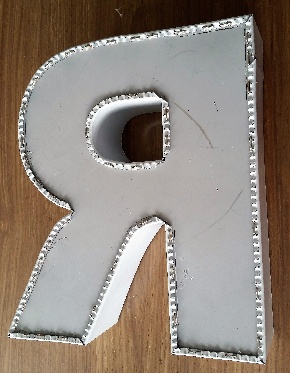
Reverse halo: Typically uses aluminum returns, an aluminum face welded to the return, and a polycarbonate back.
Trimless: Typically uses aluminum returns, a step-faced acrylic front, and an ACM or aluminum back.
Core Equipment Needed for In-House Production
To produce channel letters in-house, most shops will need:
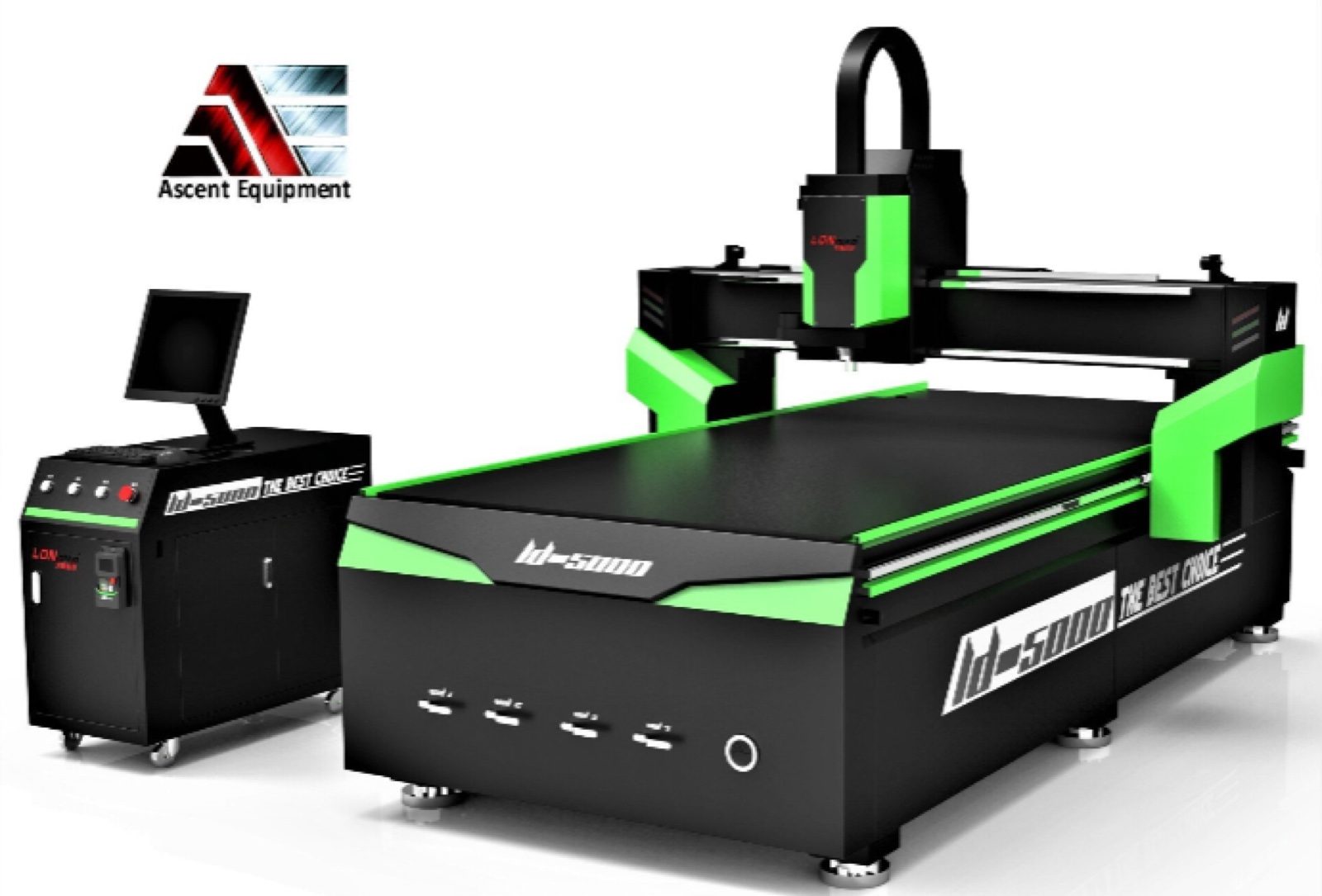
- CNC router
- CNC bending machine
- Paint booth
Recommended additional equipment:
- Laser welder
- CNC laser cutter (CO₂ and Fiber)
- Pneumatic stapler
How Bending Machines Create Limitations
Most bending machines can produce some version of the three main channel letter types. The real difference is in quality, speed, and the range of letters each machine can handle.
Machines for Legacy Trim Cap Letters
Notching-and-flanging machines are commonly used with 3-inch and 5-inch aluminum and are still widely found in shops today.
Common limitations:
- Limited minimum radius for serifs and fine detail
- Limited ability to create very sharp bends
- Restrictions on maximum return depth and material thickness
- Minimum stroke-size and letter-height requirements
- Often requires higher-quality aluminum coil for consistent results
Machines for Reverse halo Letters
Many older-style machines can produce returns without a flange, making them suitable for reverse halo applications.
Common limitations:
- Limited minimum radius for serifs and fine detail
- Limited ability to create very sharp bends
- Restrictions on maximum return depth, material thickness, stroke size, and letter height
- Typically requires welding the aluminum face to the return (minimum 0.063" aluminum thickness needed)
Machines for Trimless Letters
Older-style machines can often produce trimless returns without a flange, but the result also depends heavily on the material being used.
In this style, the acrylic face is typically bonded directly to the return. There are two common approaches:
- Use a standard aluminum coil and bond the return edge to the acrylic face.
- Use a proprietary material and bond it to the stepped edge of the acrylic.
Both methods require a stepped acrylic face.
Common limitations:
- Limited minimum radius for serifs and fine detail
- Limited ability to create very sharp bends
- Restrictions on return depth, material thickness, stroke size, and letter height
- May not be suitable for large letters, because the face is held strictly by the glue
The Ascent Difference
At Ascent, our approach is different. We design equipment to expand production capability, reduce labor dependence, and make advanced channel letter styles accessible to more shops. Our goal is to provide advanced equipment designed to reduce the training time required for new operators, while still producing high-quality results.
Ascent 5AS
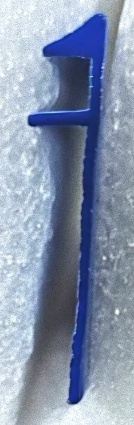
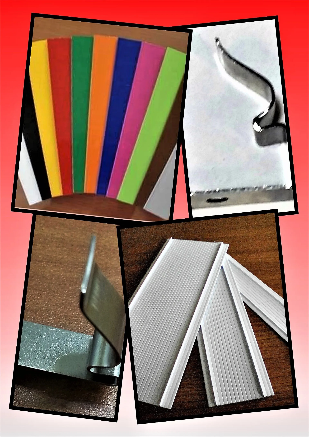
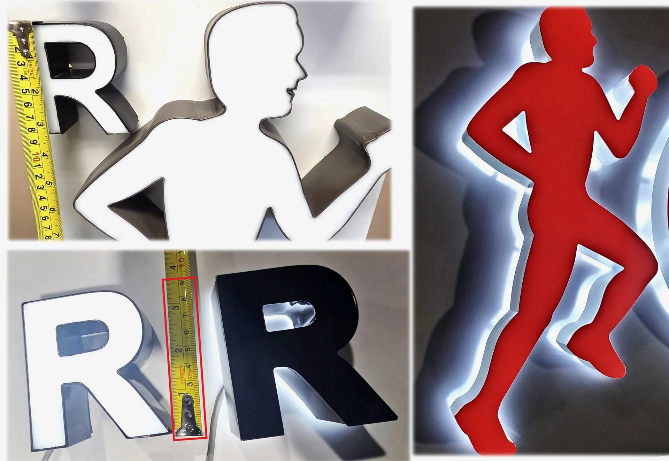
A software-driven bending machine designed for trimless letters, reverse halo letters, F-Trim, and legacy trim cap styles. By using specially designed UL/RU Recognized Component aluminum extrusions, this system helps overcome many of the limitations found in conventional machines.
- Produces trimless letters as small as 3 inches high, with depths starting at 1.37 inches and stroke widths starting at ⅛ inch.
- When paired with the Ascent nail gun, reduces dependence on glue alone for structural integrity.
- Designed for easier assembly, reducing the training time needed for new operators.
- Produces reverse halo letters without welding and can produce illuminated plastic side returns.
- Stainless steel clips supplied for easy back installation.
Learn more about the Ascent 5AS →
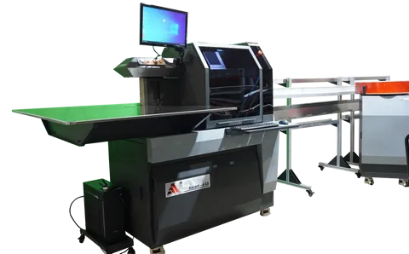

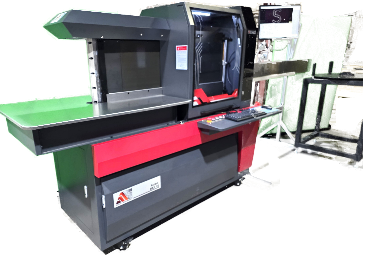
Ascent TMB-3
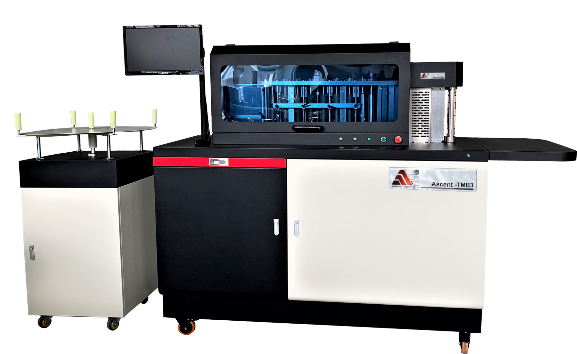
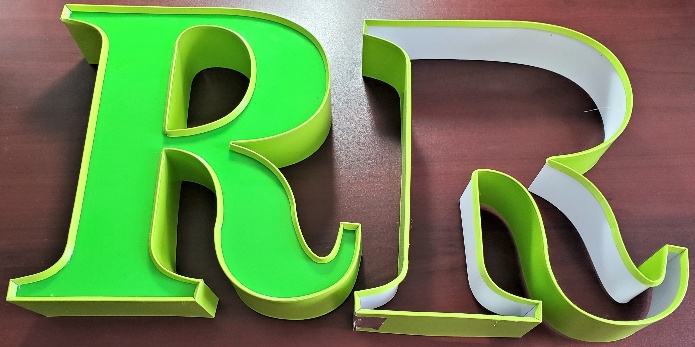
An industry-first machine that converts flat aluminum coil into durable, fade-resistant aluminum trim cap channel letters. Additional features include:
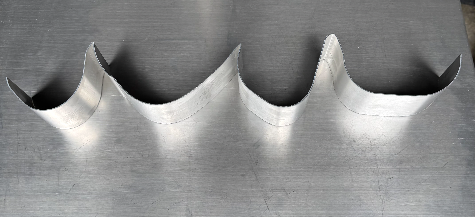
- Creates flanges on channel letter side returns from 0.040-inch aluminum coil.
- Produces reverse halo side returns from 0.040-inch aluminum coil, ready for welding.
- Processes all ¾-inch and 1-inch plastic trim caps.
Learn more about the Ascent TMB-3 →
Ascent EDGE-3
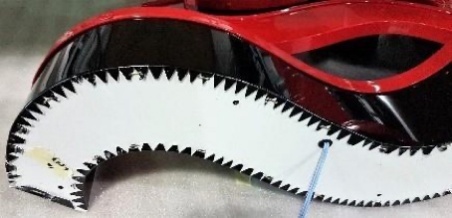
A cost-effective North American solution for traditional trim caps, flanging, and reverse halo letters. It can also process 0.080-inch aluminum for light-box applications.
Learn more about the Ascent EDGE-3 →
Ascent MAX-V2
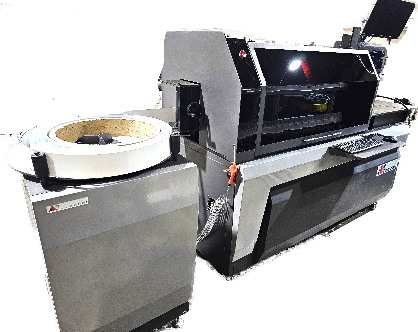
The industry's largest bending machine, built to handle heavy aluminum up to 0.080 inch at 15-inch depths. Designed for extra-large channel letters and light boxes.
Learn more about the Ascent MAX-V2 →
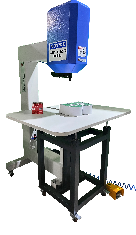
Pneumatic Channel Letter Stapler
Fastens side returns to ACM, aluminum, or polycarbonate backs using standard staples — safer and less expensive to operate than alternatives.
Learn more about the Pneumatic Stapler →
Additional Ascent Laser Systems for the Sign Industry
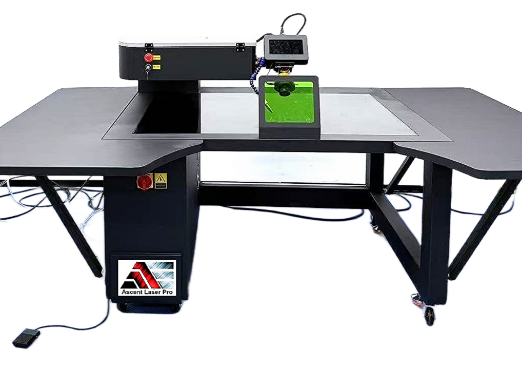
Ascent QCW Fiber Laser Welder
An industry-first tabletop and handheld hybrid designed for fast changeover and precision welding of small to medium channel letters — the only system in the industry that can weld aluminum in this format.
Handheld 2000W Fiber Laser Welder
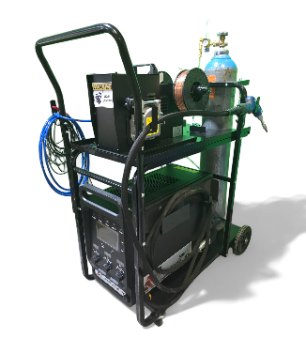
A practical alternative to traditional TIG and MIG welding using refrigerant-cooled technology for continuous operation without scheduled cooling breaks.
Dual Gantry CO₂ and Fiber Laser Cutter
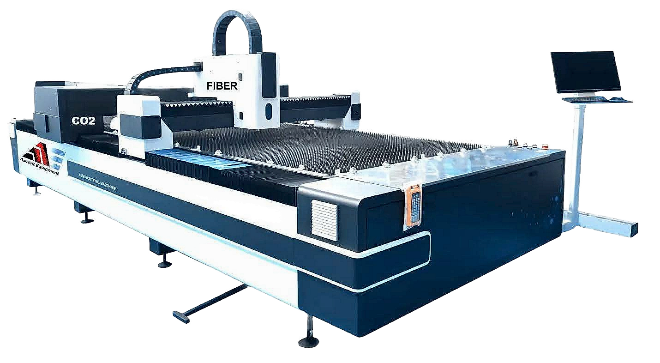
A dual-gantry system that can process two different materials simultaneously. Includes a 500W CO₂ laser for acrylic up to 1 inch thick and a 3,000W or 6,000W fiber laser for metals. The new step-and-groove feature allows precision acrylic profiling in the same pass.
For more information and to request a demonstration:
ascentequipment.com · Watch on YouTube
Buffalo, NY · Toronto, ON · Kentucky
Direct line: 416-953-8104 Toll-free: 1-800-927-5107 Extension 1008 Tel: 647-494-7800 Extension 1008 Email: dov@ascentge.com · drom@rogers.com