
Call us: 1-800-927-5107 647-494-7800 ext. 1008

Deciding Between a CNC Router and a CNC Laser Cutter

By Dave Rom, President and Chief Engineer, Ascent Equipment

When deciding between a CNC router and a CNC laser cutter, you are looking at two entirely different approaches to cutting and fabrication. Each machine excels in specific materials and applications — and for sign shops, understanding that difference can save significant time, money, and floor space.

When comparing a CNC Router, Fiber Laser Cutter, and CO₂ Laser Cutter, the most significant factor is the primary material you intend to cut.

Material Compatibility

Material CNC Router CO₂ Laser Fiber Laser
Acrylic ✅ Excellent ✅ Excellent (polished edges)
PVC ✅ Excellent ⚠ Not recommended
ACM ✅ Excellent
Wood ✅ Excellent ✅ Excellent
MDF ✅ Excellent ✅ Excellent
Polycarbonate ✅ Excellent
Aluminum Sheet ✅ Routing ✅ Excellent
Stainless Steel ✅ Excellent
Brass / Copper ⚠ Machining only ✅ Excellent
3D Carving ✅ Excellent
Engraving

CNC Router

Routers are designed for acrylic, PVC, ACM, aluminum, polycarbonate, HDPE, wood, and sign-making materials. They are the most versatile machine in the sign shop.

Best For:

  • ACM sign panels
  • PVC and HDPE
  • 3D dimensional signage
  • Woodworking

Advantages:

  • Most versatile machine overall
  • Capable of pocketing and 3D carving
  • Lower operating costs

Limitations:

  • Requires tooling
  • Slower on sheet metal with limitations on thickness
  • More cleanup and dust extraction required

CO₂ Laser Cutter

CO₂ laser systems are primarily designed for acrylic and non-metal materials, providing polished edges. They are also highly effective for wood engraving and fine decorative work.

Best For:

  • Acrylic letters and signs
  • Wood engraving
  • Decorative panels
  • Fine engraving work

Advantages:

  • Flame-polished acrylic edges
  • Very detailed engraving
  • No cutting tools required
  • Fast cutting for thin non-metal materials

Limitations:

  • Not ideal for ACM
  • Cannot cut PVC
  • Cannot cut polycarbonate

Fiber Laser Cutter

Fiber lasers are specifically designed for metal fabrication and are available in power ranges from 3,000W to 12,000W. They can cut carbon steel, stainless steel, aluminum, brass, copper, and galvanized steel.

Best For:

  • Aluminum and stainless steel letters
  • Architectural signage
  • Brackets and fabrication
  • Metal cabinets and frames

Advantages:

  • Fastest metal cutting available
  • Exceptional edge quality
  • Minimal finishing required
  • Highly productive for sheet metal

Limitations:

  • Higher initial investment
  • Specialized for metal processing only

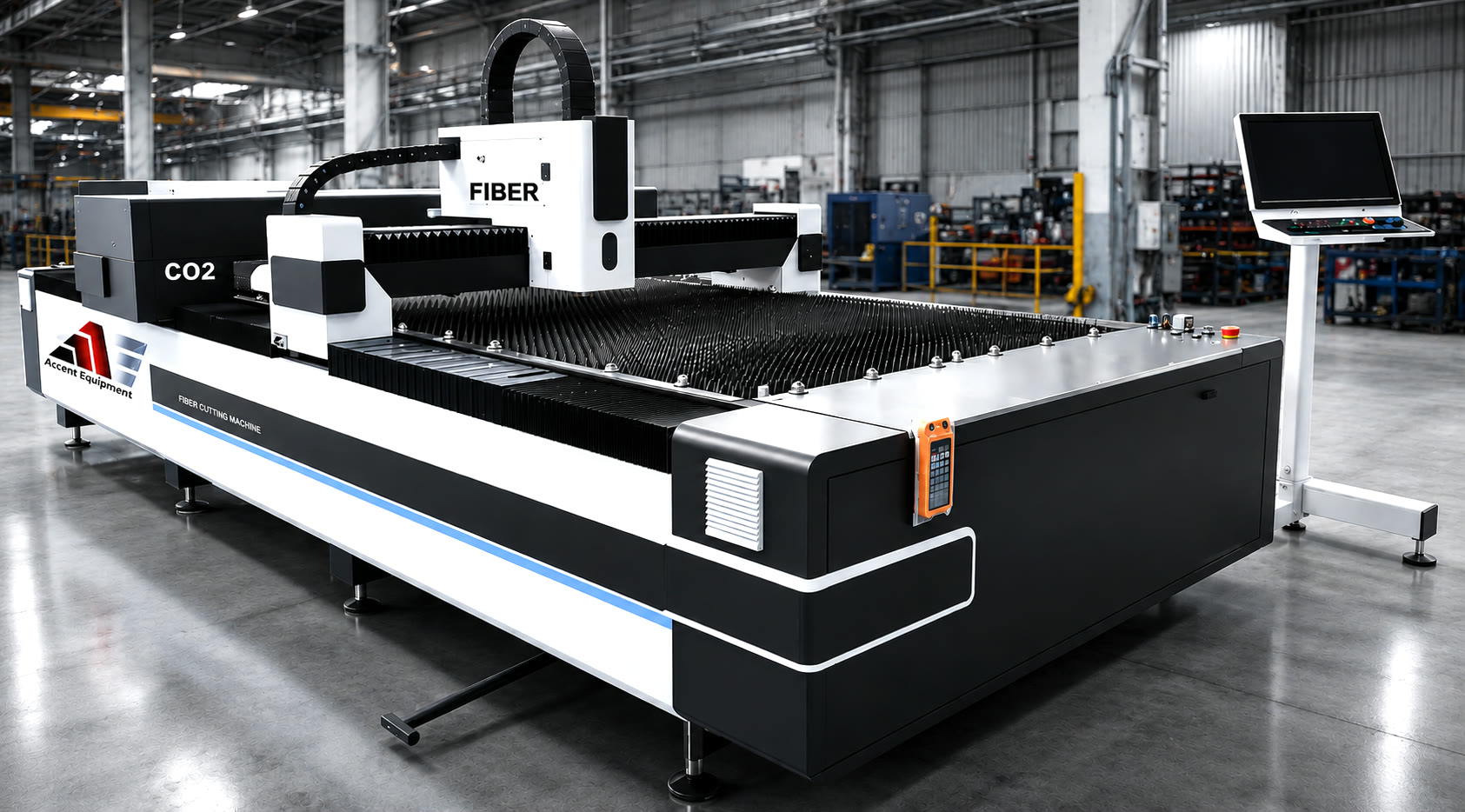
Ascent Dual Gantry CO₂ and Fiber (5'×10' or 6'×12')

For shops that need both capabilities without doubling their footprint, Ascent offers the Dual Gantry CO₂ and Fiber Laser Cutter:

  • The CO₂ gantry accommodates a laser of up to 500W for cutting acrylic up to 1" thick.
  • The fiber laser gantry supports a 3,000W or 6,000W laser for cutting metals.
  • Both gantries allow for simultaneous cutting of metal and non-metal materials.

Best For:

  • Shops cutting both acrylic and metal daily
  • Sign manufacturers with limited floor space
  • Mixed-material fabrication

Advantages:

  • One machine handles both workflows
  • Cuts acrylic, wood, steel, aluminum, brass, and more
  • Smaller footprint than two separate machines

What I Would Recommend

For start-up or small companies — start with the CNC Router:

  • Most versatile option
  • Handles ACM, acrylic, PVC, HDPE, aluminum (with limitations), and wood
  • Essential for general sign manufacturing

For a growing, full-service sign manufacturer:

  • Add the Dual Gantry CO₂ and Fiber (5'×10' or 6'×12')
  • One machine expands your capability to cover all materials

Conclusion

For companies producing channel letters, cabinet signs, and architectural signage, the combination of the CNC Router and the Dual Gantry CO₂ and Fiber Laser Cutter covers virtually every material and workflow you will encounter. Start with the router for versatility, then add the dual gantry as your volume and material mix grows.
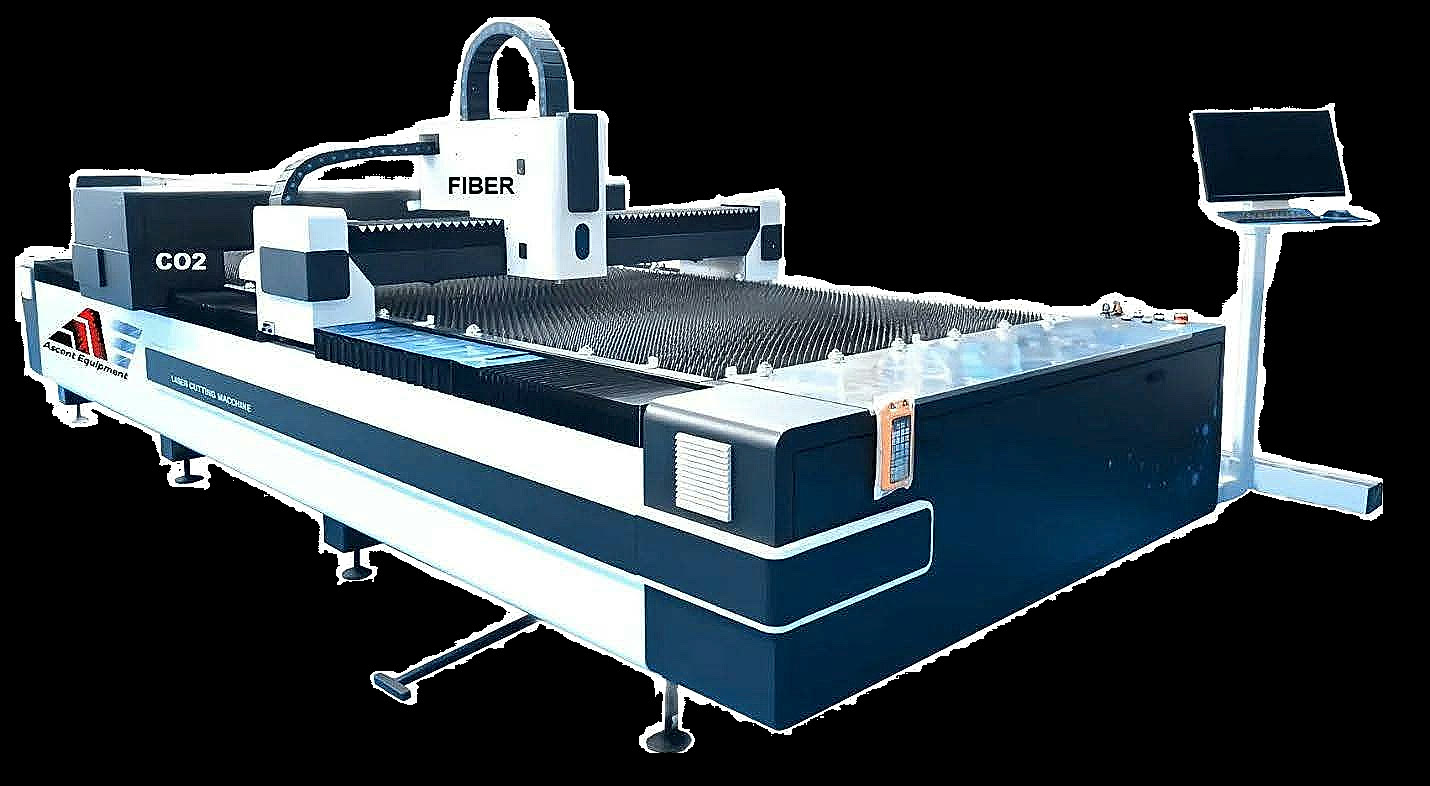
Ascent Equipment Dual Gantry CO2 and Fiber Laser Cutter — open table design showing both CO2 and Fiber gantries

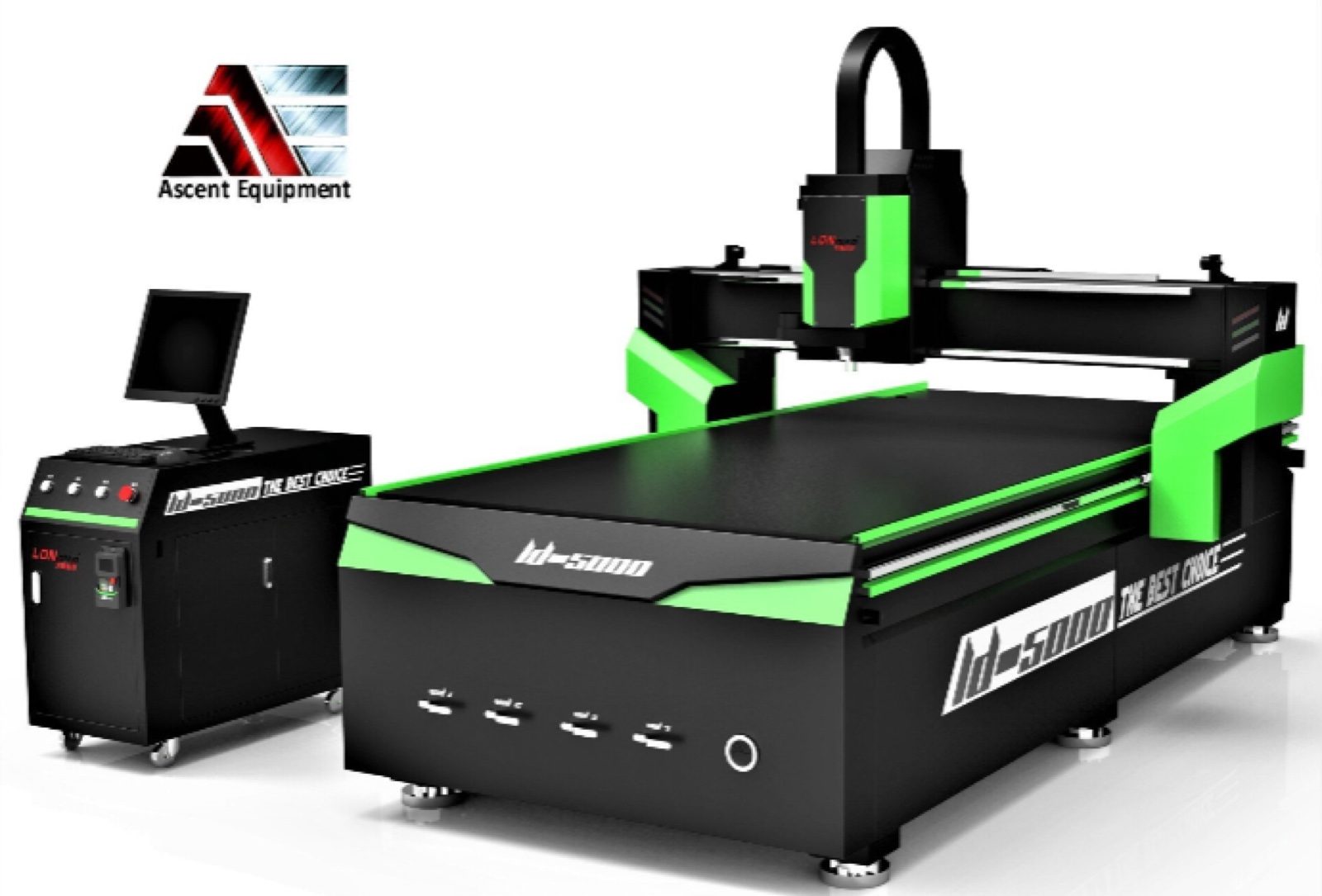
Ascent Equipment CNC Router ld-5000 with control cabinet


For more information:

ascentequipment.com · Watch on YouTube

Buffalo, NY · Toronto, ON · Kentucky

Direct line: 416-953-8104 Toll-free: 1-800-927-5107 Extension 1008 Tel: 647-494-7800 Extension 1008 Email: dov@ascentge.com · drom@rogers.com
← All articles
More from Ascent

Related articles

Laser Cutter Consumables: What to Stock for Your CO₂ and Fiber System
A practical guide to consumables, replacement schedules, and spare parts for shops running a dual-gantry CO₂ and fiber laser cutter — so downtime never catches you off guard.
Laser Safety for Industrial Laser Cutters: What U.S. Operators Need to Know
A practical guide to OSHA, FDA, and ANSI laser safety requirements for shops running industrial CO₂ and fiber laser cutting systems — covering engineering controls, PPE, ventilation, and daily checklists.
Safety Considerations for the Ascent QCW Laser Welder
A complete safety guide for the Ascent QCW fiber laser welder — covering Class 4 laser requirements, eye protection, PPE, controlled areas, fume extraction, and daily inspection procedures.
How to Price Channel Letters in 2026 When Using Ascent Equipment
A practical pricing guide for channel letter fabricators — the inch rule, cost-plus method, how each Ascent machine (5AS, EDGE-3, TMB3, laser welder, laser cutter) changes your cost structure, and worked examples comparing five shop configurations.
Ascent 2000W Refrigeration Laser Welder vs. the Competition
A feature-by-feature comparison of the Ascent Equipment 2000W Refrigeration Handheld Fiber Laser Welder against leading competitors — cooling technology, duty cycle, operating costs, and what matters most for production shops.
From Hand-Bending to Machine-Bending: What It Means for Your Shop
Hand-bending channel letters takes 30–45 minutes per letter. A bending machine does the same job in 3–4 minutes. Here's what that shift actually looks like inside a sign shop — production, labor, quality, and the transition itself.
How to Select a Laser Cleaner: The Complete Buyer's Guide
Pulsed or continuous wave? 100W or 3000W? This guide covers every major decision when buying a fiber laser cleaning machine — power, laser type, cooling, applications, and what to ask your supplier.
One Supplier for Your Bender, Your Welder, and Your Laser Cutter
Most sign shops piece together their channel letter equipment from multiple vendors. Ascent Equipment is the only supplier in North America that covers the complete workflow — bending machine, laser welder, and laser cutter — with on-site installation and training on all three.
Laser Welder Safety: What Every Sign Shop Needs to Know
A practical safety guide for sign shops using fiber laser welders — eye protection, fume extraction, fire safety, and how to know exactly what your setup requires.
QCW Tabletop vs. Handheld Fiber Laser Welder: Which Is Right for Your Sign Shop?
A direct comparison of the Ascent QCW tabletop laser welder and the 2000W handheld fiber laser welder — applications, heat input, speed, and which sign shops should buy which.
CO₂ vs. Fiber Laser Cutters for the Sign Industry: Which Technology Is Right for Your Shop?
A direct comparison of CO₂ and fiber laser cutting technologies for sign companies — materials, edge quality, speed, operating costs, and when to run both.
Channel Letter Materials Guide: Aluminum Gauges, Extrusions, and Profiles
A complete reference guide to channel letter materials — aluminum coil gauges, extrusion profiles, face materials, back panels, and hardware — and how each choice affects the finished letter.

Let Ascent Experts Assemble All the Pieces of The Equipment Puzzle for your Company

Contact us