
Call us: 1-800-927-5107 647-494-7800 ext. 1008

Ascent TMB3: The Machine That Revolutionized the Aluminum Trim Cap

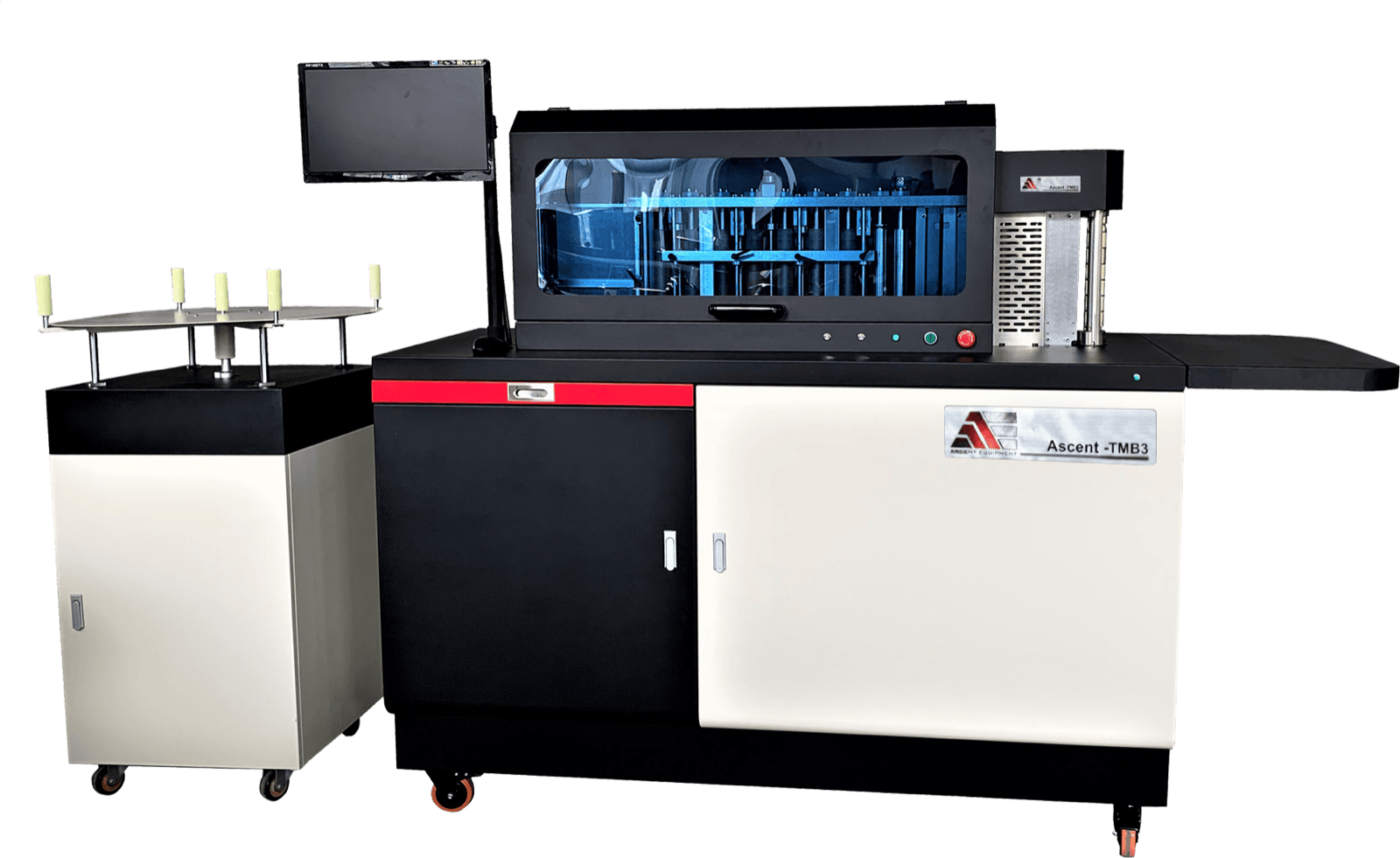
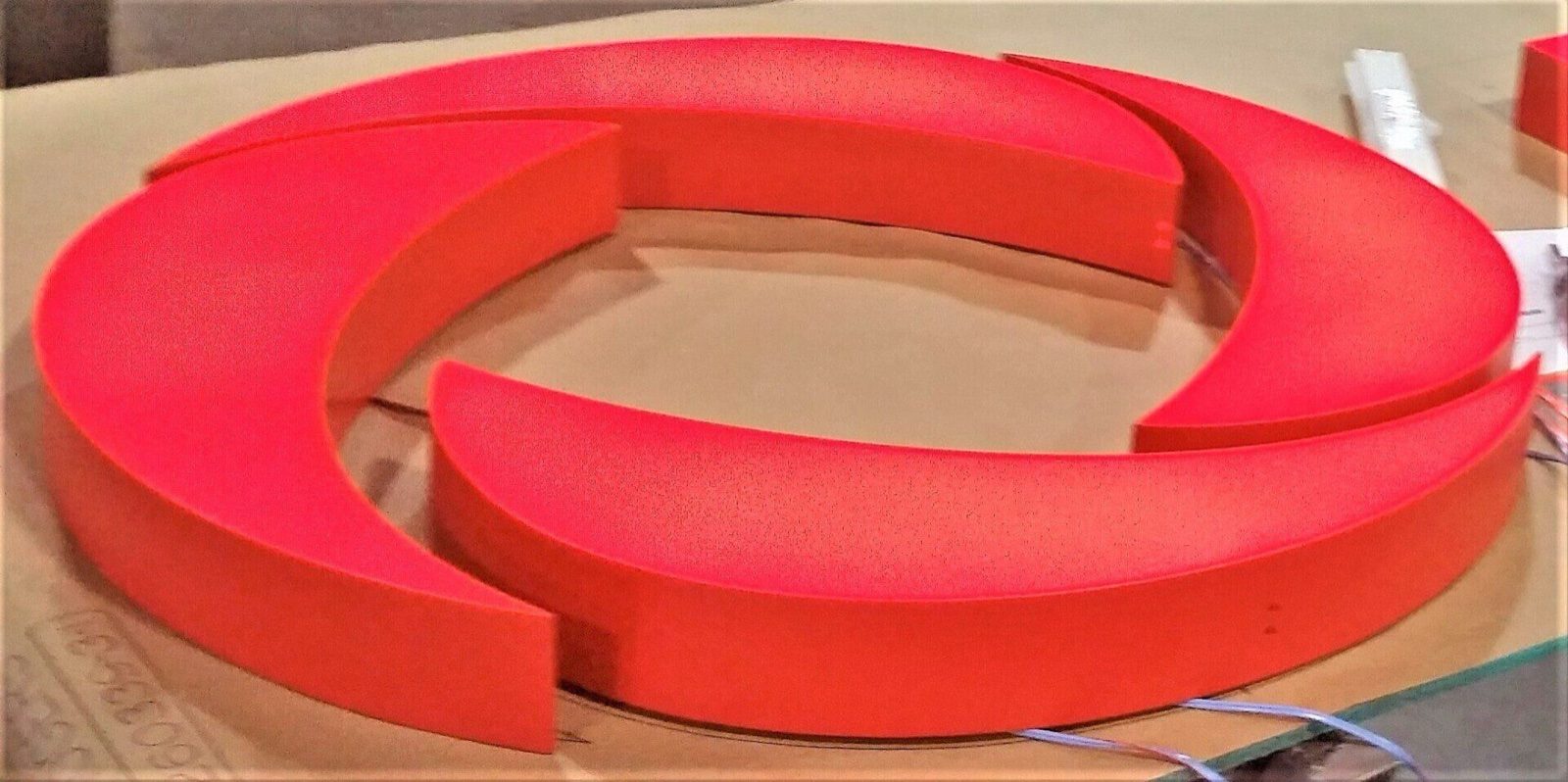
Ascent Equipment revolutionized the trim cap with the introduction of its TMB3 machine.

The TMB3 is the only machine in the industry that takes a flat aluminum coil and converts it directly into aluminum trim — forming it into the shape of any letter.

See it in action

Ascent TMB3 — converting aluminum coil into trim cap

Why Aluminum Trim Is Better Than Plastic

Aluminum trim offers decisive advantages over traditional plastic trim caps:

  • Will not fade, crack, or distort over time
  • Significantly reduces labor — no more manually forming plastic trim by hand
  • Lower cost per foot — aluminum coil is approximately 25% cheaper than plastic trim
  • Faster assembly — customers save time on every job
  • Available in a wide variety of colors, including stock White, Black, and Red
  • Comes with a PVC strip built in — use the same standard adhesive as plastic trim

The Problem with Plastic Trim Caps

Trim caps gained widespread adoption for illuminated channel letters during the 1970s and early 1980s, coinciding with the rise of acrylic-faced channel letters. But plastic has well-known, long-standing problems:

1. UV Degradation

The most common issue with plastic trim:

  • Plastic becomes brittle after years of sun exposure
  • Colors fade or chalk
  • Trim caps crack and break
  • Deterioration accelerates in southern climates

2. Shrinkage and Warping

  • Repeated heating and cooling cycles cause distortion
  • Corners pull away from the face
  • Wavy edges develop on large letters

3. Water Intrusion

  • A poorly fitted trim cap channels water directly into the letter body

4. Appearance Issues

  • A visible trim border makes letters look less modern
  • Gaps between the trim cap and return are noticeable
  • Painted trim caps peel after years outdoors
  • Seams where cap ends meet can appear messy

5. Large Letter Limitations

Very large letters (typically over 48") may require fabricated retainers because plastic trim caps fail under wind loading and thermal expansion.

6. Fabrication Hassles

  • Manual labor: Wrapping tight corners requires tedious heating and stretching
  • Limited lifespan: Signs often need service within 3 to 7 years

What the Ascent TMB3 Does

The TMB3 is a full-featured CNC bending machine that handles both trim and side return work:

  • Converts flat aluminum coil to aluminum trim and shapes the letter
  • Makes the flanging on the channel letter side return from 0.040" aluminum coil
  • Produces channel letter side returns (with or without flanging) ready for welding
  • Processes all standard plastic trims — 3/4" and 1" trim cap
  • 360° cutter for accurate notch position, front and back
  • Custom colors available for national programs

The aluminum coil comes with a PVC strip pre-applied, so standard adhesive (the same used for plastic trim) works without modification.

Pricing and ROI

The price per foot for aluminum coils is lower than traditional plastic trim. Add in the labor savings from automated forming versus manual plastic trim work, and the TMB3 pays for itself quickly — especially for shops producing volume channel letters.


"The Art of Channel Letters Through Precision Automation"

Ascent Equipment ascentequipment.com/ascent-bending-and-trim-machine/ Tel: 647-494-7800 Extension 1008 Email: dov@ascentGE.com

← All articles
More from Ascent

Related articles

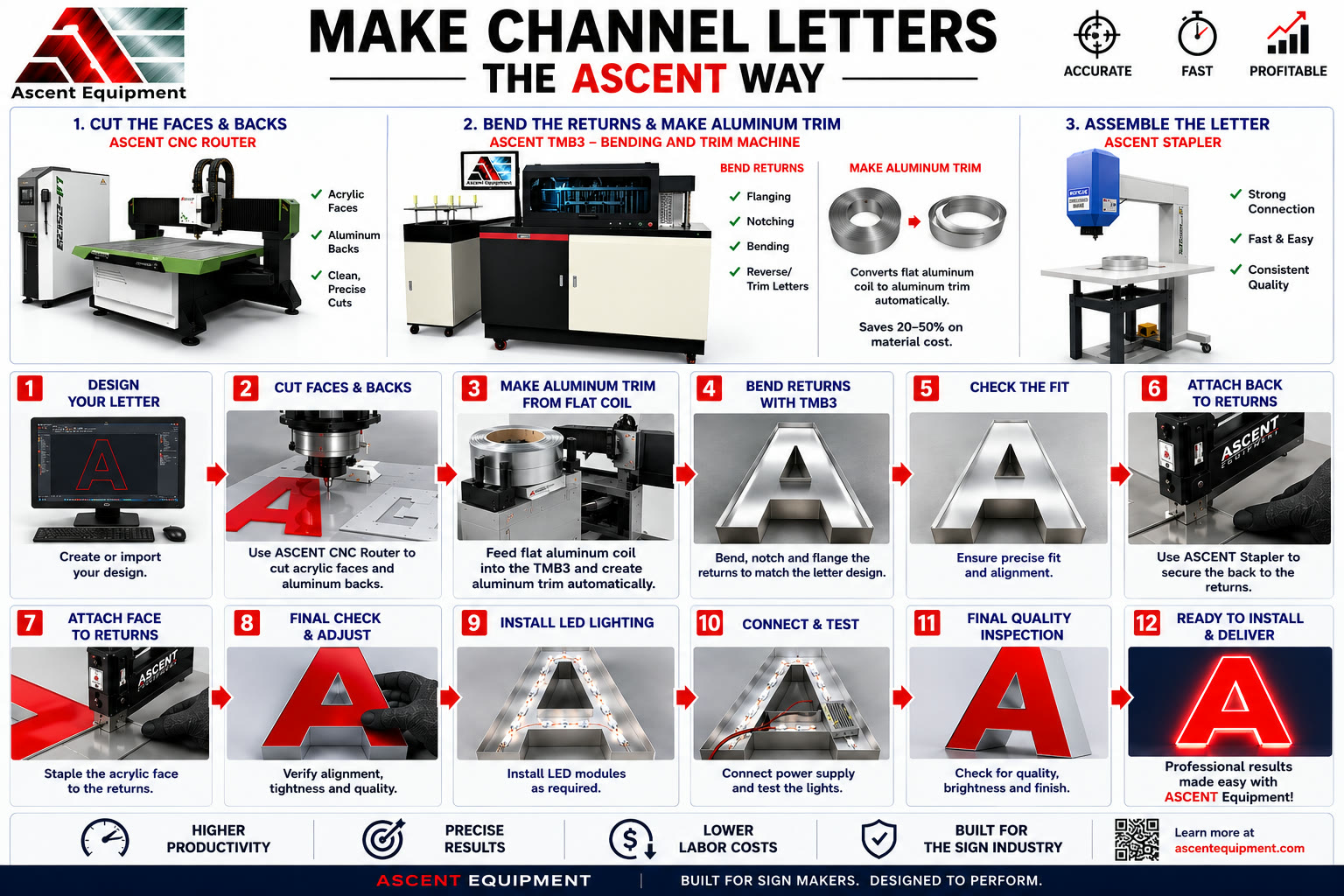
How to Make a Channel Letter — The Ascent Way with TMB3
A step-by-step walkthrough of building a channel letter using the Ascent CNC Router, TMB3 bending and trim machine, and Ascent Stapler — including how the TMB3 converts flat aluminum coil into trim cap automatically, saving 20–50% on material cost.
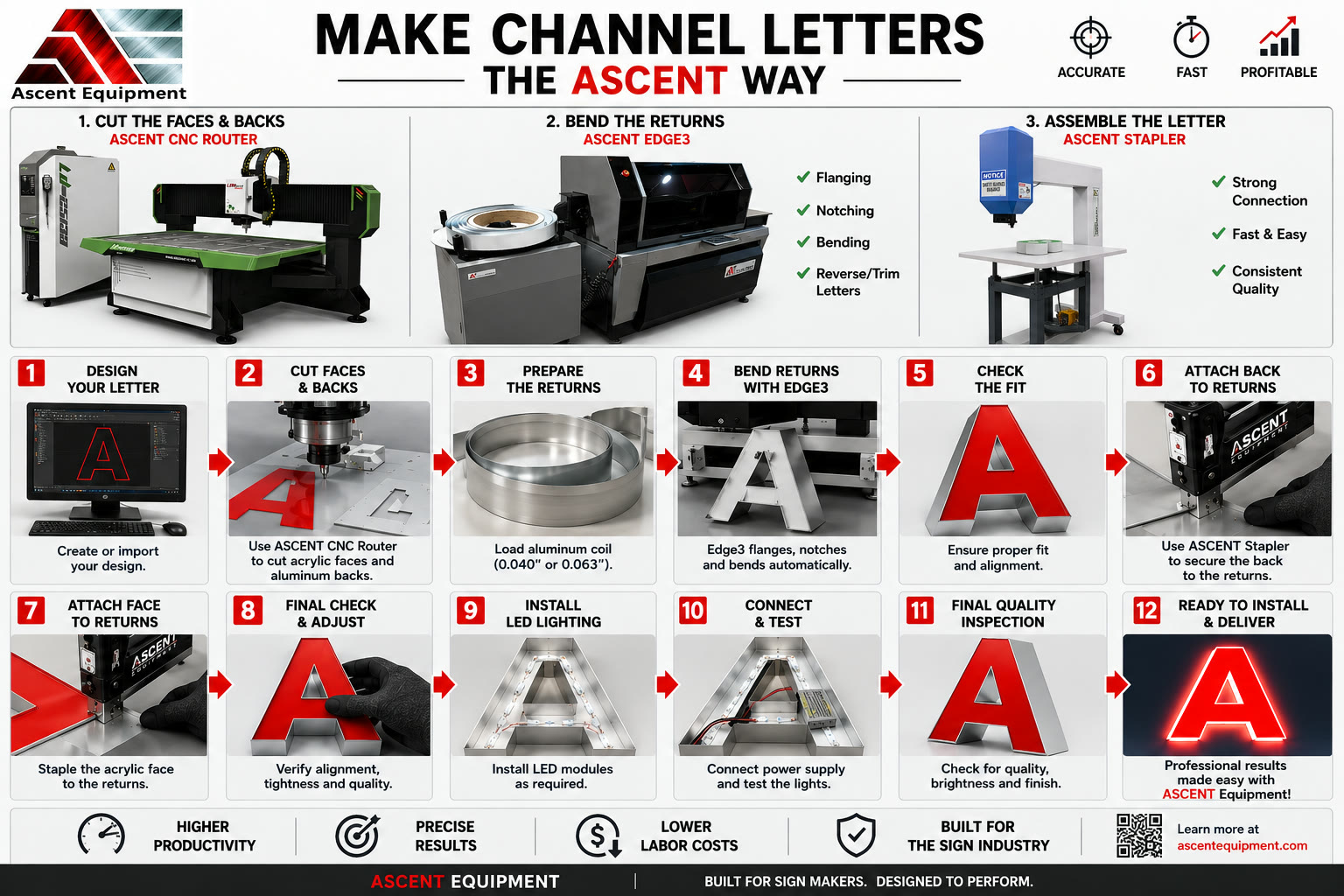
How to Make a Channel Letter — The Ascent Way with EDGE3
A complete step-by-step walkthrough of building a channel letter from design to delivery using the Ascent CNC Router, EDGE-3 bending machine, and Ascent Stapler — faster, more accurate, and more profitable than hand methods.
Making Aluminum Trim with the TMB3 — Better Than Plastic, Cheaper Per Foot, and Glues the Same Way
How the Ascent TMB3 converts flat aluminum coil into finished trim cap on demand — why aluminum outlasts plastic, how the PVC-coated coil lets you use standard contact cement, and what the cost savings look like in practice.
Buying Ascent Equipment: Purchase Outright, Finance, and Use IRS Section 179
For most sign companies, the decision isn't whether to buy equipment — it's how to pay for it. A practical guide to purchasing outright vs. financing, cash flow comparisons, and how IRS Section 179 can reduce your tax burden whether you pay cash or finance.
What Sign Manufacturers Are Buying in 2026 — and Why Ascent Has the Answer
The sign industry's equipment buying decisions in 2026 are driven by labor shortages and profitability — not equipment age. Here's who is actively buying, what problem they're solving, and why Ascent Equipment is positioned to solve all of it from one source.
Laser Cutter Consumables: What to Stock for Your CO₂ and Fiber System
A practical guide to consumables, replacement schedules, and spare parts for shops running a dual-gantry CO₂ and fiber laser cutter — so downtime never catches you off guard.
Laser Safety for Industrial Laser Cutters: What U.S. Operators Need to Know
A practical guide to OSHA, FDA, and ANSI laser safety requirements for shops running industrial CO₂ and fiber laser cutting systems — covering engineering controls, PPE, ventilation, and daily checklists.
Safety Considerations for the Ascent QCW Laser Welder
A complete safety guide for the Ascent QCW fiber laser welder — covering Class 4 laser requirements, eye protection, PPE, controlled areas, fume extraction, and daily inspection procedures.
How to Price Channel Letters in 2026 When Using Ascent Equipment
A practical pricing guide for channel letter fabricators — the inch rule, cost-plus method, how each Ascent machine (5AS, EDGE-3, TMB3, laser welder, laser cutter) changes your cost structure, and worked examples comparing five shop configurations.
Ascent 2000W Refrigeration Laser Welder vs. the Competition
A feature-by-feature comparison of the Ascent Equipment 2000W Refrigeration Handheld Fiber Laser Welder against leading competitors — cooling technology, duty cycle, operating costs, and what matters most for production shops.
From Hand-Bending to Machine-Bending: What It Means for Your Shop
Hand-bending channel letters takes 30–45 minutes per letter. A bending machine does the same job in 3–4 minutes. Here's what that shift actually looks like inside a sign shop — production, labor, quality, and the transition itself.
How to Select a Laser Cleaner: The Complete Buyer's Guide
Pulsed or continuous wave? 100W or 3000W? This guide covers every major decision when buying a fiber laser cleaning machine — power, laser type, cooling, applications, and what to ask your supplier.
One Supplier for Your Bender, Your Welder, and Your Laser Cutter
Most sign shops piece together their channel letter equipment from multiple vendors. Ascent Equipment is the only supplier in North America that covers the complete workflow — bending machine, laser welder, and laser cutter — with on-site installation and training on all three.
Laser Welder Safety: What Every Sign Shop Needs to Know
A practical safety guide for sign shops using fiber laser welders — eye protection, fume extraction, fire safety, and how to know exactly what your setup requires.

Let Ascent Experts Assemble All the Pieces of The Equipment Puzzle for your Company

Contact us