
Call us: 1-800-927-5107 647-494-7800 ext. 1008

Should You Add a Laser Cutter to Your Sign Shop? Ascent's Dual Gantry CO2 and Fiber Does Both

Many customers ask: Should I add a laser cutter to my shop — and if so, which type? CO2 for non-metals or fiber for metals?

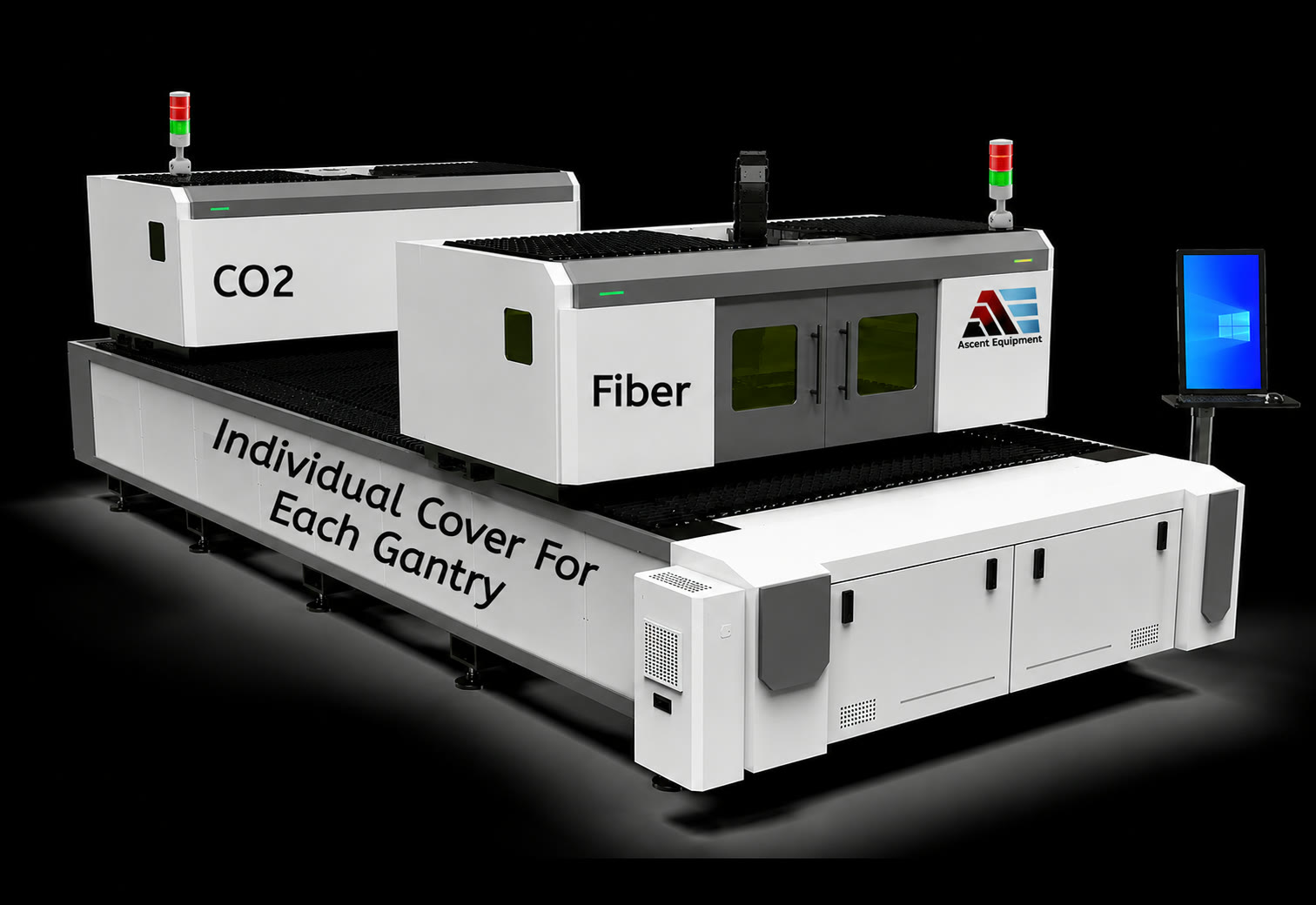
Ascent Equipment has simplified that decision with the Dual Gantry CO2 and Fiber Laser Cutter — one machine with two independent gantries that can cut acrylic and aluminum simultaneously on a 5' × 10' or 6' × 12' working area.

See it in action
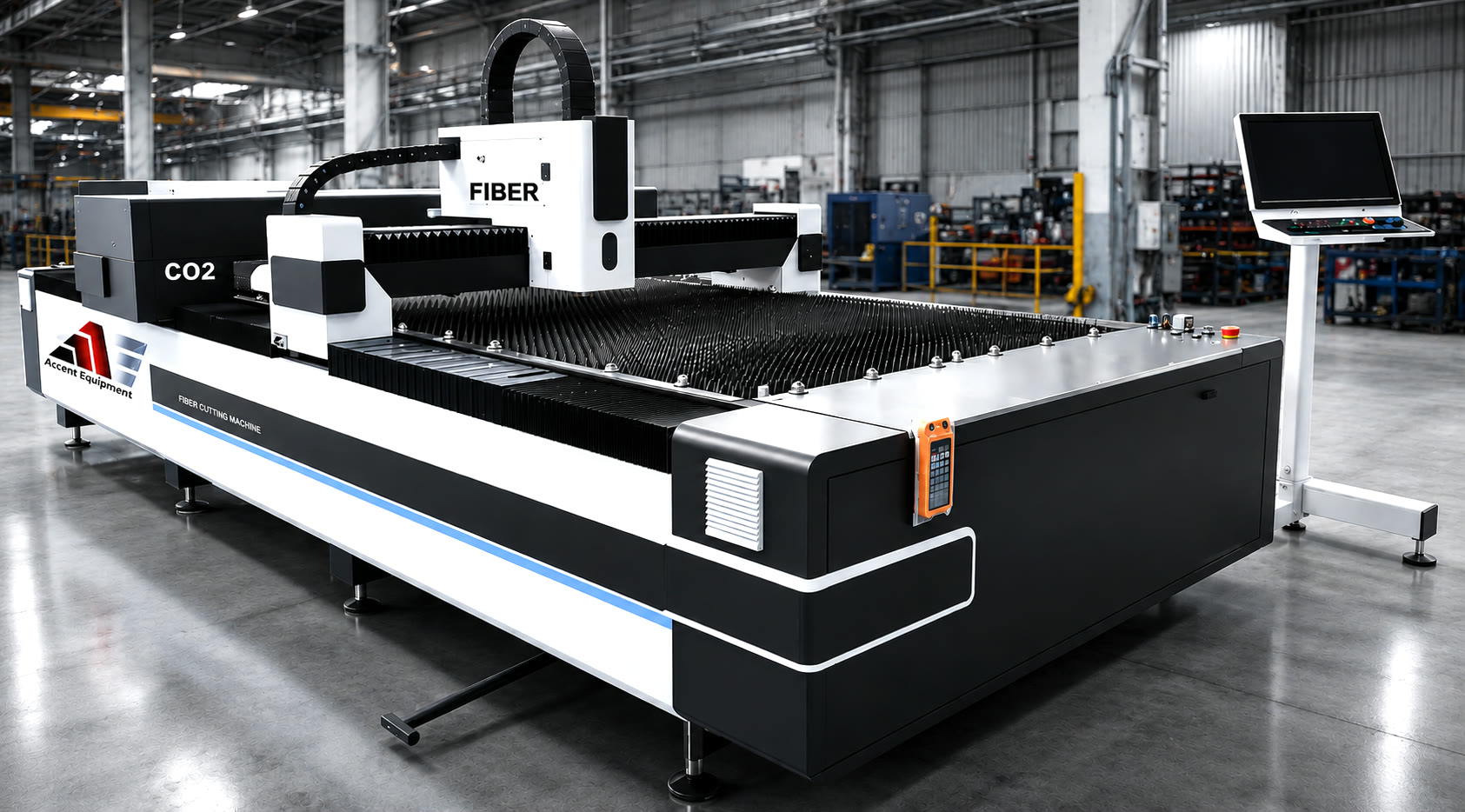
Ascent Dual Gantry CO2 and Fiber Laser Cutter in action

What a Laser Cutter Does for a Sign Shop

Adding a laser cutter significantly expands capabilities, productivity, and profitability. Here's what changes:

1. Faster Production

  • Cuts complex shapes automatically from digital files
  • Eliminates many manual cutting and routing operations
  • Reduces labor costs and increases throughput
  • Allows faster turnaround times for customers

2. Higher Precision and Consistency

  • Extremely accurate cuts with repeatable results
  • Perfect for intricate logos, letters, and decorative elements
  • Reduces rework and material waste

3. Expanded Product Offering

A laser cutter allows a shop to produce:

  • Acrylic letters and logos
  • ADA signage
  • Interior architectural signs
  • Decorative wall panels
  • Engraved plaques
  • Awards and trophies
  • Wayfinding signage
  • Personalized gifts and promotional products
  • Stencils and templates

4. Superior Edge Quality

For acrylic, the CO2 laser produces smooth, polished edges with minimal post-processing — professional appearance without flame polishing.

5. Increased Profit Margins

  • Many laser-cut products command premium pricing
  • Profitable for custom and short-run jobs
  • Opens new revenue streams beyond traditional channel letters

6. Material Versatility

CO2 laser cuts: Acrylic, wood, MDF, plywood, paper, cardboard, leather, fabrics, rubber, and many plastics.

Fiber laser cuts: Stainless steel, aluminum, brass, and copper.

7. Improved Customization

  • Easy one-off production with no tooling costs
  • Ideal for personalized signs, awards, and branded products

8. Competitive Advantage

  • Offer services that competitors outsource
  • Faster delivery and better quality control
  • More complete in-house manufacturing capability

CO2 vs. Fiber: Which Do You Need?

ApplicationCO2 LaserFiber Laser
Acrylic CuttingExcellentNot Recommended
Wood / MDFExcellentNo
EngravingExcellentGood on metal
Stainless SteelLimitedExcellent
Aluminum CuttingLimitedExcellent
Sign MakingExcellentExcellent for metal signs
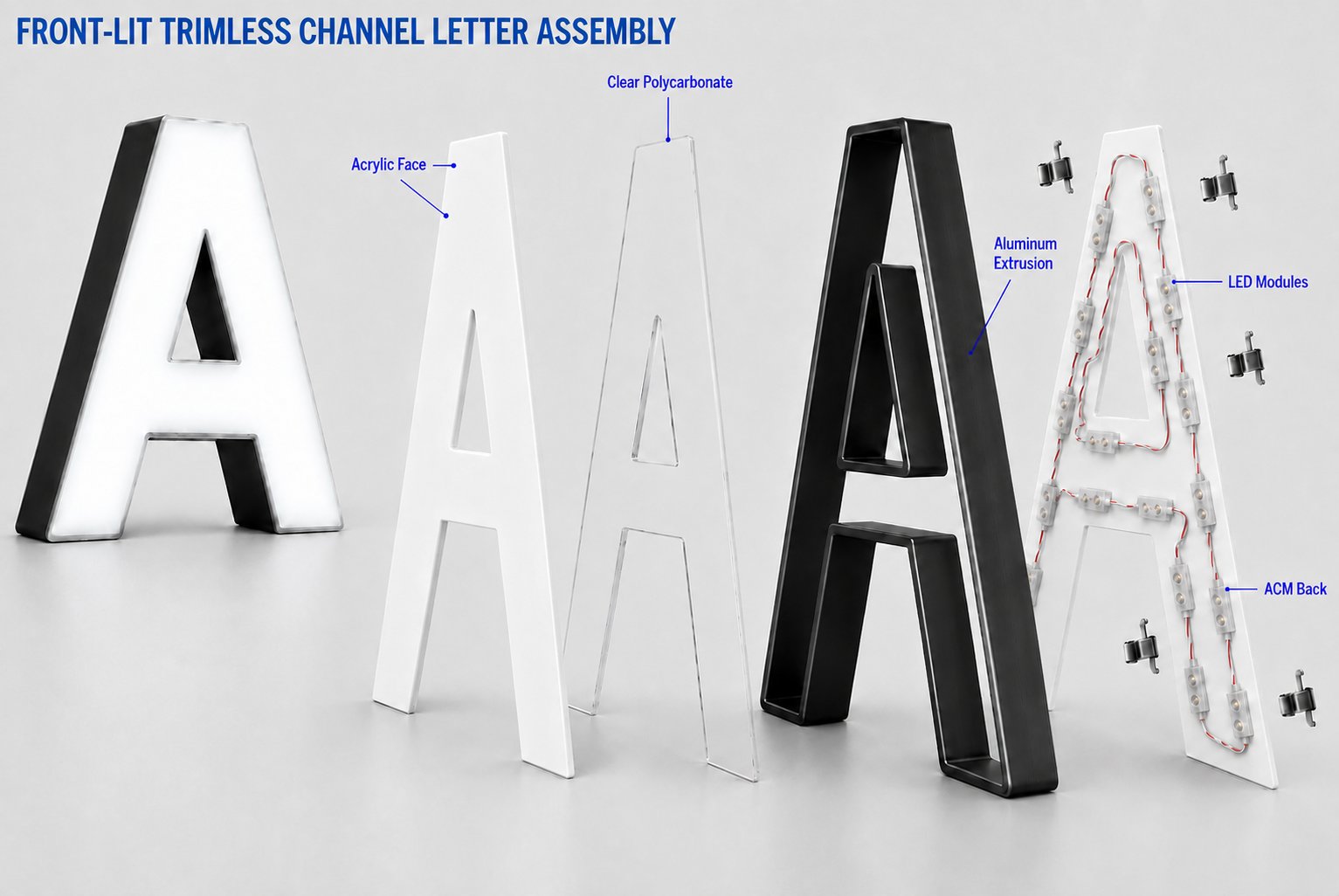
Channel Letter ComponentsGoodExcellent

The Ascent answer: get both in one machine. Two independent gantries — each doing its job simultaneously on the same table.

The Ascent Dual Gantry: What's Included

  • 500W CO2 — cuts acrylic up to 1" thick using compressed air
  • 3000W or 6000W Fiber — aluminum, stainless steel, carbon steel, brass, copper
  • Each gantry operates independently and simultaneously
  • Working area: 5' × 10' or 6' × 12'
  • Industrial computer with operational and nesting software
  • Autofocus laser head; AU3TECH cutting head and controller
  • DELTA 750W servo motor and drivers
  • 2 water chillers, oil-free air compressor for CO2
  • 380V 3-phase and 220V 1-phase 60Hz

Optional add-ons:

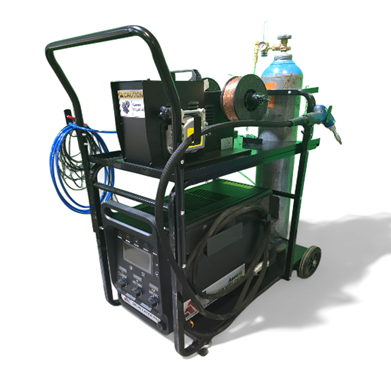
  • Smell/fume collector for the CO2 laser
  • Debris collector for the fiber laser
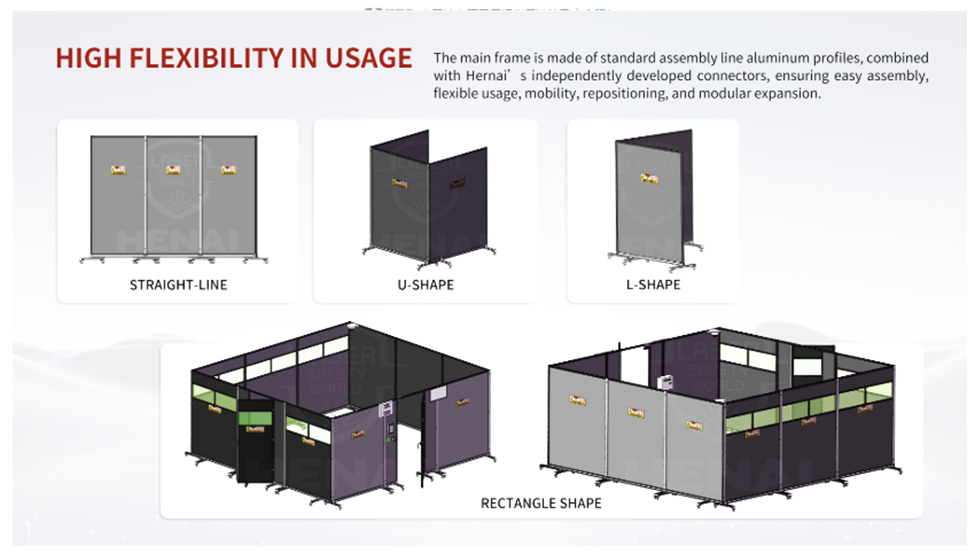
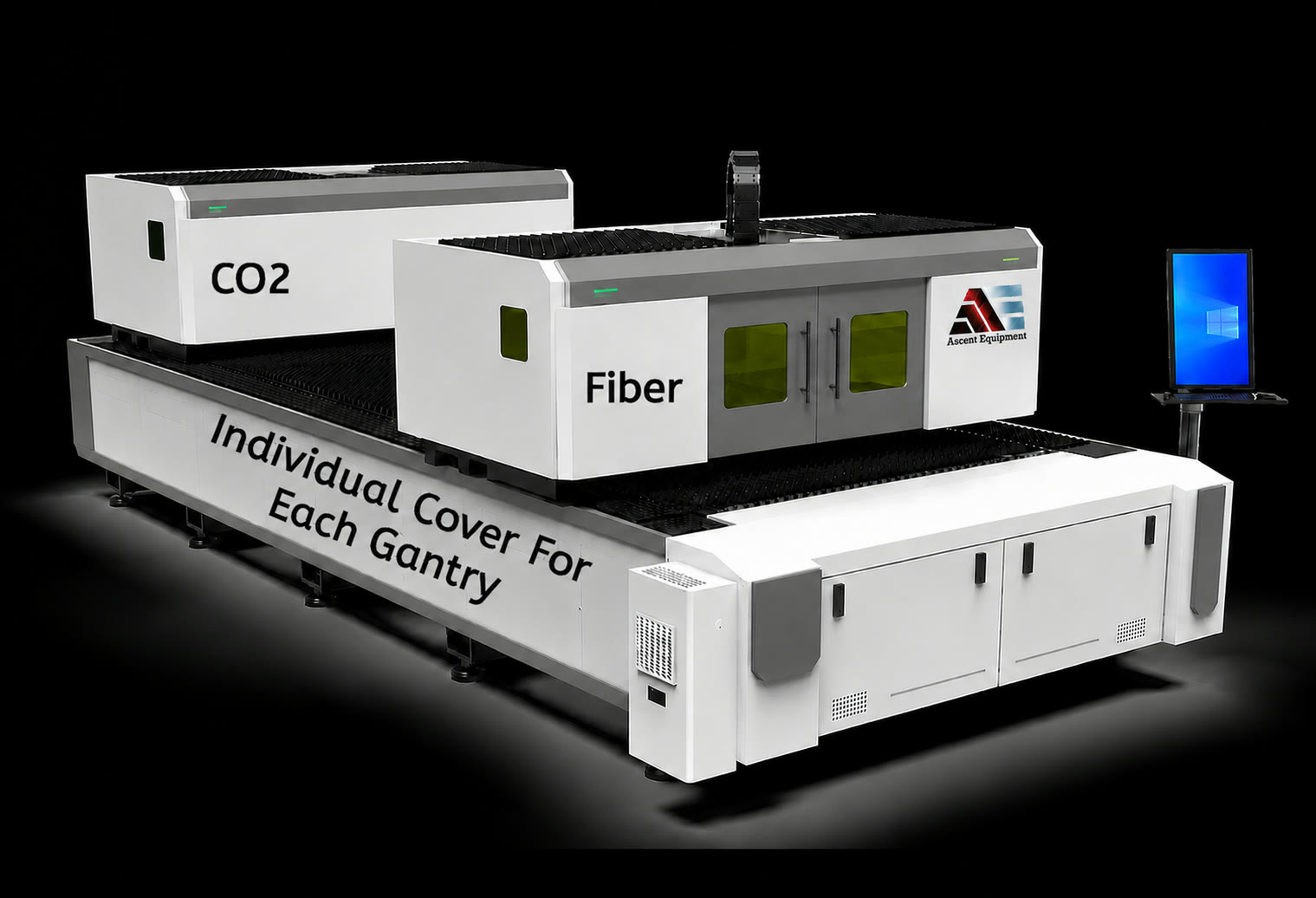
  • Sliding cover or laser-rated partition enclosure

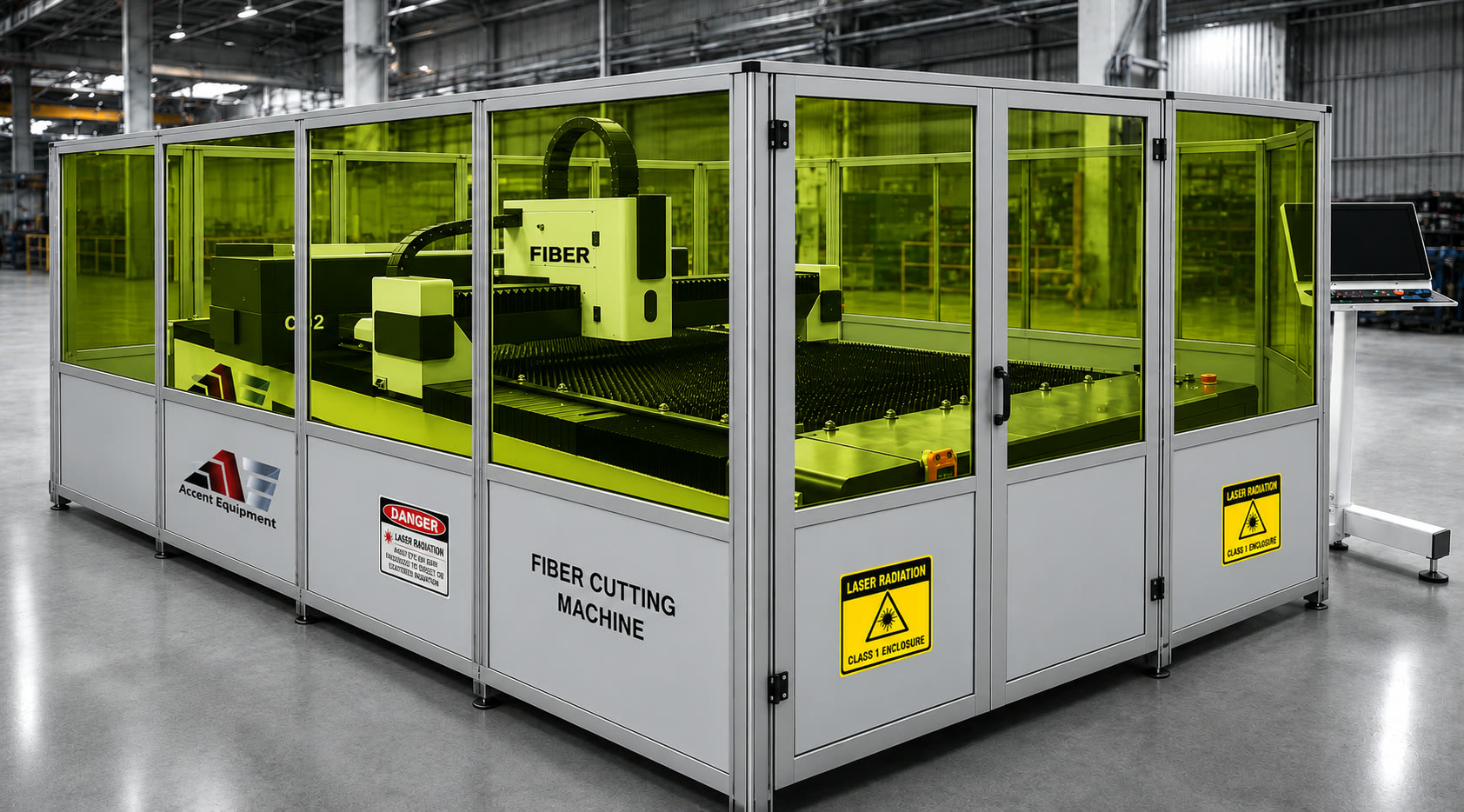
Housing / Safety Enclosures
The Recommended Sign Shop Setup

For a modern sign shop, the ideal combination is:

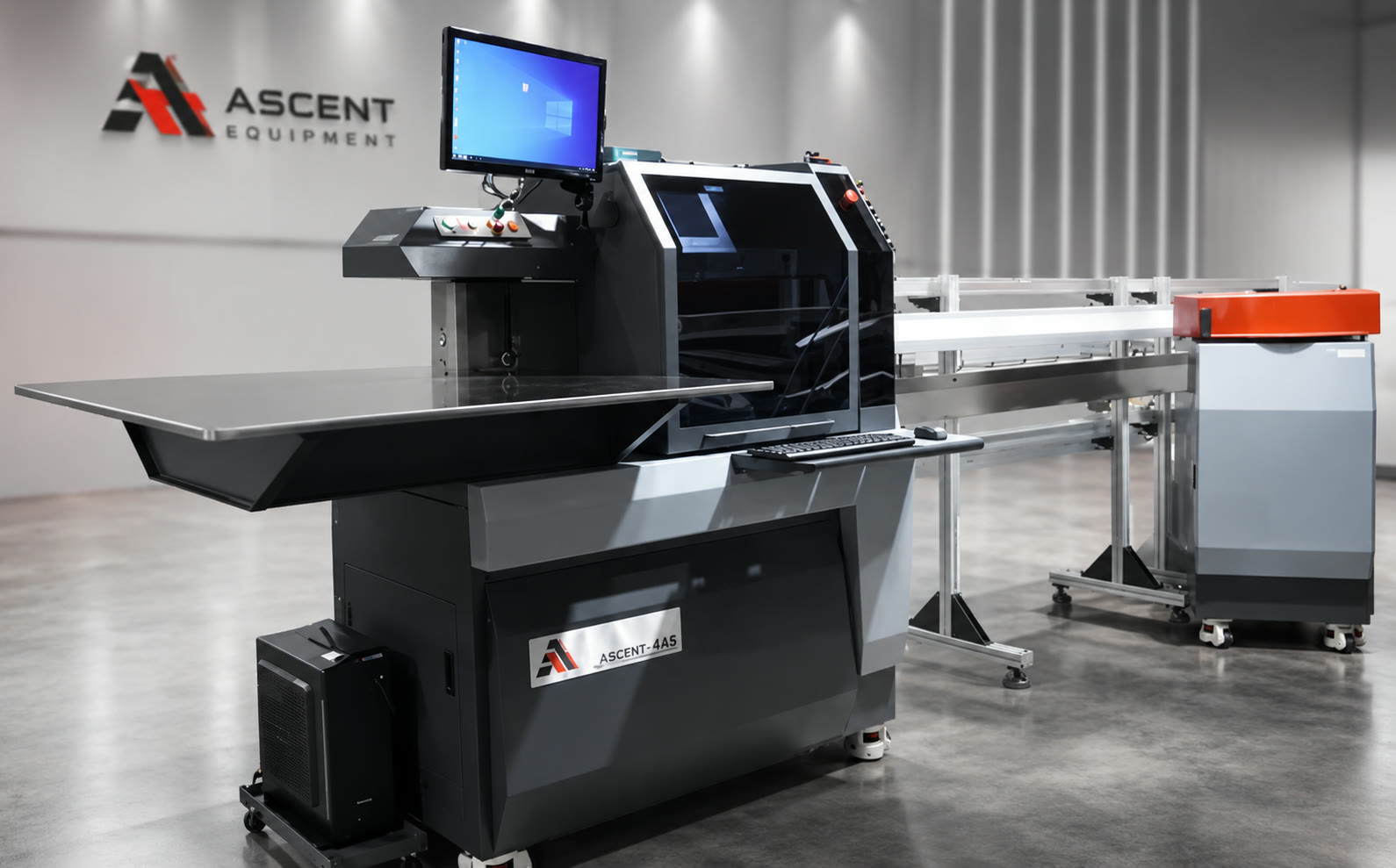
  1. Ascent CNC Channel Letter Bending Machine — for aluminum and stainless side returns
  2. Ascent Dual Gantry CO2 + Fiber Laser Cutter — acrylic, wood, and all metals
  3. Ascent Handheld Fiber Laser Welder or QCW Tabletop Laser Welder — fast, clean welding
  4. CNC Router — for ACM and PVC

This combination allows nearly all sign manufacturing to be done in-house — reducing outsourcing costs while improving quality and turnaround time.

Warranty

  • Machine: 2 years
  • Fiber laser generator: 2 years
  • CO2 laser tubes: 1 year (12,000 hours)

Installation and training are included at your location. Ascent technicians are based in Buffalo, NY, Toronto, ON, and Kentucky.


"The Art of Channel Letters Through Precision Automation"

Ascent Equipment ascentequipment.com/dual-gantry-co2-and-fiber-laser-cutter/ Tel: 647-494-7800 Extension 1008 Email: dov@ascentGE.com

← All articles
More from Ascent

Related articles

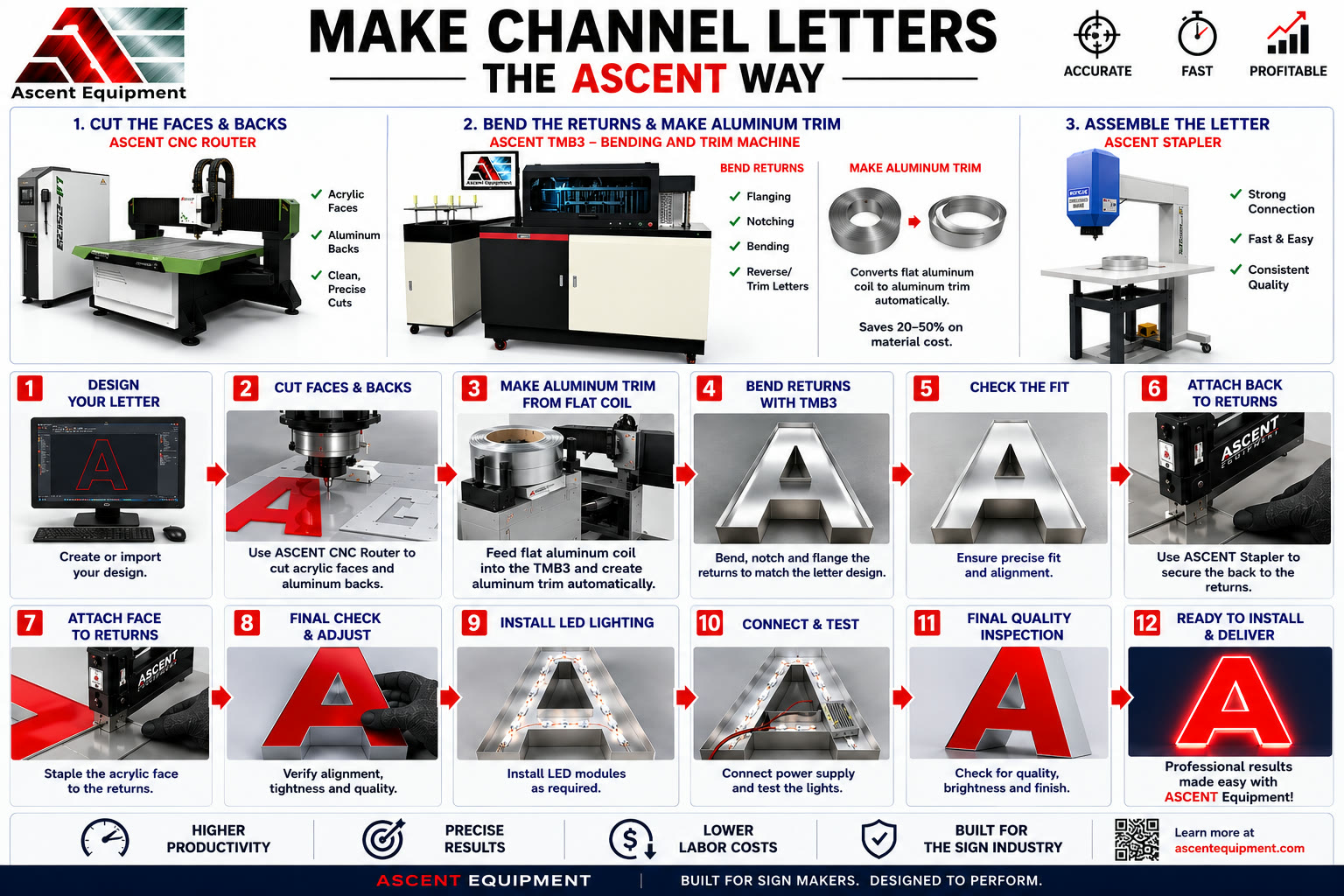
How to Make a Channel Letter — The Ascent Way with TMB3
A step-by-step walkthrough of building a channel letter using the Ascent CNC Router, TMB3 bending and trim machine, and Ascent Stapler — including how the TMB3 converts flat aluminum coil into trim cap automatically, saving 20–50% on material cost.
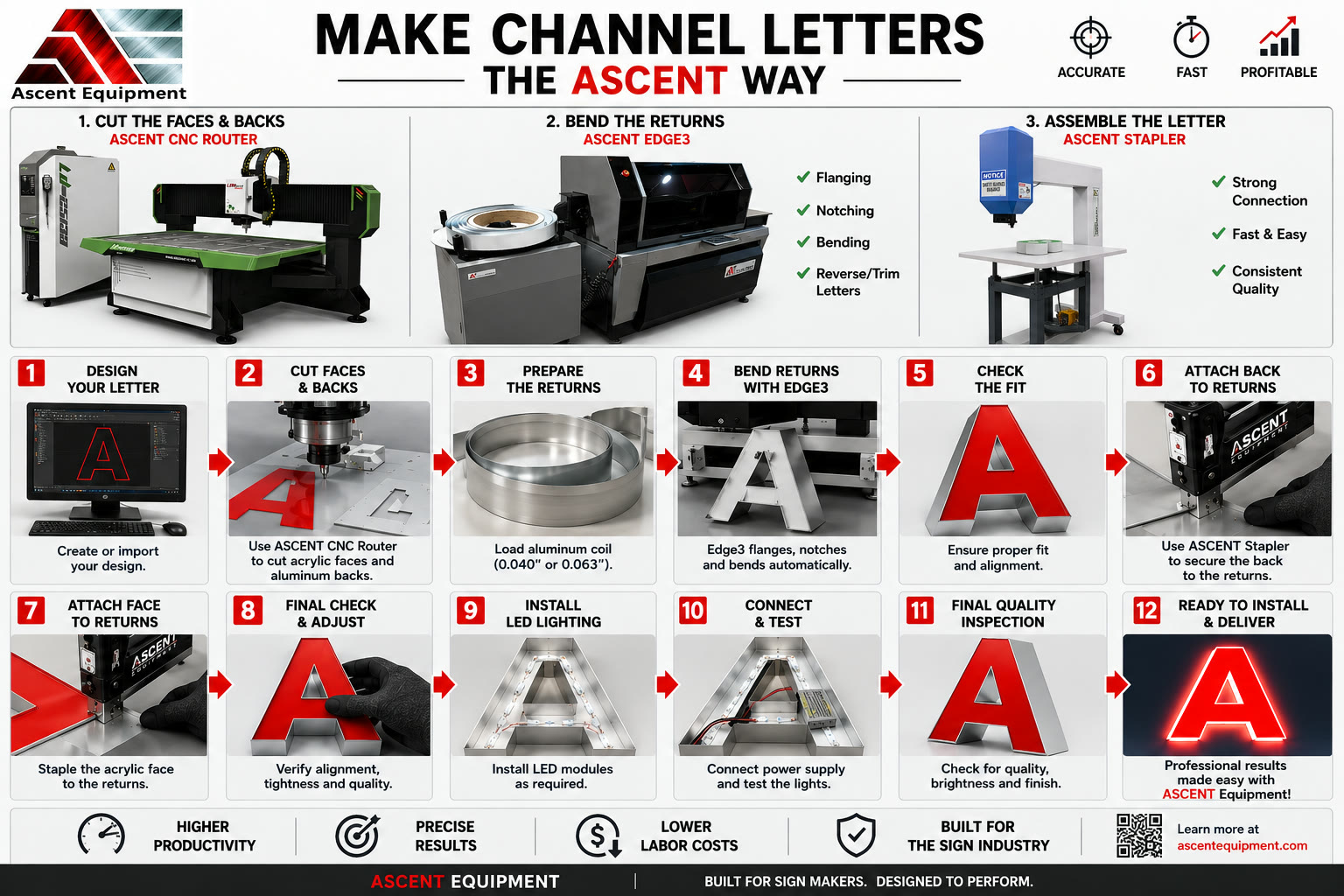
How to Make a Channel Letter — The Ascent Way with EDGE3
A complete step-by-step walkthrough of building a channel letter from design to delivery using the Ascent CNC Router, EDGE-3 bending machine, and Ascent Stapler — faster, more accurate, and more profitable than hand methods.
Making Aluminum Trim with the TMB3 — Better Than Plastic, Cheaper Per Foot, and Glues the Same Way
How the Ascent TMB3 converts flat aluminum coil into finished trim cap on demand — why aluminum outlasts plastic, how the PVC-coated coil lets you use standard contact cement, and what the cost savings look like in practice.
Buying Ascent Equipment: Purchase Outright, Finance, and Use IRS Section 179
For most sign companies, the decision isn't whether to buy equipment — it's how to pay for it. A practical guide to purchasing outright vs. financing, cash flow comparisons, and how IRS Section 179 can reduce your tax burden whether you pay cash or finance.
What Sign Manufacturers Are Buying in 2026 — and Why Ascent Has the Answer
The sign industry's equipment buying decisions in 2026 are driven by labor shortages and profitability — not equipment age. Here's who is actively buying, what problem they're solving, and why Ascent Equipment is positioned to solve all of it from one source.
Laser Cutter Consumables: What to Stock for Your CO₂ and Fiber System
A practical guide to consumables, replacement schedules, and spare parts for shops running a dual-gantry CO₂ and fiber laser cutter — so downtime never catches you off guard.
Laser Safety for Industrial Laser Cutters: What U.S. Operators Need to Know
A practical guide to OSHA, FDA, and ANSI laser safety requirements for shops running industrial CO₂ and fiber laser cutting systems — covering engineering controls, PPE, ventilation, and daily checklists.
Safety Considerations for the Ascent QCW Laser Welder
A complete safety guide for the Ascent QCW fiber laser welder — covering Class 4 laser requirements, eye protection, PPE, controlled areas, fume extraction, and daily inspection procedures.
How to Price Channel Letters in 2026 When Using Ascent Equipment
A practical pricing guide for channel letter fabricators — the inch rule, cost-plus method, how each Ascent machine (5AS, EDGE-3, TMB3, laser welder, laser cutter) changes your cost structure, and worked examples comparing five shop configurations.
Ascent 2000W Refrigeration Laser Welder vs. the Competition
A feature-by-feature comparison of the Ascent Equipment 2000W Refrigeration Handheld Fiber Laser Welder against leading competitors — cooling technology, duty cycle, operating costs, and what matters most for production shops.
From Hand-Bending to Machine-Bending: What It Means for Your Shop
Hand-bending channel letters takes 30–45 minutes per letter. A bending machine does the same job in 3–4 minutes. Here's what that shift actually looks like inside a sign shop — production, labor, quality, and the transition itself.
How to Select a Laser Cleaner: The Complete Buyer's Guide
Pulsed or continuous wave? 100W or 3000W? This guide covers every major decision when buying a fiber laser cleaning machine — power, laser type, cooling, applications, and what to ask your supplier.
One Supplier for Your Bender, Your Welder, and Your Laser Cutter
Most sign shops piece together their channel letter equipment from multiple vendors. Ascent Equipment is the only supplier in North America that covers the complete workflow — bending machine, laser welder, and laser cutter — with on-site installation and training on all three.
Laser Welder Safety: What Every Sign Shop Needs to Know
A practical safety guide for sign shops using fiber laser welders — eye protection, fume extraction, fire safety, and how to know exactly what your setup requires.

Let Ascent Experts Assemble All the Pieces of The Equipment Puzzle for your Company

Contact us