
How to Start a Channel Letter Fabrication Business
Channel letter fabrication is one of the more accessible manufacturing businesses to start. The end product — illuminated letters mounted on buildings — is in constant demand from retailers, restaurants, hotels, offices, and institutional clients across North America. The equipment is specialized but available. The skills are learnable. And unlike many manufacturing niches, there is a clear path from a small startup to a profitable wholesale supplier in a relatively short time.
This guide covers what you actually need to get started: space, equipment, skills, startup costs, pricing, and how to find your first customers.
What the Business Is
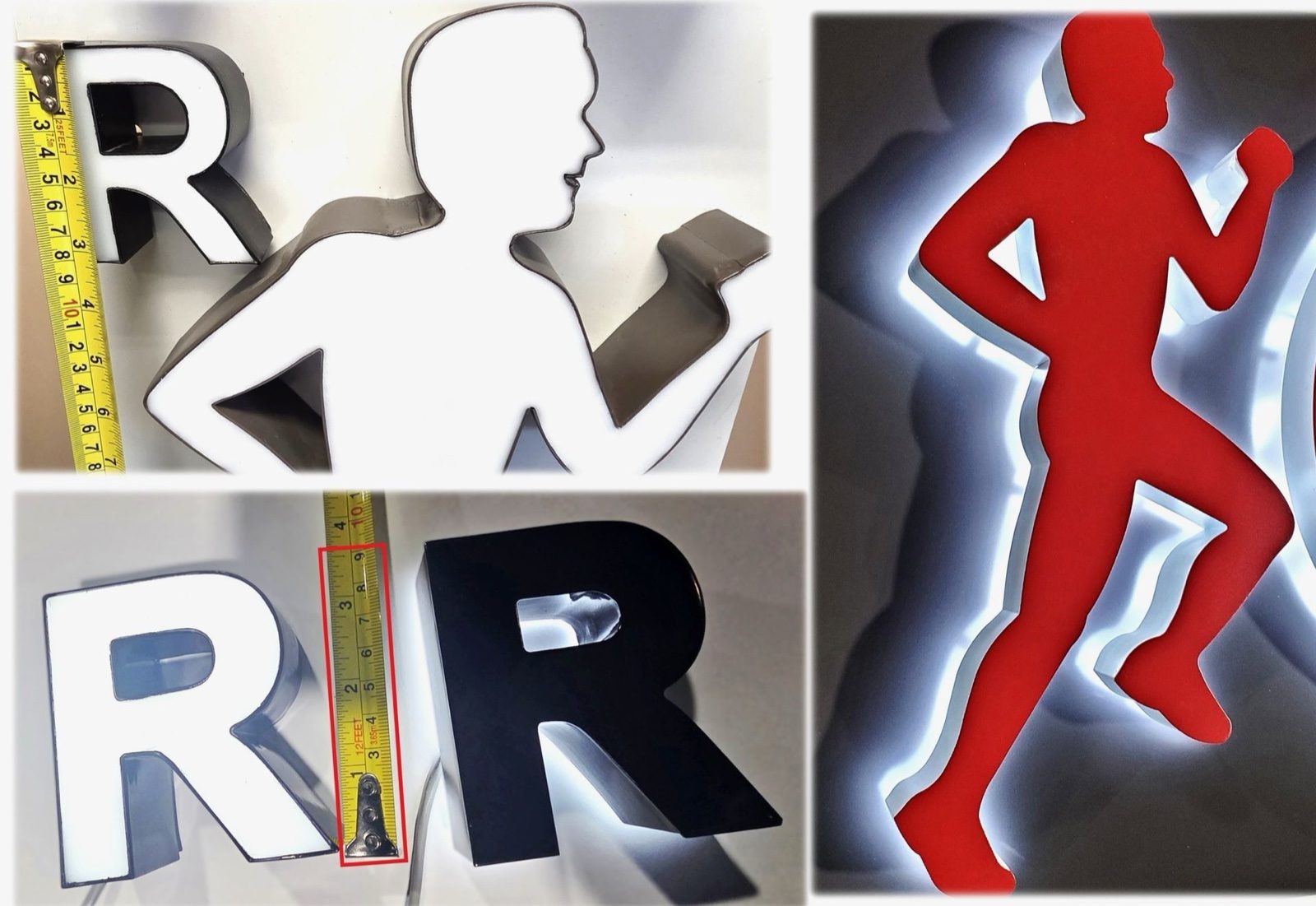
Channel letter fabricators make the individual illuminated letters and shapes that spell out business names on storefronts and buildings. Letters are sold either directly to businesses that want new signage, or — more commonly for startups — wholesale to sign companies that design and install signage but do not fabricate letters themselves.
The wholesale model is worth understanding early. There are tens of thousands of sign shops across North America that sell channel letter signage to their clients but outsource the actual fabrication. They need a reliable fabricator who can deliver consistent quality on a predictable schedule. For a new fabrication shop, becoming the wholesale supplier to five or ten established sign companies is a faster and more stable revenue path than chasing end-user clients directly.
Space Requirements
Channel letter fabrication does not require a large facility. A starting shop can operate in 1,500 to 3,000 square feet — a standard commercial unit or a large garage bay. You need:
- Enough floor space for the bending machine (roughly 6' × 8' footprint for a standard unit, plus operating clearance)
- A workbench area for LED installation, wiring, and assembly
- A cutting station for face and back panels (CNC router or laser cutter)
- Storage for aluminum coil, extrusion profiles, acrylic sheet, and hardware
- A staging area for completed letters before shipping
Ceiling height matters if you plan to produce large letters — a standard 10-foot ceiling is sufficient for most channel letter work. Overhead lighting should be good enough to inspect LED installations and spot any uneven illumination before letters ship.
The Core Equipment
You do not need to buy everything at once. A viable starting configuration is:
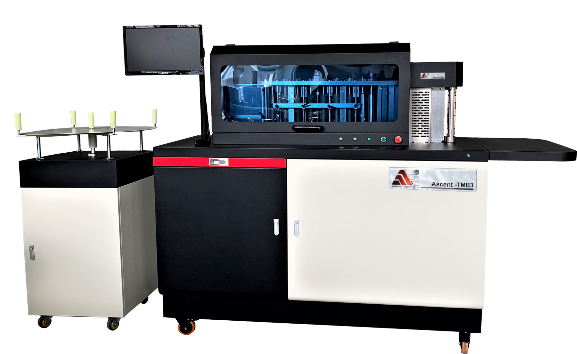
CNC channel letter bending machine
This is the centerpiece of the operation. It reads your letter file, cuts notches in the aluminum, and bends it to the letter path automatically. Without a bending machine, you are doing all of that by hand — which is slow, inconsistent, and impossible to scale.
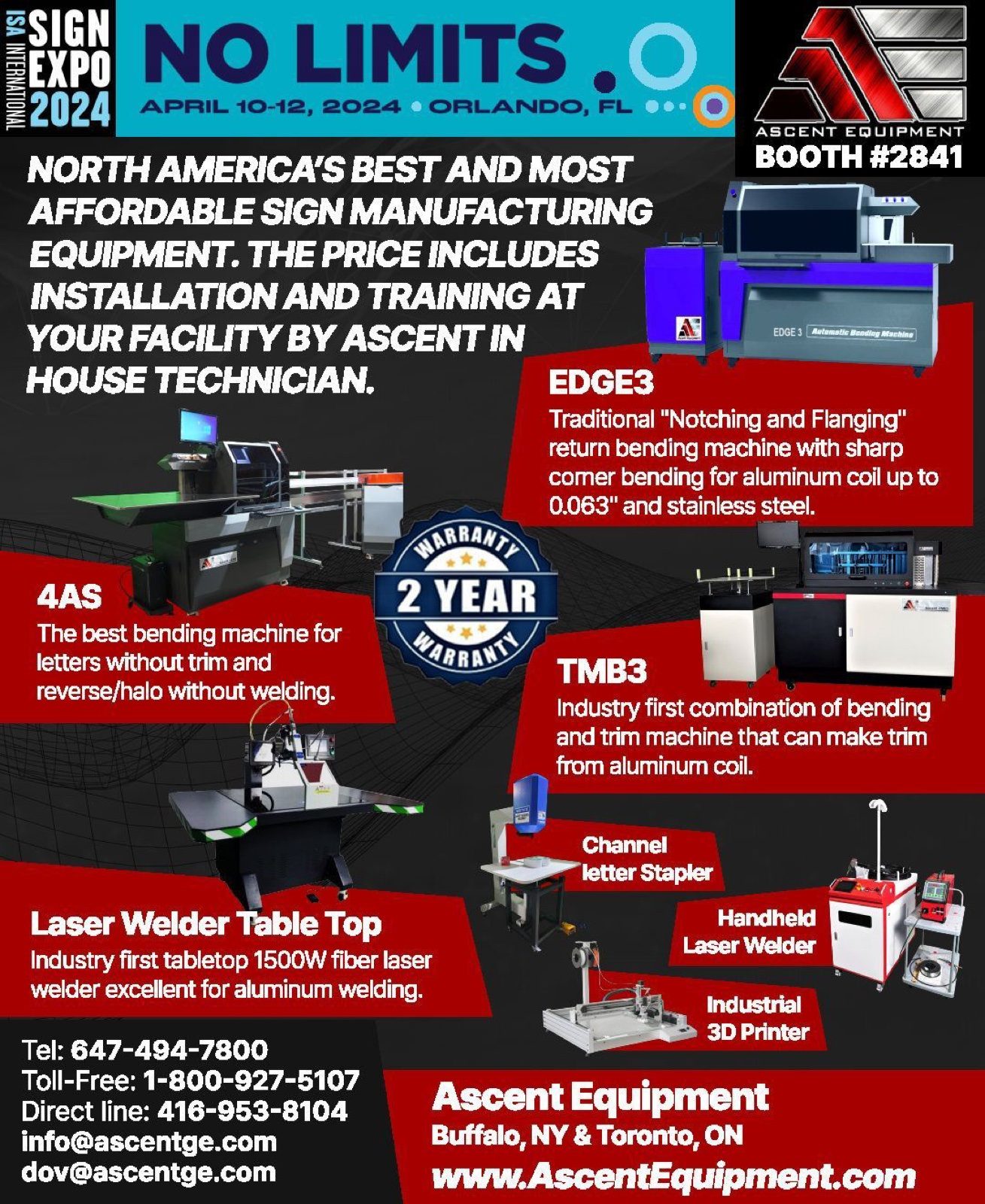
For a new shop that wants to produce both trimless letters and conventional letters, the Ascent 4AS is the practical starting point. It processes both flat aluminum coil and Ascent extrusion profiles, produces reverse halo letters without welding, and handles 0.040" and 0.063" aluminum up to 8" depth. The 5AS adds F-trim capability and stainless steel — useful once you're quoting more complex work.
Budget: $42,000–$46,000 including shipping, installation, and training.
Face and back panel cutting
Letters need a face (acrylic or polycarbonate) and a back panel (aluminum or polycarbonate) cut to the letter outline. The two options:
CNC router: Cuts aluminum and acrylic. Versatile, well-understood technology, broad vendor support. Good for shops that also want to cut cabinet faces, dimensional letters, or substrates beyond channel letter components.
CO₂ laser cutter: Cuts acrylic faster than a router and produces sealed, polished edges that fit the extrusion cleanly. Does not cut aluminum as well as a router. For a shop focused purely on channel letters with acrylic faces, a laser cutter is the faster path.
Budget: $45,000–$60,000 for a CNC router, depending on size and configuration. A CO₂ laser cutter sized for acrylic letter faces is a separate, typically smaller investment — contact Ascent for a configuration-specific quote.
Pneumatic mailer gun
The Ascent pneumatic stapler drives the stainless steel clips that close letter backs without welding. Inexpensive, requires no special training, and eliminates the need for a TIG welder entirely.
Basic hand tools and workbench equipment
Wire strippers, crimpers, drill press, pop rivet gun, tape measure, inspection light. Most shops already have these or can acquire them for under $2,000.
What you can add later
A laser welder becomes relevant once you are producing letters that require welding — large stainless steel letters, refrigeration equipment repairs, certain custom work. Start without one, and add it when a specific customer need or volume justifies the investment.
Skills You Need
CNC machine operation: Running the bending machine, loading files, setting material parameters, performing basic calibration. This is learned during the installation and training that comes with every Ascent machine — most operators are productive within one to two weeks.
Electrical basics: LED strip installation, driver sizing, wiring, polarity. Not advanced electrical work, but you need to be comfortable with low-voltage DC wiring. Most people without this background can learn it in a few days from online resources and practice.
File preparation: Letters arrive as DXF or AI files from the sign company or designer. The bending machine software reads these directly — you do not need design skills, but you do need to understand basic file handling and how to check a file for errors before running it.
Quality inspection: Checking finished letters for even LED coverage, clean face seating, square backs, no loose clips. This is visual and tactile, learned quickly with practice.
What you do not need at the start: TIG welding, sign installation, graphic design, or sales experience. The wholesale model lets you focus entirely on fabrication quality and delivery reliability.
Startup Costs
A realistic starting budget for a small channel letter fabrication shop:
| Item | Estimated cost |
|---|---|
| CNC bending machine (with install and training) | $42,000–$46,000 |
| CNC router (or CO₂ laser cutter as an alternative) | $45,000–$60,000 |
| Pneumatic mailer gun and tools | $2,000–$4,000 |
| Initial material inventory (coil, profiles, acrylic, LEDs, hardware) | $8,000–$15,000 |
| First/last month rent on shop space | $3,000–$8,000 |
| Electrical upgrades (if needed for machine power) | $1,000–$5,000 |
| Business setup, insurance, basic website | $2,000–$5,000 |
| Total | $103,000–$143,000 |
Most of the equipment cost can be financed. A $44,000 bending machine financed over 60 months is roughly $800–$880 per month. At 200 letters per month, that is about $4.40 per letter in equipment cost — a small fraction of a letter's sell price.
Pricing Your Work
Channel letter pricing varies by region, letter type, complexity, and volume. Wholesale pricing to sign companies is typically lower than direct-to-end-user pricing, but wholesale orders are more predictable and require less sales effort.
Rough wholesale price ranges (per letter):
- Standard front-lit trim cap letters: $35–$70 per letter depending on size and material
- Trimless letters: $50–$90 per letter — command a premium because most fabricators cannot produce them
- Reverse halo letters: $60–$100 per letter — higher labor value, especially without welding
- Large-format or stainless steel letters: priced by complexity, often $100–$200+
Your cost per letter depends heavily on your labor efficiency. A shop running the Ascent extrusion system without welding can produce at lower labor cost than a welding-based shop, which gives you room to be competitive on price while maintaining better margins.
Track your actual cost per letter — materials plus labor plus equipment amortization — from the first week. The shops that price confidently are the ones that know their numbers.
Finding Your First Customers
Sign companies in your region: The most direct path. Search for sign companies within a few hours' drive that sell channel letter signage. Call or visit, introduce yourself as a wholesale fabricator, and offer to quote a sample job. Sign companies that currently outsource fabrication to a distant supplier are often willing to switch to a local option for faster turnaround and easier communication.
Online sign industry communities: Forums and Facebook groups for sign professionals are active. Fabricators who post quality work and respond quickly to questions build a reputation that generates inbound wholesale inquiries.
Sign industry trade shows: ISA (International Sign Association) is the major North American show. Attending as a visitor gives you direct access to hundreds of sign companies in one place. Exhibiting once you are established puts you in front of wholesale buyers actively looking for fabrication suppliers.
Direct outreach to retailers and restaurant chains: Harder to break into as a startup, but high-volume once established. Chain accounts often use a designated fabricator for all locations — landing one regional chain can represent steady volume for years.
The Realistic Timeline
Month 1–2: Machine installation, operator training, initial material inventory, first test runs. Focus entirely on producing quality letters, not on sales.
Month 2–4: Approach local sign companies with sample letters and a quote sheet. Expect to do a few small jobs at near-cost to demonstrate reliability. One or two satisfied wholesale customers at this stage is a strong foundation.
Month 4–8: Build recurring wholesale relationships. Aim for three to five sign companies placing regular orders. At this point you have enough volume to understand your real cost structure and price accurately.
Month 8–18: Add capability based on demand — a second machine, a laser welder, larger format capacity. Shops that reach this point with good customer relationships and clean quality records are positioned to grow steadily.
A Note on Equipment Partners
The bending machine you start with determines what you can produce for the life of that machine. A machine that can only produce conventional trim cap letters locks you out of the trimless and no-weld reverse halo work where margins are better and competition is thinner. Starting with the right machine is not an upsell — it is the decision that shapes your product mix for the next decade.
Ascent includes on-site installation and training with every machine. For a startup, that means your team learns on your equipment, with your files, with a technician who stays until you are producing cleanly — not a manual and a phone number. Contact us to talk through the right starting configuration for your budget and letter mix.