
Ascent 2000W Refrigeration Laser Welder vs. the Competition
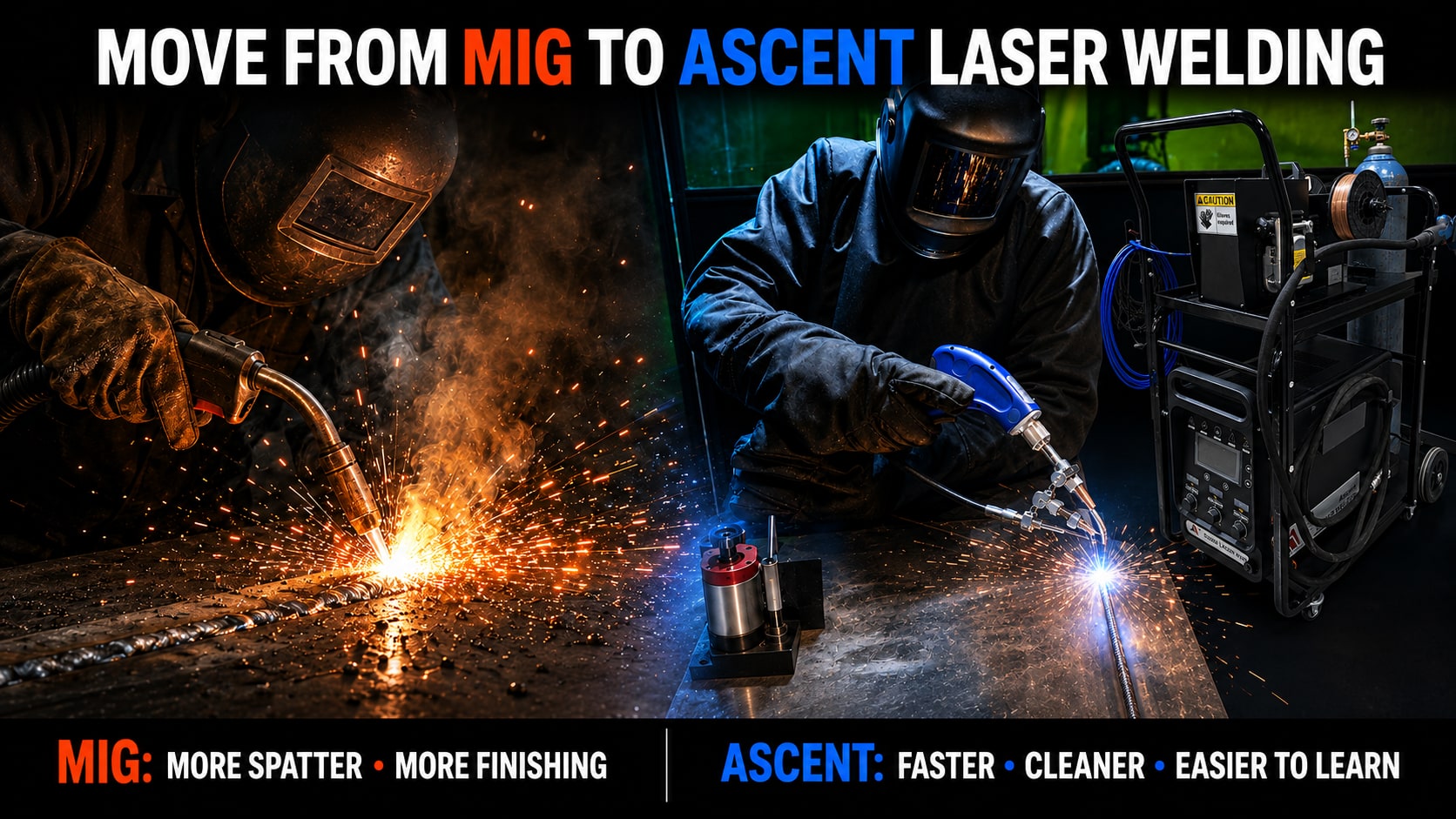
When comparing the Ascent Equipment 2000W Refrigeration Handheld Fiber Laser Welder to the leading alternatives, the comparison should focus on production performance, cooling technology, ease of use, operating costs, and support — not just laser power. Wattage is only one part of the picture.
Feature Comparison
| Feature | Ascent Equipment 2000W | Typical Competitors |
|---|---|---|
| Cooling System | Refrigerant direct cooling (heat pump) | Air-cooled or water-cooled |
| Duty Cycle | 100% duty cycle for continuous operation without scheduled cooling breaks | Varies by model; cooling capacity depends on design |
| Maintenance | No water replacement or chiller maintenance | Air filter cleaning or water/chiller maintenance |
| Torch Weight | 1.32 lb (600 g) | Often 1 kg or more on many industrial systems |
| Operating Temperature | −20°C to +60°C | Typically narrower operating ranges |
| Wire Feeder | Dual automatic wire feeder included | Often single feeder or optional accessory |
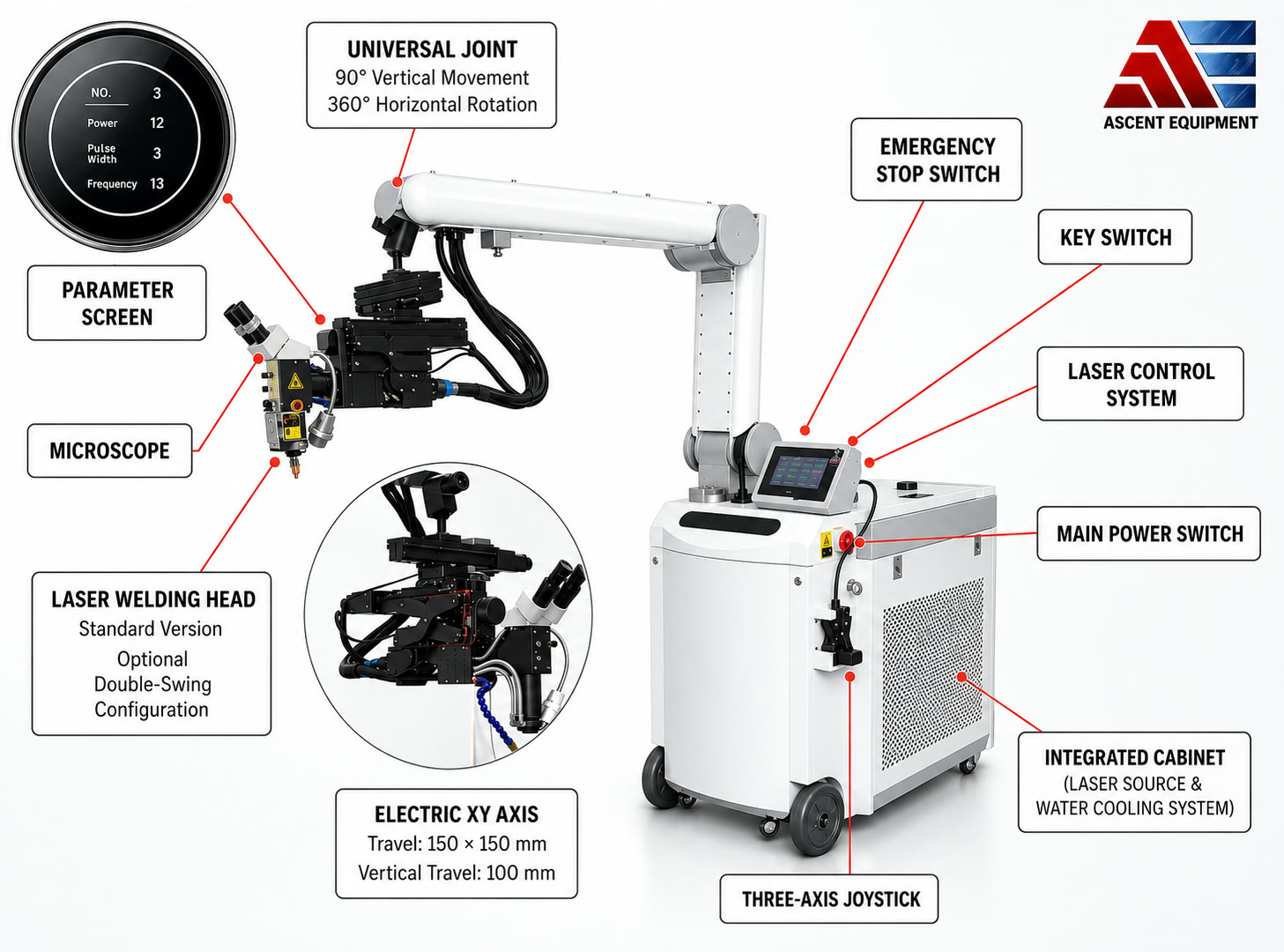
| Controls | Android app + 3-button control | Usually touchscreen only |
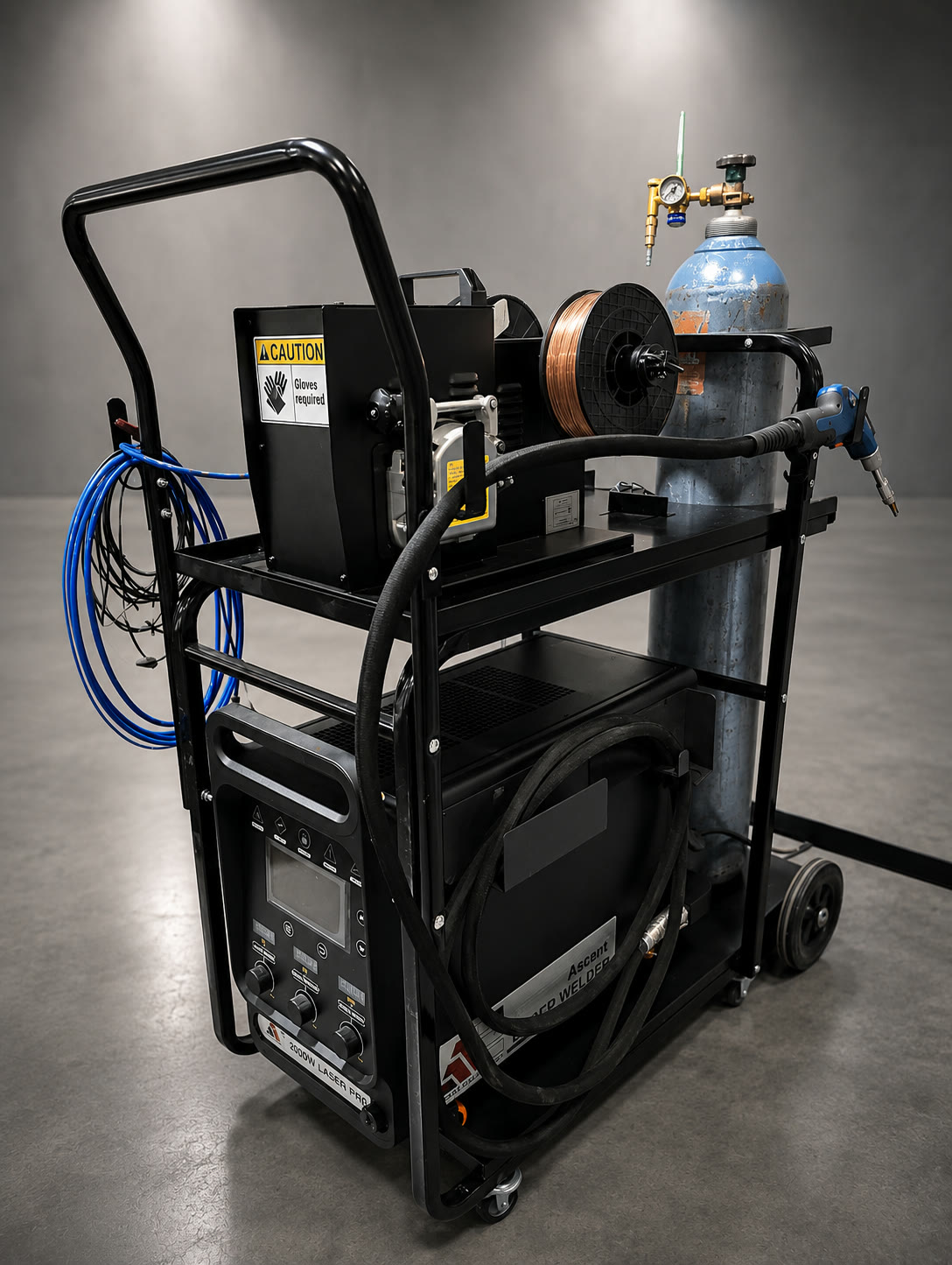
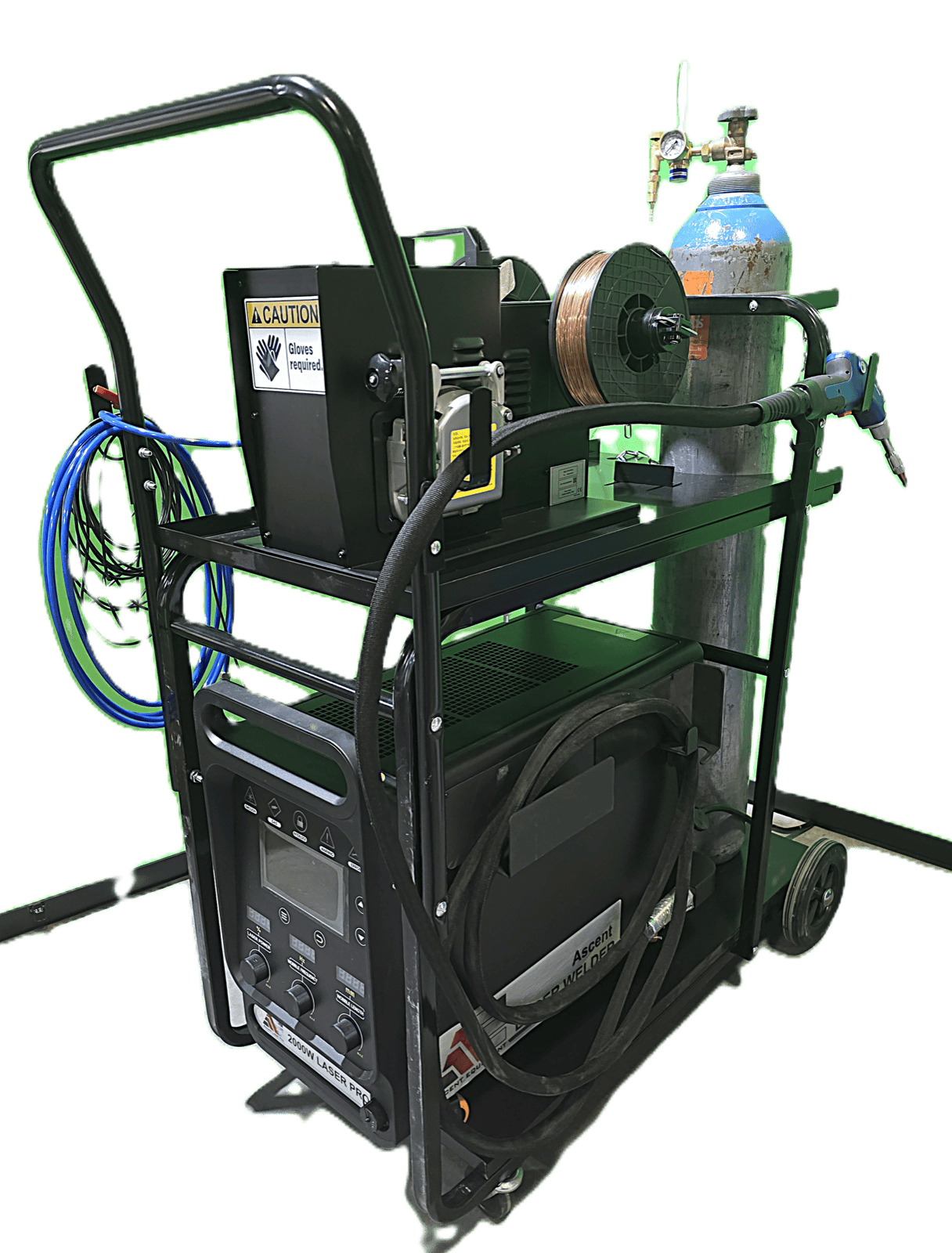
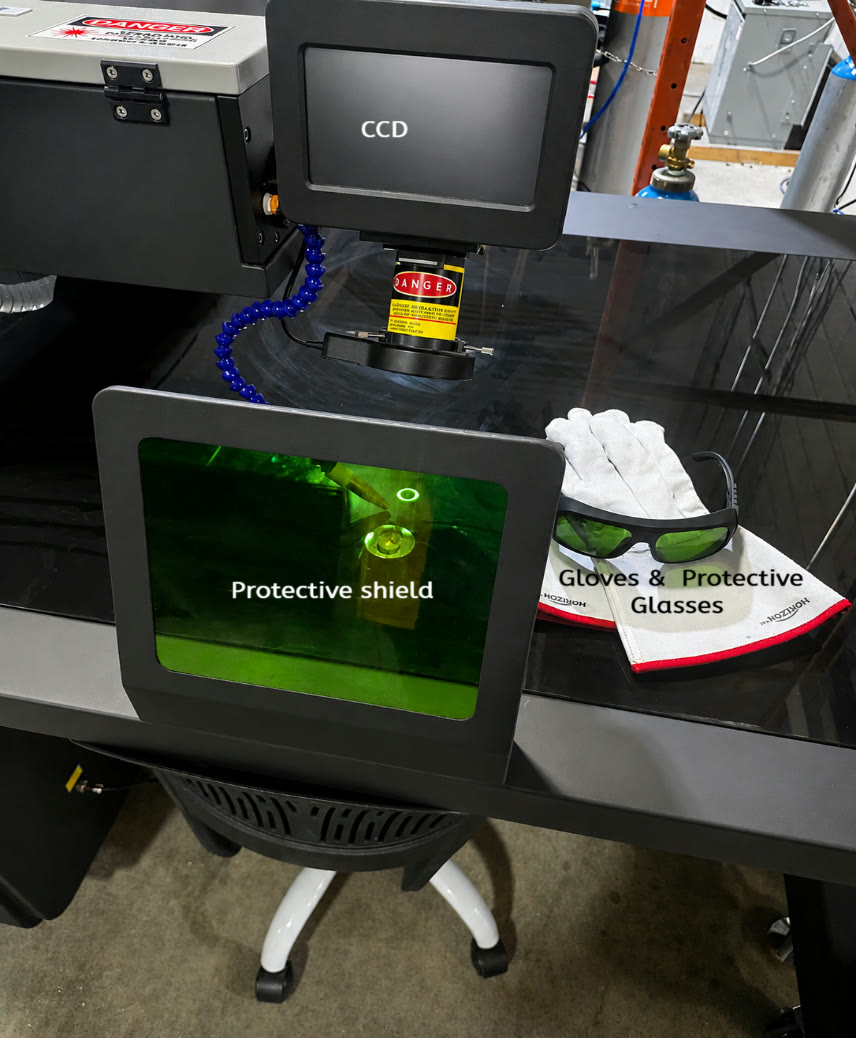
| Included Accessories | Fiber laser helmet, OD 8 goggles, welding gloves, regulator, wire feeder, nozzles | Frequently optional extras |
| Designed For | High-production fabrication and sign manufacturing | General metal fabrication |
Advantages of the Ascent Equipment System
1. Refrigeration Cooling Technology
Unlike traditional air- or water-cooled systems, Ascent uses a dual-circuit refrigerant heat pump — the same technology principle as HVAC equipment. This is not a marketing distinction. It changes how the machine performs in a real production environment.
Benefits include:
- No water tank to fill or replace
- No coolant maintenance or chiller servicing
- Consistent laser output temperature throughout a shift
- Stable performance in ambient temperatures from −20°C to +60°C (−4°F to +140°F)
- Continuous operation without scheduled cooling breaks
- Reduced downtime and maintenance overhead
- Improved energy efficiency compared to water-cooled alternatives
Air-cooled systems throttle under sustained load. Water-cooled systems require a separate chiller unit and ongoing maintenance. Ascent's refrigeration system handles both limitations in one integrated design.
2. Lighter Welding Gun
Torch weight directly affects operator performance over a full production shift. A lighter gun means:
- Less operator fatigue across a full day of welding
- Better torch control and more consistent weld quality
- Faster movement between weld points
- More accurate welds on tight geometries
Ascent specifies a torch weight of 1.32 lb (600 g). Many competing handheld laser welders use significantly heavier guns — fatigue compounds across an 8-hour shift in ways that spec sheets do not capture.
3. Designed for Sign Manufacturing and Light Fabrication
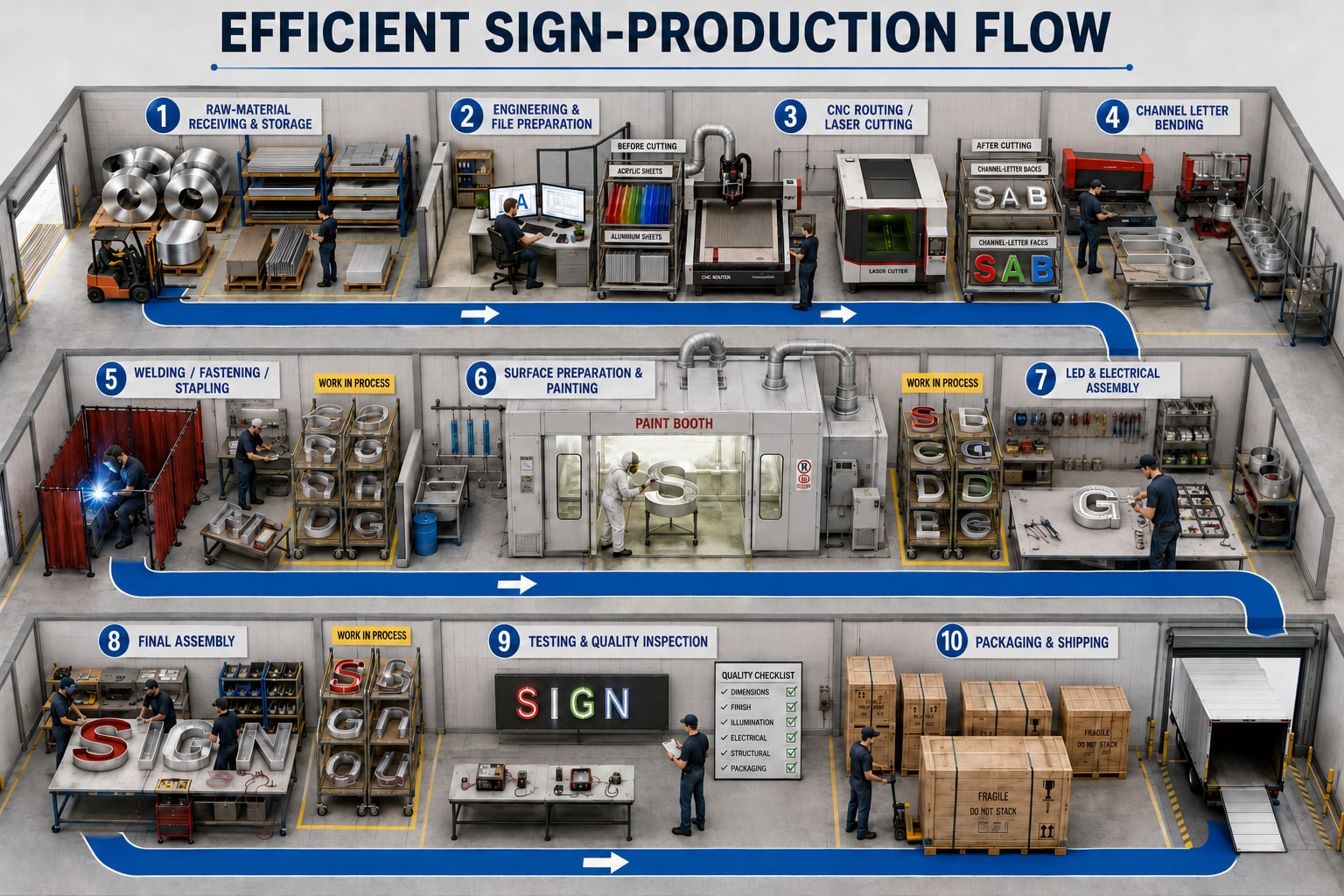
Most laser welders are built for general fabrication, automotive, or heavy industry. The Ascent machine is configured specifically for:
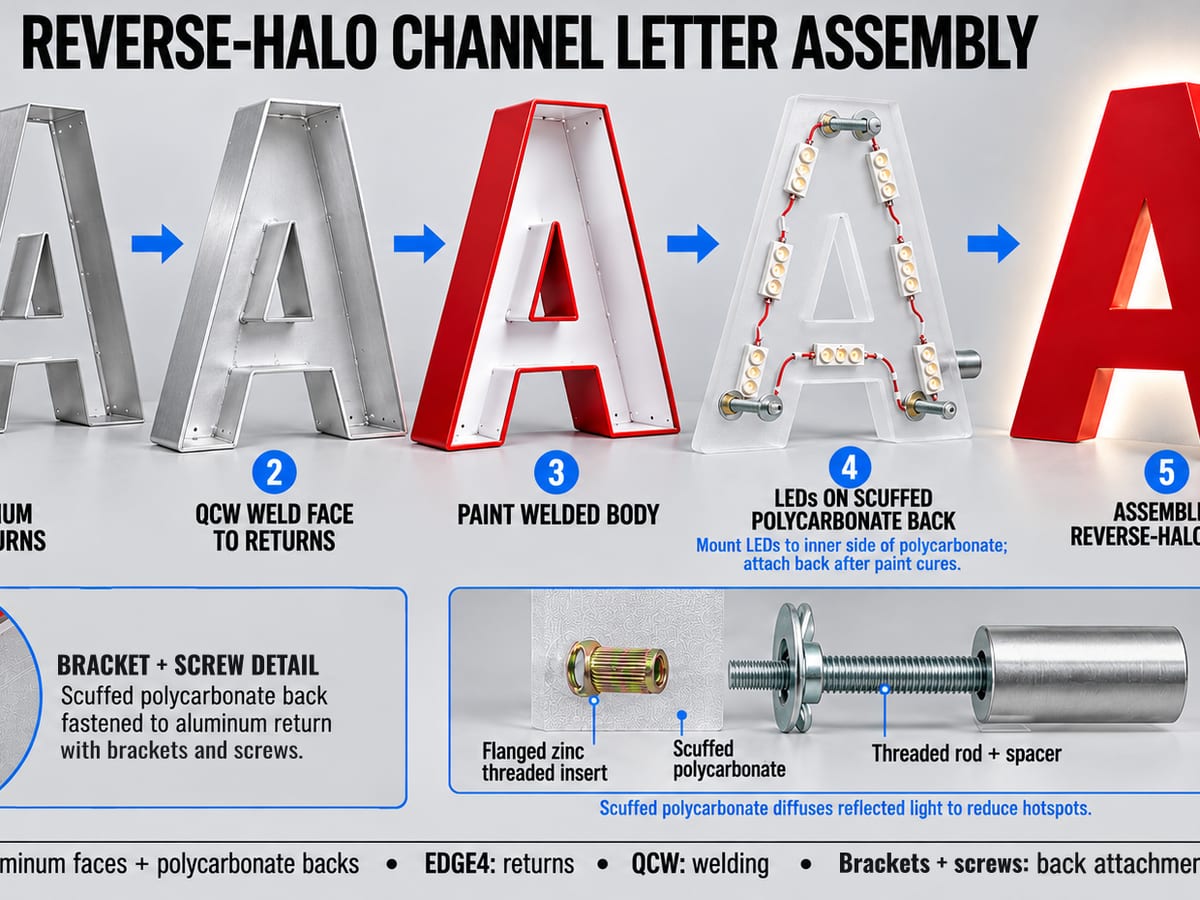
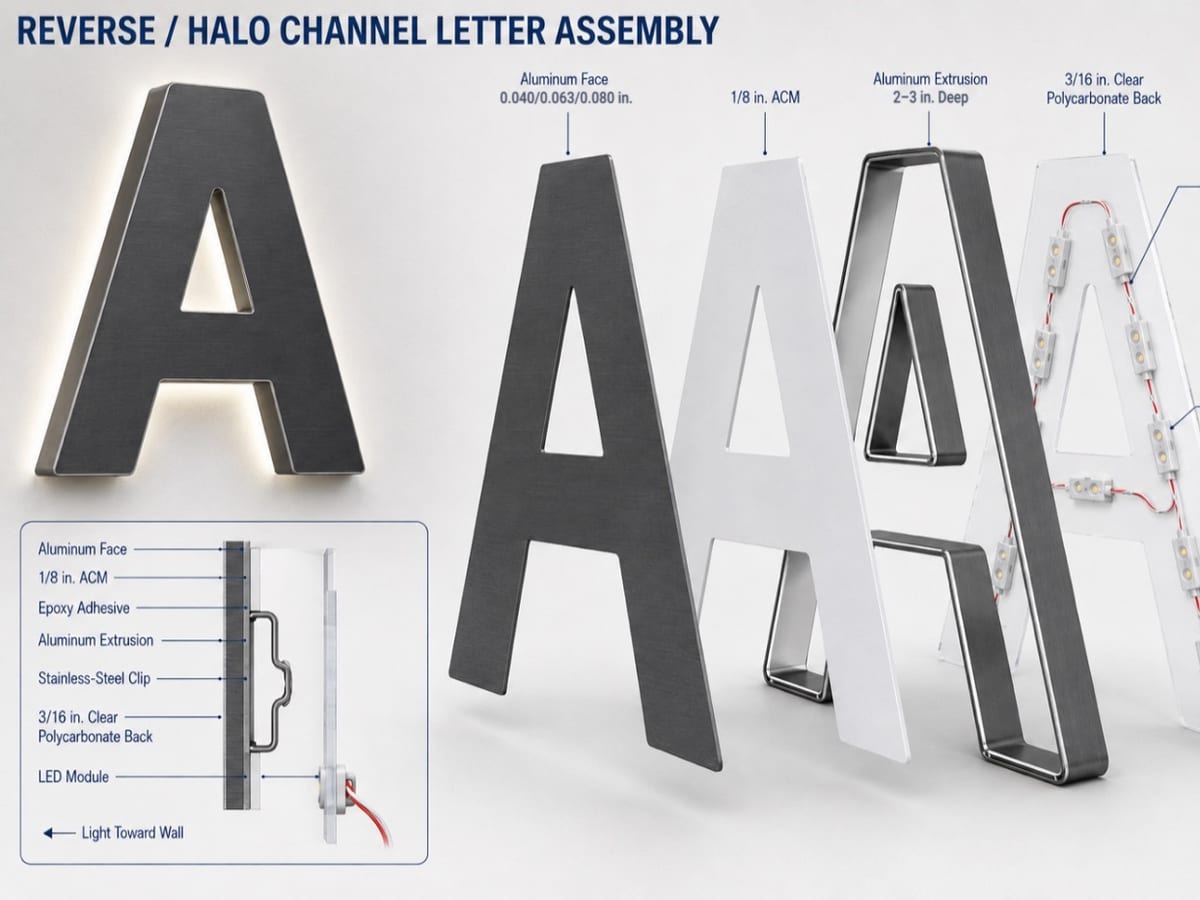
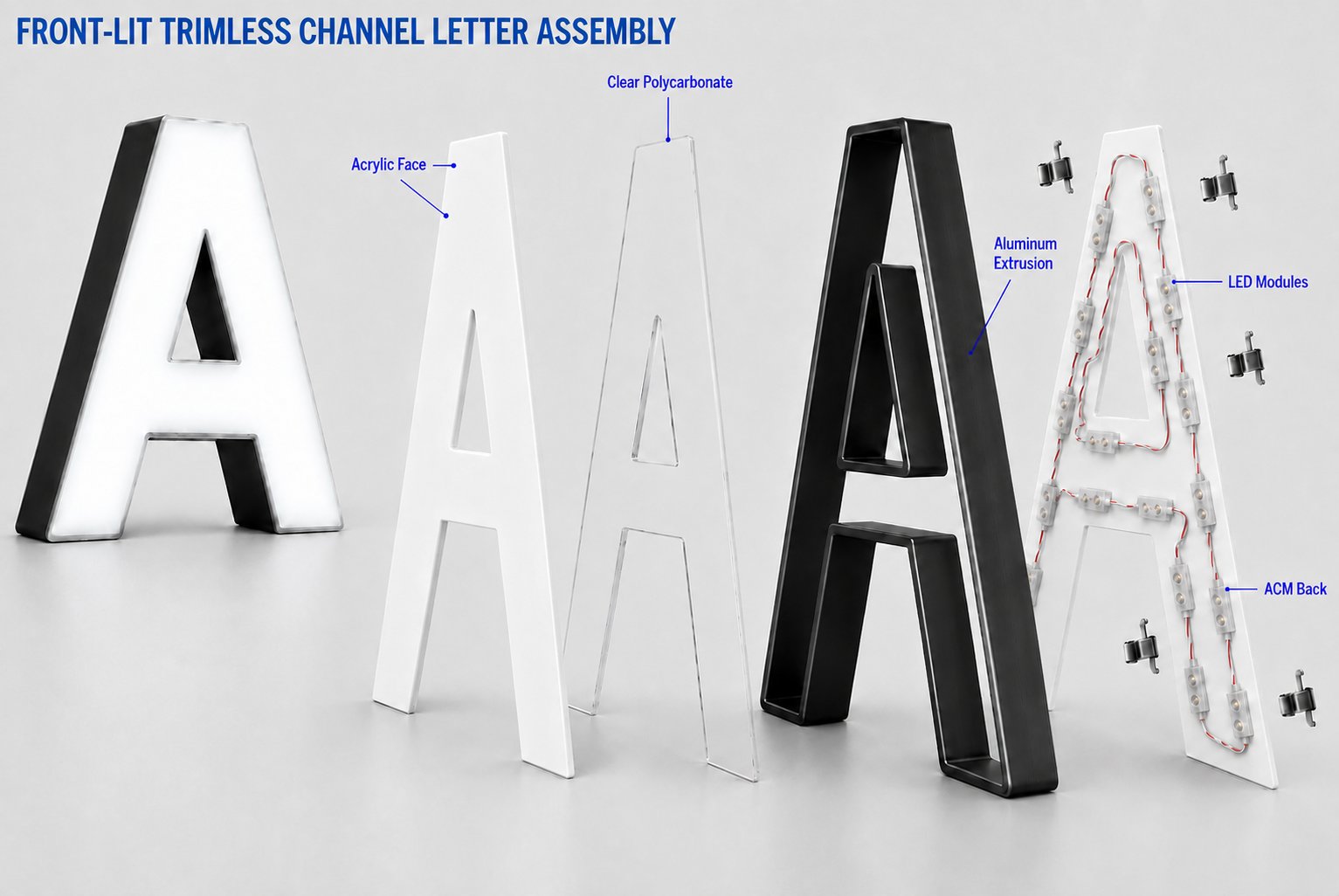
- Channel letter production (aluminum and stainless steel returns)
- Thin-gauge materials common in sign fabrication
- Sign cabinets and enclosures
- Architectural signage and decorative metalwork
- HVAC fabrication
This focus reduces setup time, simplifies operator training, and means the machine's default parameters are tuned for the materials sign shops and light fabricators actually use — not heavy structural steel.
4. Lower Operating Costs
Compared with water-cooled systems:
- No coolant to purchase or dispose of
- No chiller unit to service or replace
- Fewer consumable costs overall
- Less planned downtime for maintenance
Compared with air-cooled systems:
- Greater thermal stability under sustained production loads
- Consistent performance in hot shop environments where air cooling degrades
Cooling system design is one of the largest factors in long-term operating cost and productivity — yet it is frequently overlooked in initial purchase comparisons that focus only on wattage and price.
Comparison Against Well-Known Brands
| Brand | Strength | Compared to Ascent |
|---|---|---|
| IPG LightWELD | Premium brand recognition | Higher purchase price; strong reputation but different cooling architecture |
| Maxphotonics-based welders | Widely available | Generally conventional air- or water-cooled systems |
| Raycus-based welders | Good value | Broad OEM ecosystem; features vary significantly by manufacturer |
| Bodor | Strong industrial automation | More focused on larger fabrication customers |
| Han's Laser | Large global manufacturer | Broad product line rather than sign-industry specialization |
Best Applications
The Ascent 2000W Refrigeration Handheld Laser Welder is ideal for:
- Sign manufacturers running channel letter production
- Aluminum and stainless steel fabrication shops
- Architectural metalwork
- HVAC and light industrial fabrication
- Any continuous production environment where duty cycle and cooling performance matter
Why Most Production Shops Choose 2000W
A 2000W handheld laser welder offers the best balance of speed, penetration depth, portability, power consumption, and ease of operation for the majority of fabrication tasks. It handles aluminum, stainless steel, carbon steel, and galvanized materials in the thicknesses most commonly used in sign and light industrial manufacturing — without moving to a larger, more expensive 3000W platform that may be more than the application requires.
Overall Assessment
For sign manufacturers and light-to-medium fabrication shops, the Ascent 2000W Refrigeration Handheld Laser Welder stands out through its combination of:
- Refrigerant direct-cooling technology that sustains 100% duty cycle
- Lightweight ergonomic torch for reduced operator fatigue
- Low-maintenance operation with no chiller or coolant requirements
- Complete ready-to-weld package (fiber laser helmet, OD 8 goggles, welding gloves, regulator, dual wire feeder, nozzles included)
- Controls designed for production environments (Android app + 3-button operation)
- Factory installation, on-site training, and lifetime technical support
- Sign-industry-specific application focus
A fair comparison should note that specific competitors may excel in other areas — premium brand recognition, broader automation ecosystems, or specialized heavy-industrial applications. The best choice depends on production volume, materials, service availability, and total cost of ownership — not laser power alone.
Contact us to discuss your production requirements and get a quote on the Ascent 2000W Refrigeration Handheld Laser Welder.