
One Supplier for Your Bender, Your Welder, and Your Laser Cutter
Most sign shops build their channel letter production line the same way: one machine at a time, from different vendors, whenever the budget allows. A bending machine from one company, a laser welder from another, a laser cutter from a third. Each purchase made independently, each vendor contracted separately, each piece of equipment installed and trained by a different team.
It works. But it creates a coordination problem that compounds over time — and most shops don't notice it until something breaks.
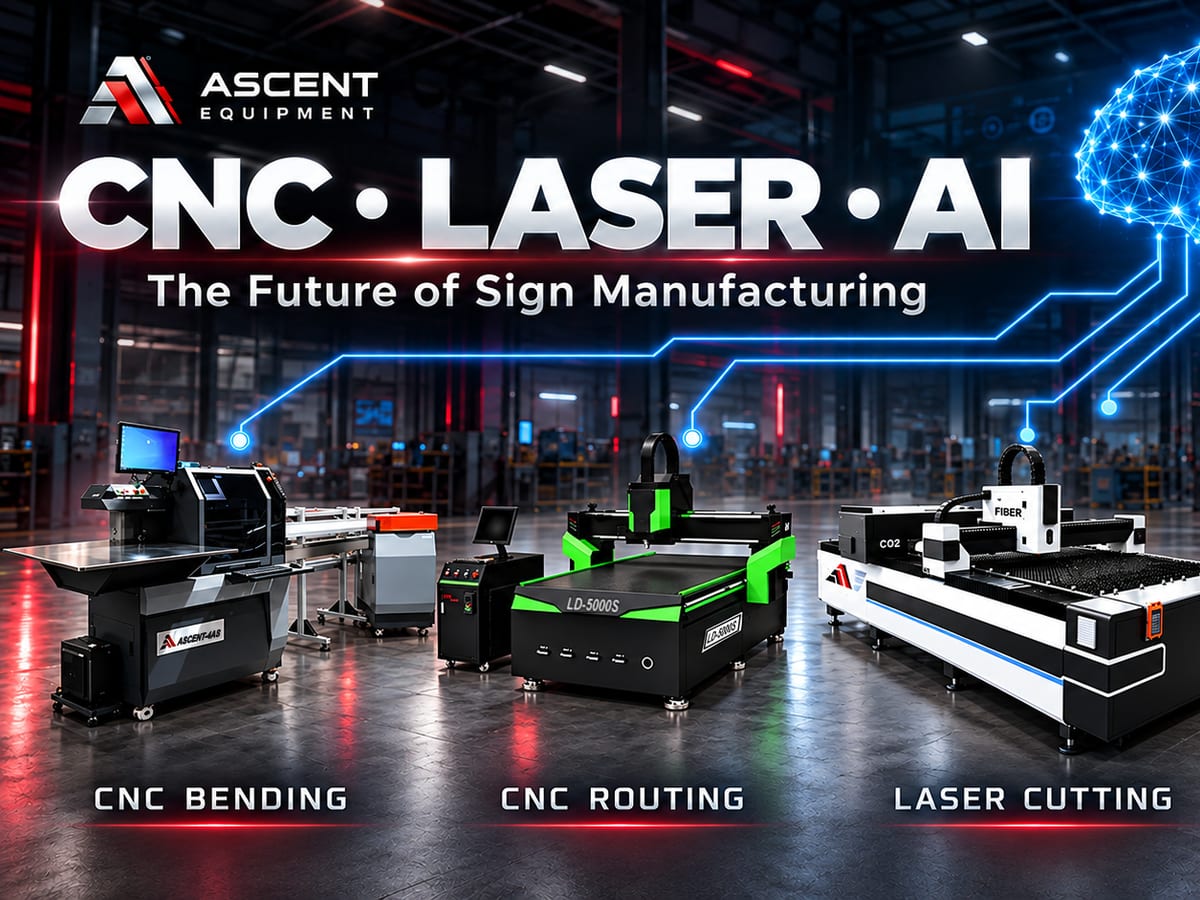
Based on Ascent Equipment's review of publicly available North American suppliers as of August 2026, we have not identified another supplier offering this same combination of capabilities. Ascent Equipment covers the full channel letter production workflow — bending machine, laser welder, and laser cutter — as one company, with one installation team, one service contact, and equipment designed to be used together.
What a Complete Channel Letter Production Line Actually Requires
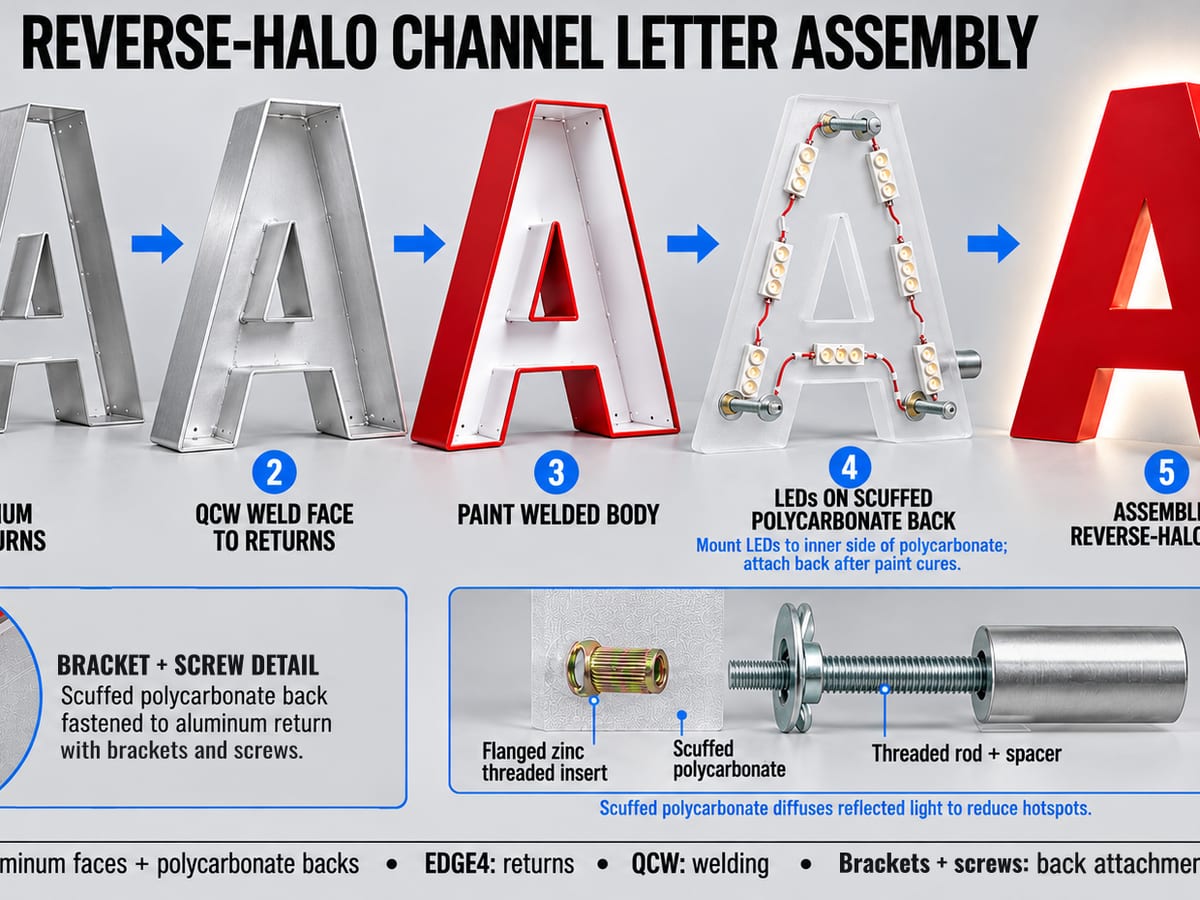
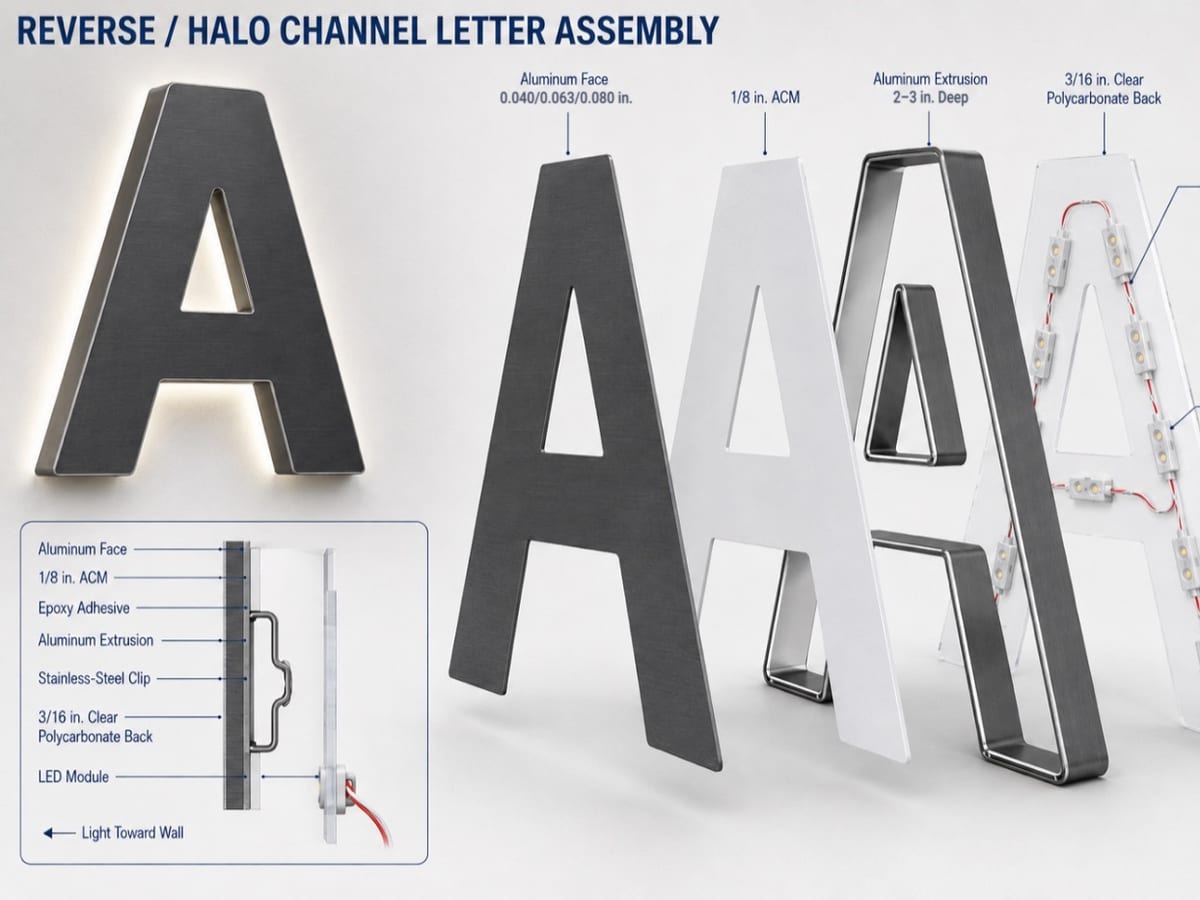
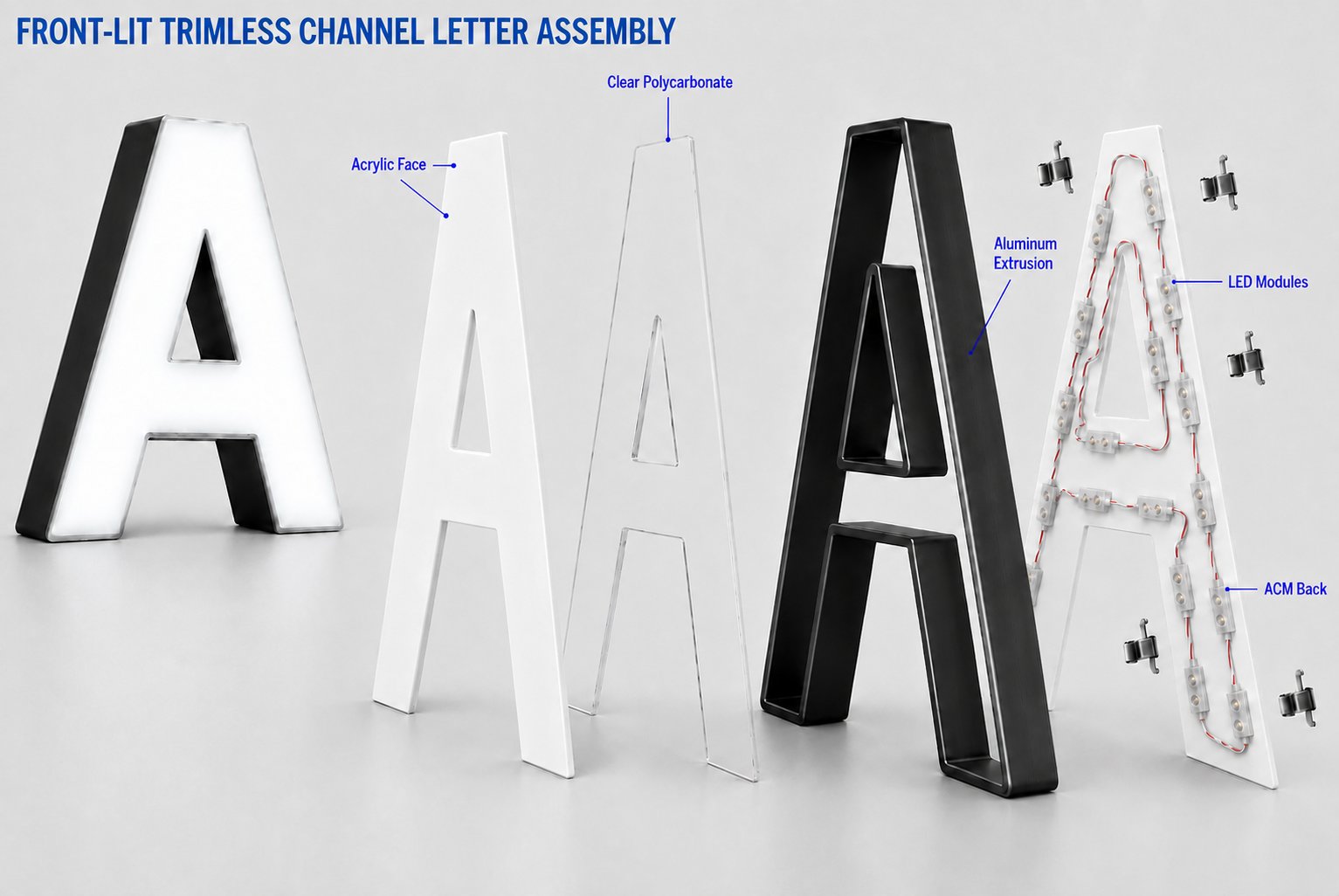
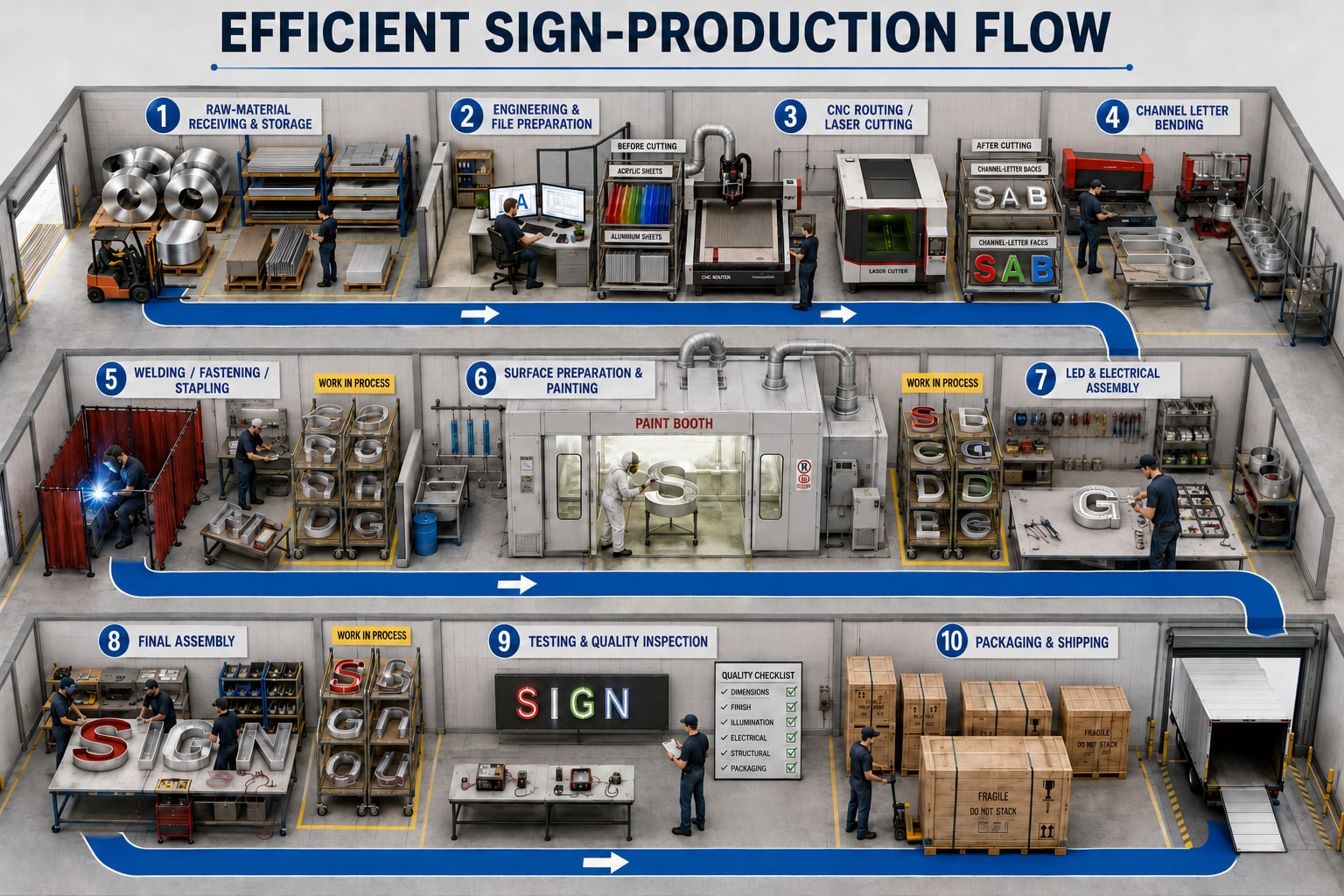
A finished channel letter has four components: the face (acrylic or aluminum), the side returns (the shaped aluminum or stainless strip that gives the letter its depth), the back, and the lighting. Producing that letter from raw material involves three distinct machine operations:
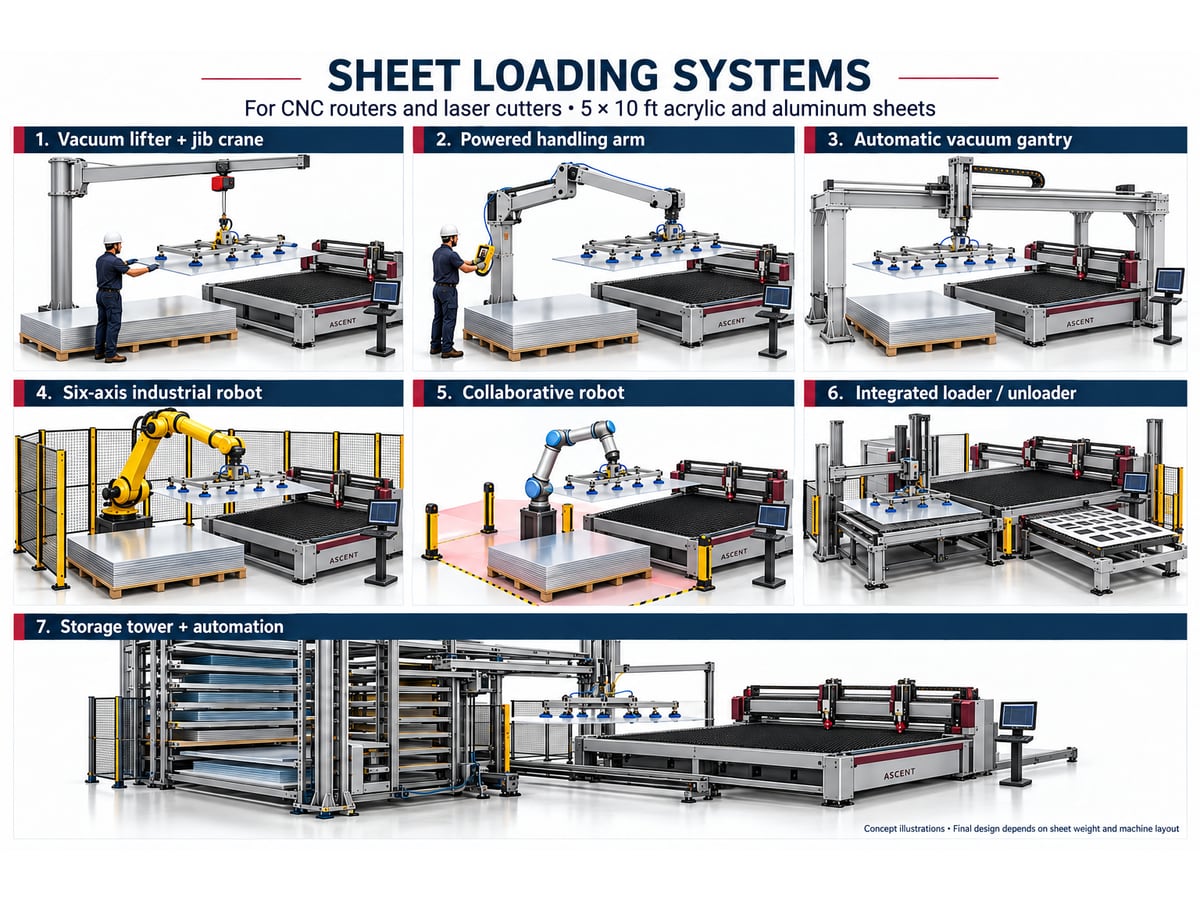
1. Cutting — The laser cutter cuts the letter face from acrylic sheet, the letter back from aluminum sheet, and any steel mounting hardware. A CO2 laser handles acrylic; a fiber laser handles aluminum and steel. A combination machine handles both on one bed.
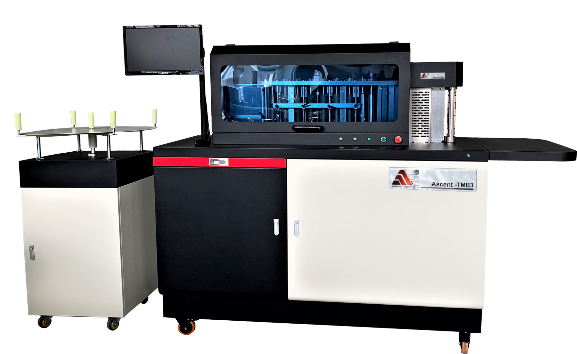
2. Bending — The CNC bending machine forms the aluminum or stainless coil into the shaped side returns that wrap around each letter. This is the step that replaces 30 to 45 minutes of hand-bending with 3 to 4 minutes of machine time.
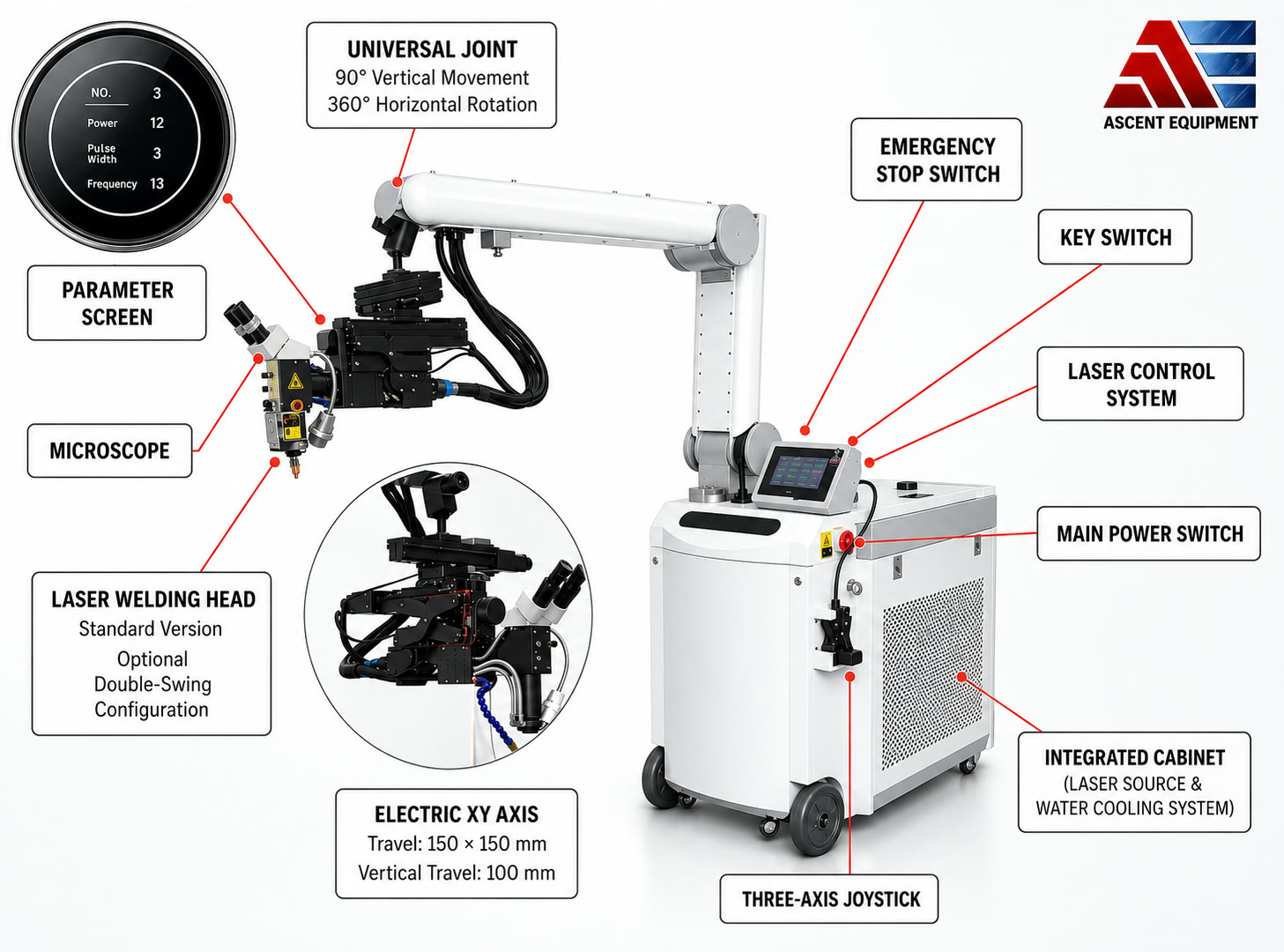
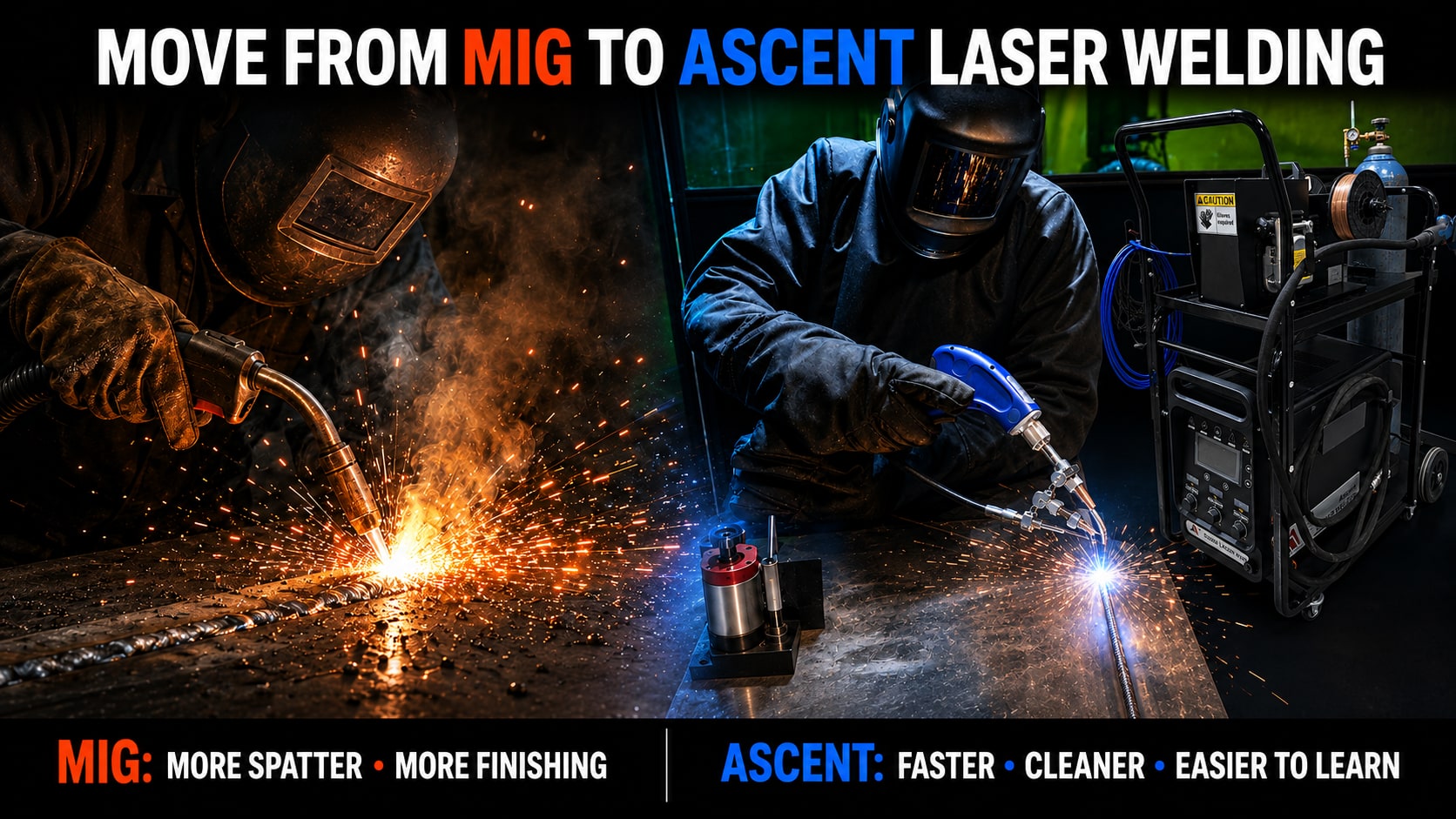
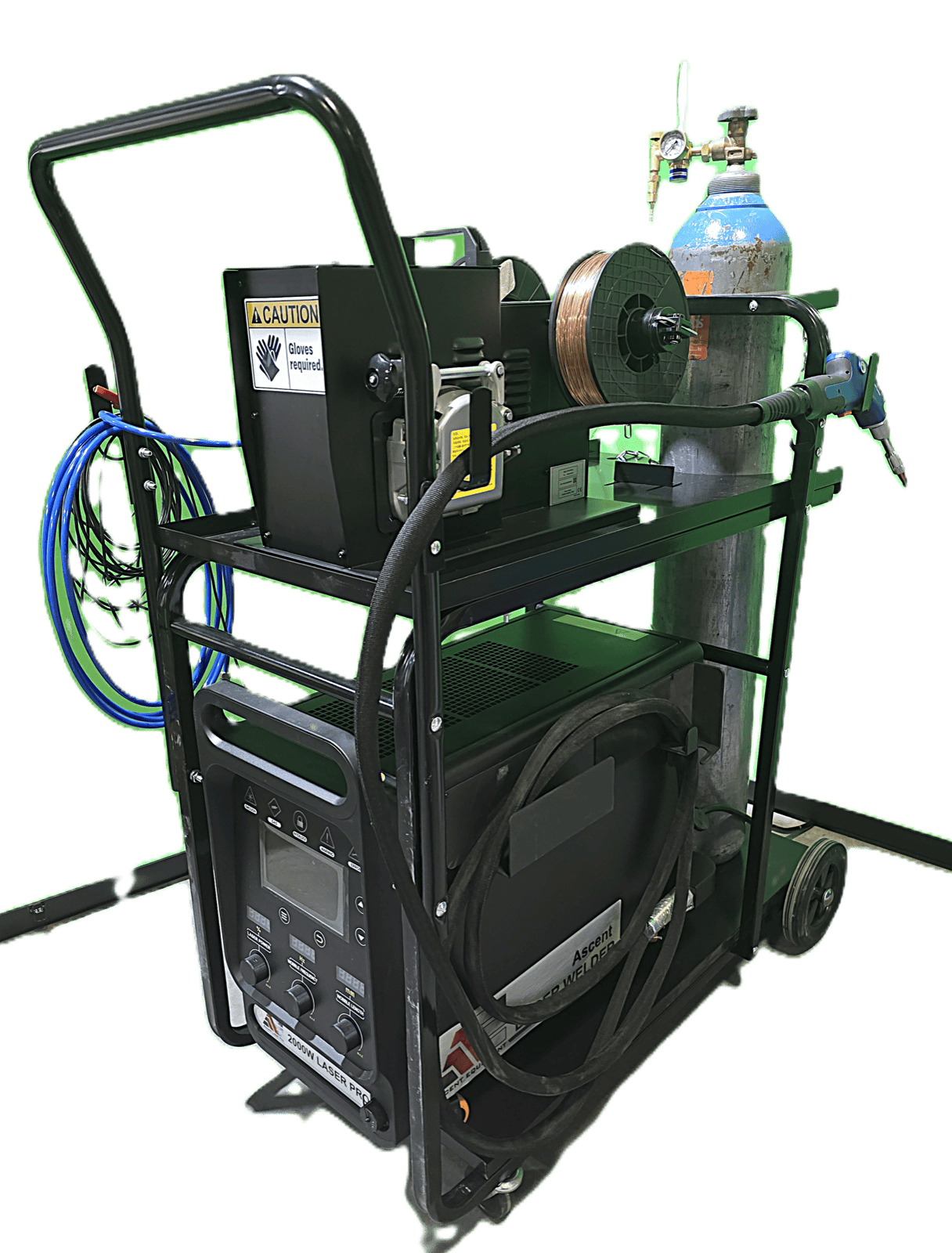
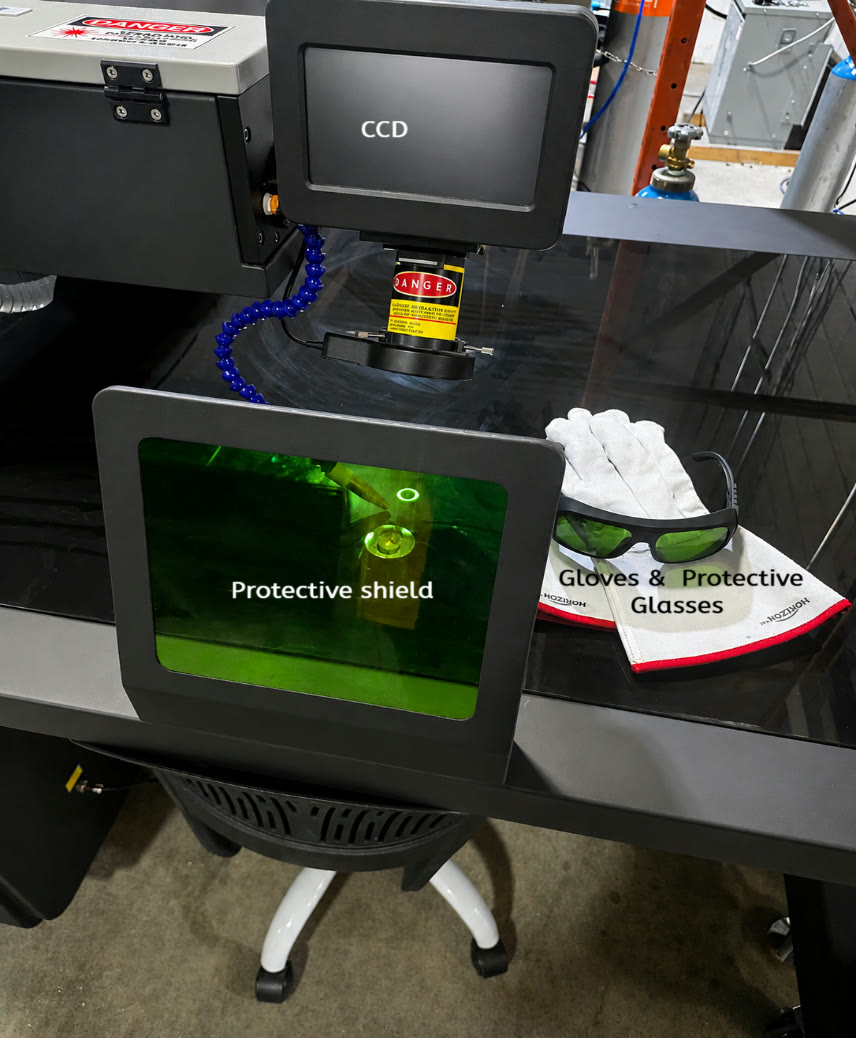
3. Welding — The laser welder closes the seams on the return, bonds the back to the return, and handles any joint work on the finished letter. A laser welder does this faster, cleaner, and with less heat distortion than TIG or MIG — and without the grinding and cleanup that traditional welding requires.
Each step feeds the next. The cutter produces the components; the bender forms the returns; the welder assembles the letter. If any one step is slow or inconsistent, it creates a backlog for the steps that follow.
The Three Ascent Systems
Bending Machines
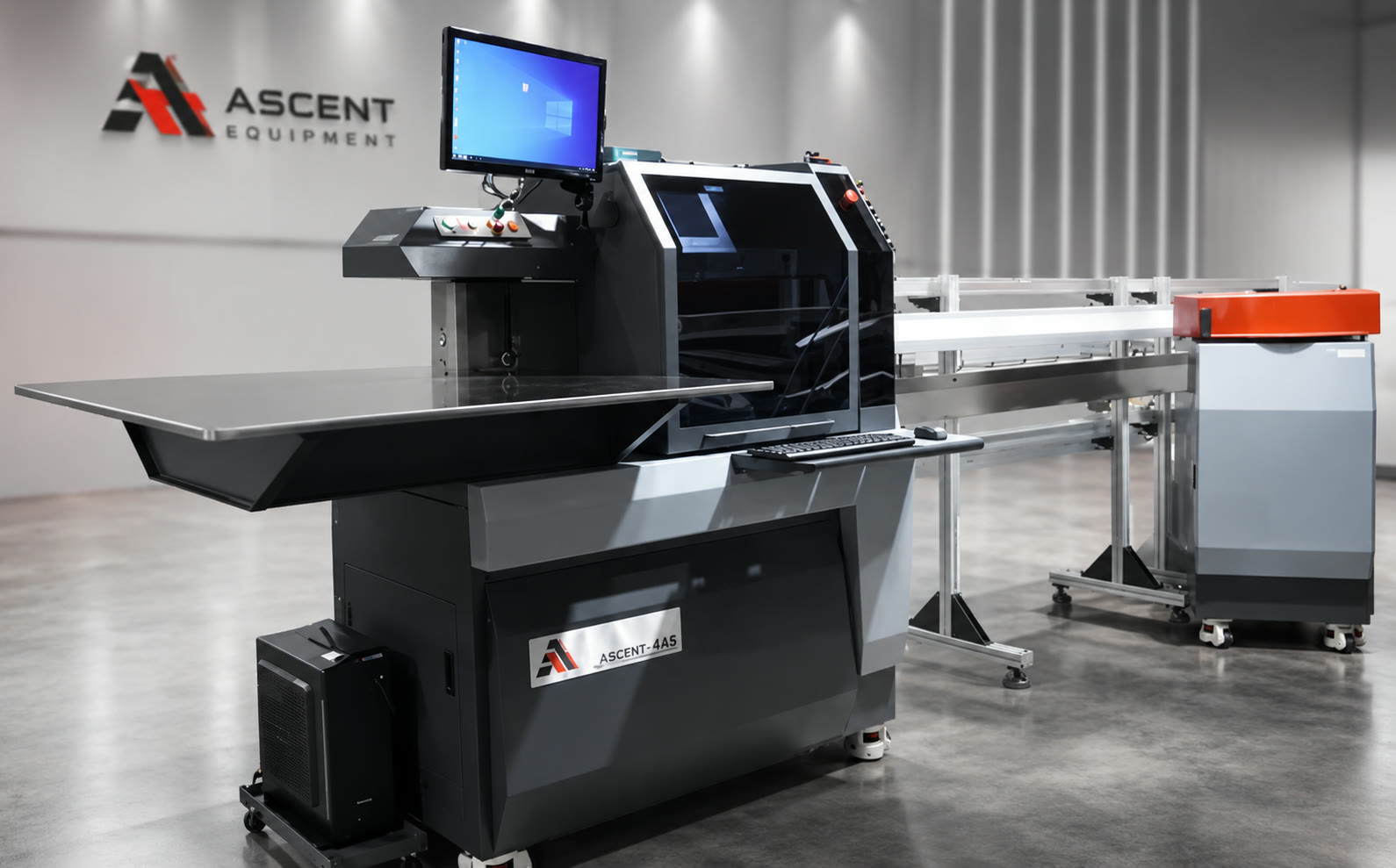
Ascent makes six bending machine models covering every channel letter style and material — from the 5AS for trimless letters and reverse halo without welding, to the EDGE-4 for high-precision traditional letters, to the MAX for large outdoor cabinets over 8" deep. All run from Windows software that accepts your existing DXF and AI design files.
See all six bending machines →
Laser Welders
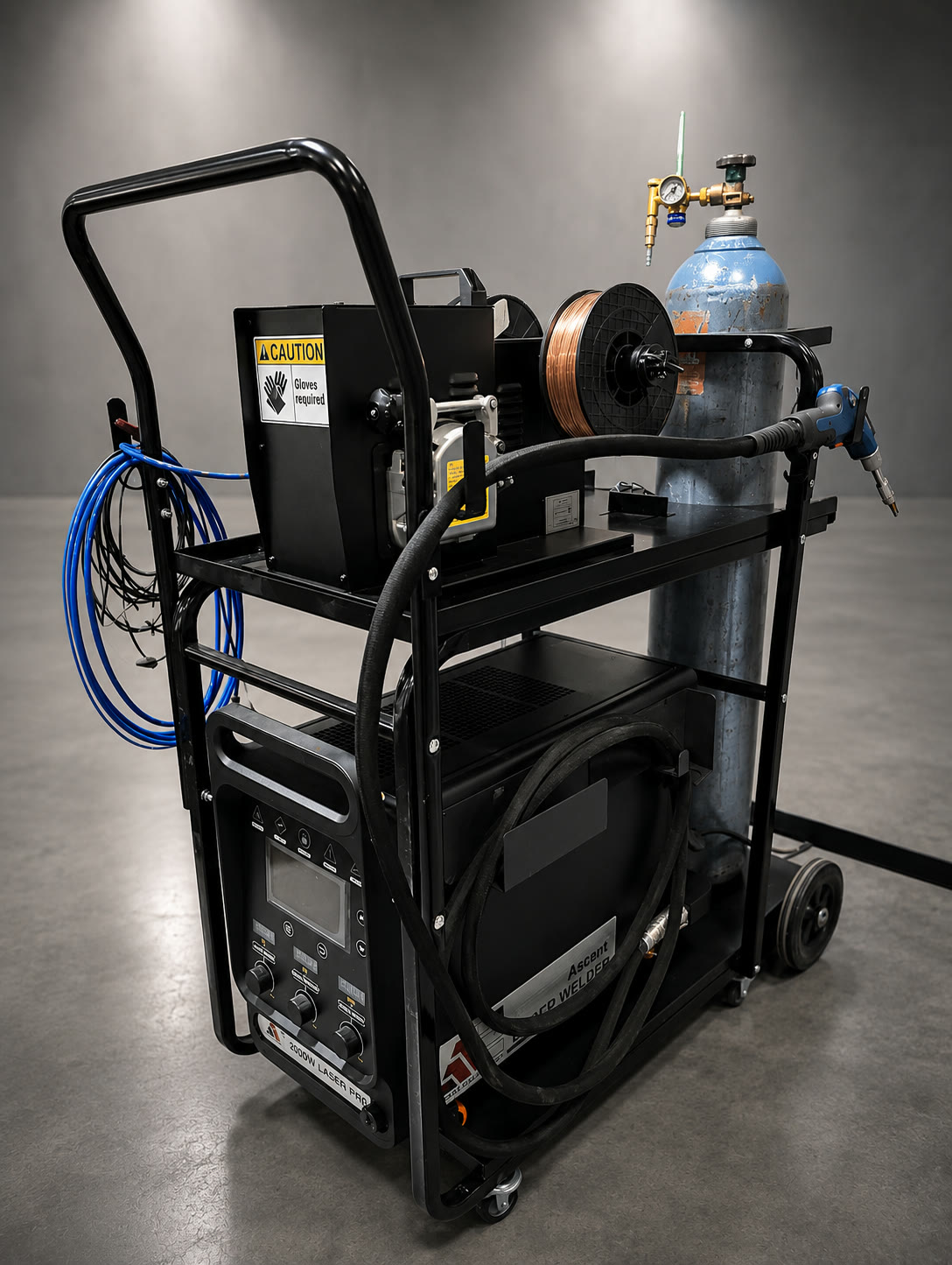
Ascent's refrigeration fiber laser welders use a refrigerant heat pump — the same principle as an air conditioner — to sustain a 100% duty cycle from −20 °C (−4 °F) to +60 °C (140 °F), with no chiller or water circuit to maintain. Three models, 1500W, 2000W and 3000W, cover small letter shops through high-volume fabrication. For smaller letter work, the QCW tabletop/handheld combination handles aluminum up to 0.063" and stainless steel up to 0.040".
Laser Cutters
Ascent's laser cutter line runs from the 280W CO2 acrylic cutter for sign shops focused on acrylic faces and non-metals, to the fiber laser cutter for metal fabrication shops cutting aluminum and steel sheet, to the combination CO2 + fiber that handles both in a single 4'×8' or 5'×10' machine — so a channel letter shop can cut acrylic faces and aluminum backs without changing setups or moving material between machines.
Why One Supplier Changes the Equation
One installation team who knows your whole shop
When each machine comes from a different vendor, installation is three separate events. Three different technicians, three different timelines, and three different sets of instructions about where equipment should be positioned, how power and air should be run, and how material flow should work around each machine.
When Ascent installs all three, it's one team, one visit, and one shop layout decision. The technician who positions your bender knows you're getting a laser cutter on the same floor. The cabling, the airflow, the material staging — it's planned around the complete workflow, not added piecemeal.
One training relationship for your operators
Operator training is where multi-vendor setups create the most friction. Each vendor trains to their own machine and their own software, with no connection to how the other machines in your shop work. Your operators end up with three separate knowledge bases that don't reinforce each other.
Ascent trains your team on all three machines together. Operators understand how a file flows from the cutter to the bender to the welder — not just how to run each machine in isolation. That workflow knowledge is what turns individual operators into a production team.
One service contact for everything on the floor
When something goes wrong with a machine from vendor A, and vendor A asks whether the problem might be related to vendor B's machine, no one knows — and neither vendor has an incentive to find out. You're the one making the calls, chasing the answers, and absorbing the downtime.
With Ascent, one phone call covers everything on the floor. The same technician who installed all three machines can diagnose an issue that touches more than one of them. There's no finger-pointing between suppliers because there's only one supplier.
Ascent service technicians are based in Buffalo, Toronto, and Kentucky, and remote diagnostics run through AnyDesk pre-installed on every machine. Most issues are resolved remotely; on-site visits happen on short notice when they're not.
Bundle pricing that reflects the full investment
Buying three machines from three vendors means negotiating three separate prices, three separate warranties, and three separate service agreements. Buying from one supplier means one negotiation, one relationship, and pricing that reflects the total investment rather than three individual transactions.
Ascent includes on-site installation, comprehensive training, a warranty (terms vary by machine type), and lifetime remote diagnostics with every machine — not as add-ons, but as standard.
Who This Matters Most For
Shops building out a production line from scratch. Starting with all three machines from one supplier avoids the pieced-together problem entirely. Your production line is designed as a system, not assembled as a series of compromises.
Shops that own one or two machines and are adding a third. If you already have an Ascent bender and you're adding a welder or cutter, Ascent already knows your setup. Installation is an extension of an existing relationship, not a fresh start.
Shops replacing aging equipment across multiple categories. If your bender, welder, and cutter are all due for replacement within a few years of each other, bundling those purchases is a practical and financial decision — one major procurement event instead of three.
Canadian sign shops. Ascent's Toronto location makes on-site installation and service practical in ways that US-only suppliers cannot match — no customs delays, no currency risk, and technicians who can be on-site without cross-border logistics.
The Practical Case
The sign shops that produce channel letters most efficiently aren't the ones with the most machines — they're the ones whose machines work together as a production system. That requires more than compatible specs. It requires a shared installation, shared training, and a single point of accountability when something doesn't work.
Most suppliers can sell you one piece of that. Ascent is the one that covers all three.
Contact Ascent Equipment to talk through your current production setup and what a complete Ascent line looks like for your shop — or explore the full equipment catalog: