
Call us: 1-800-927-5107 647-494-7800 ext. 1008

Why You Should Purchase Ascent Special Type Filament for Channel Letter 3D Printing

Differences between the standard filament and special channel letter filament

1. Light Transmission

Channel letter filaments have two kinds of transmittance: Lightproof and Semi-transparent. In many cases, you will need a lighttight letter wall — here we take white color filament as an example:
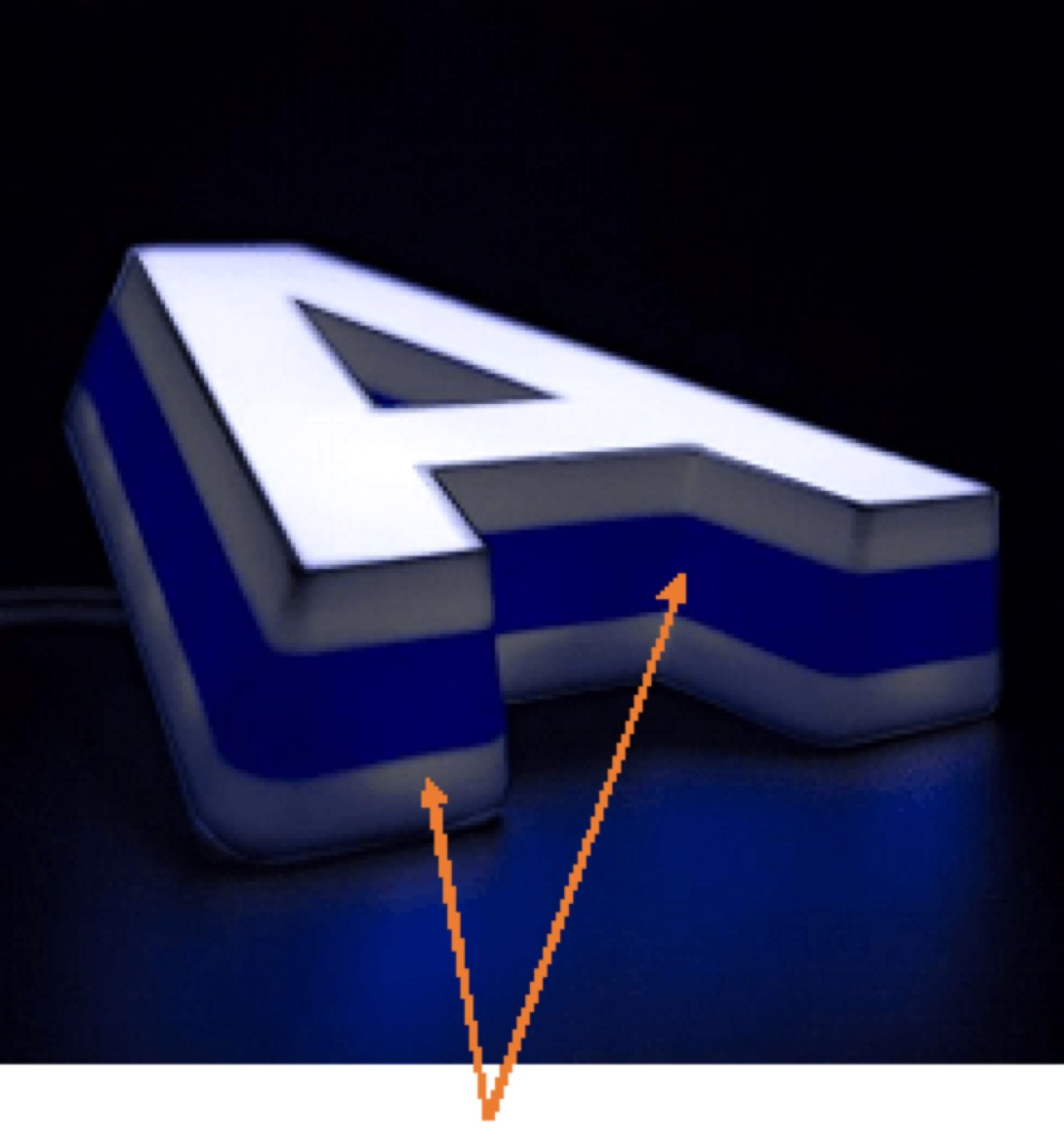
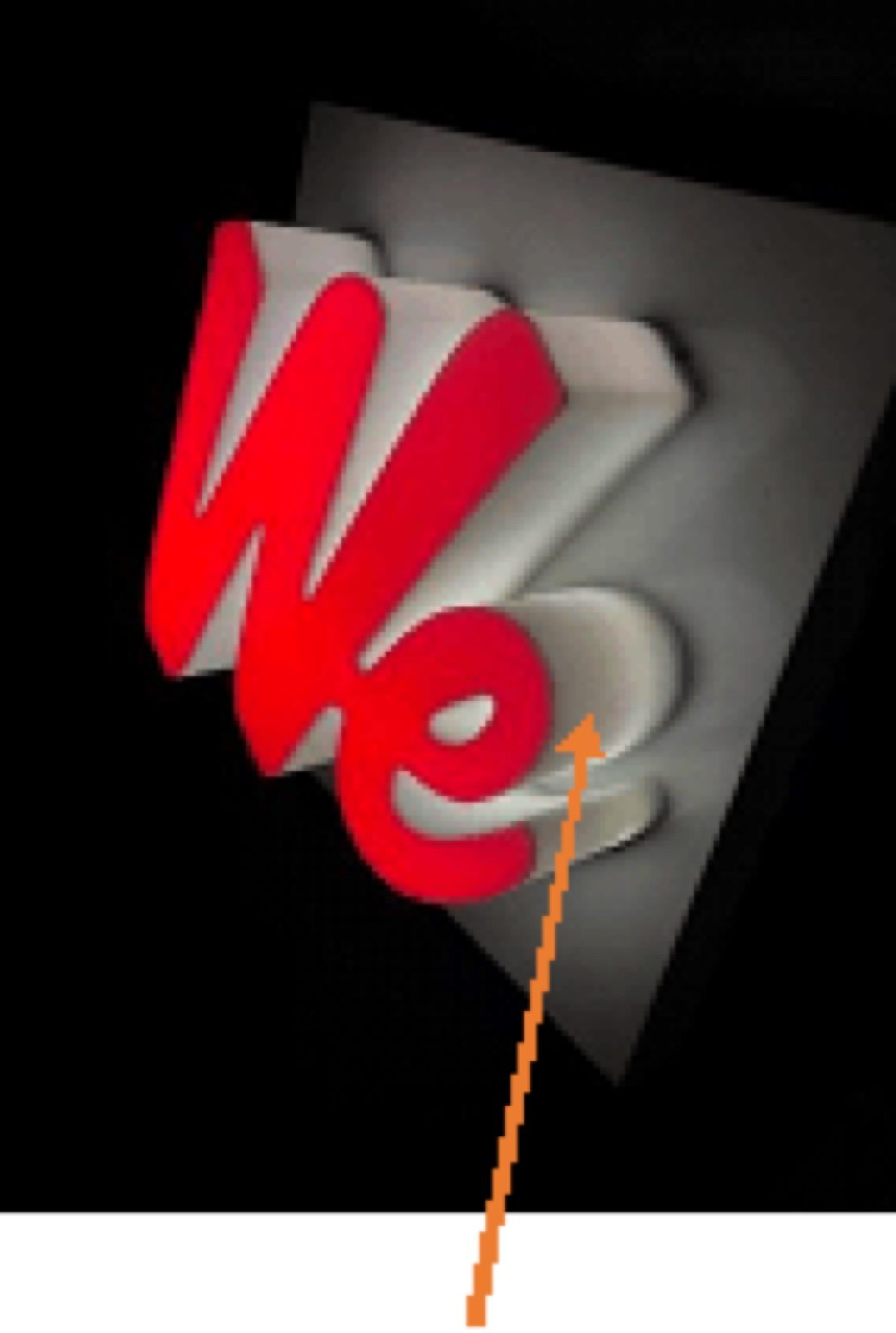
Solid color filament — light leaks through, makes the letter wired
This is the solid color filament. It cannot be entirely opaque to light, which makes the letter wired.
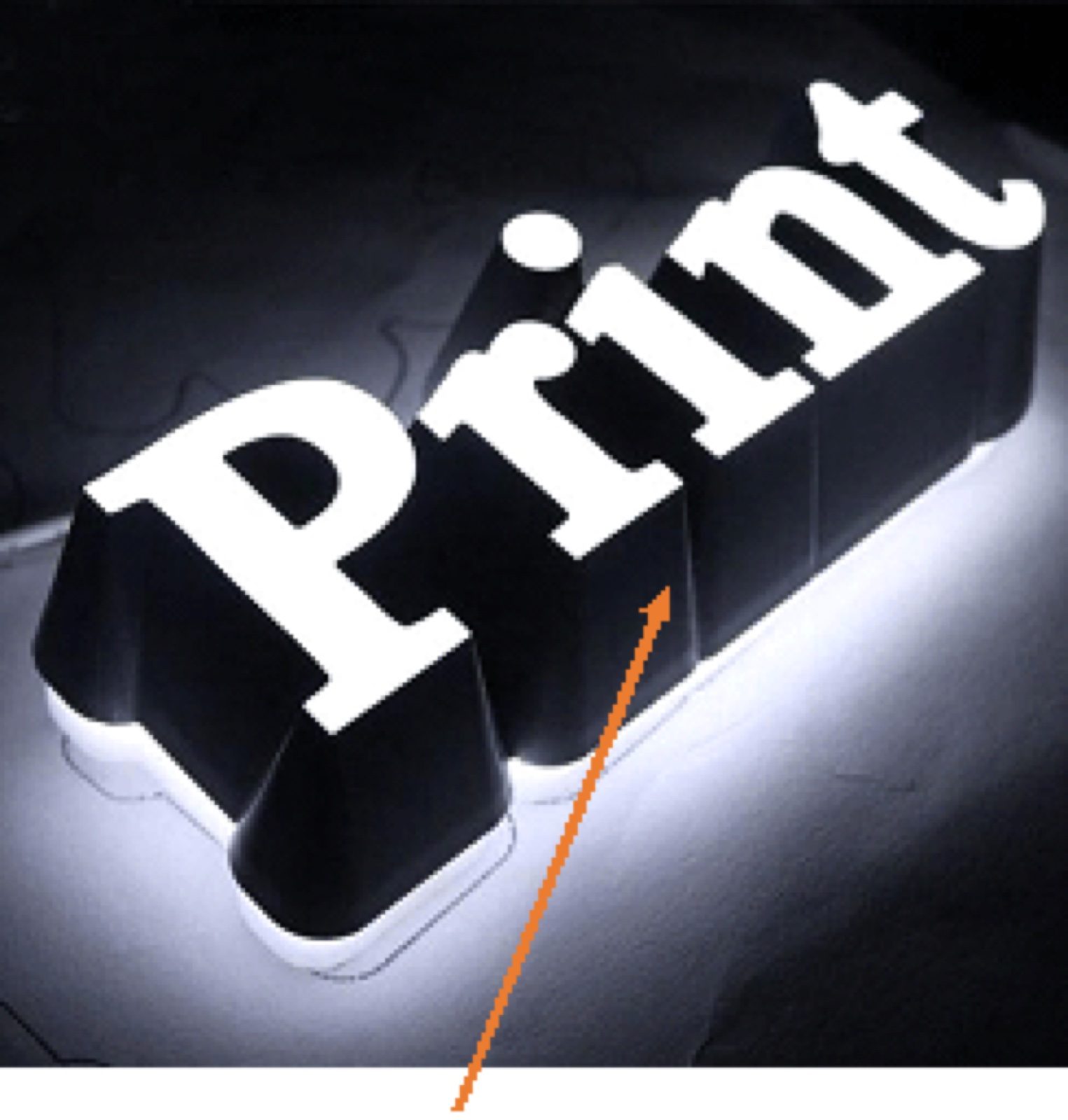
Special channel letter filament — completely tight to light
Special channel letter filament can be completely tight to light.
Normal filament — not enough transparency for 50% transparence
Normal filament doesn't have enough transparency when you want 50% transparence.
Semi-transparent special channel letter filament — even and soft light
Semi-transparent special channel letter filament will give you exceptional even and soft light.

2. Pigment Leaching

If you use liquid acrylic, you need stable color material.
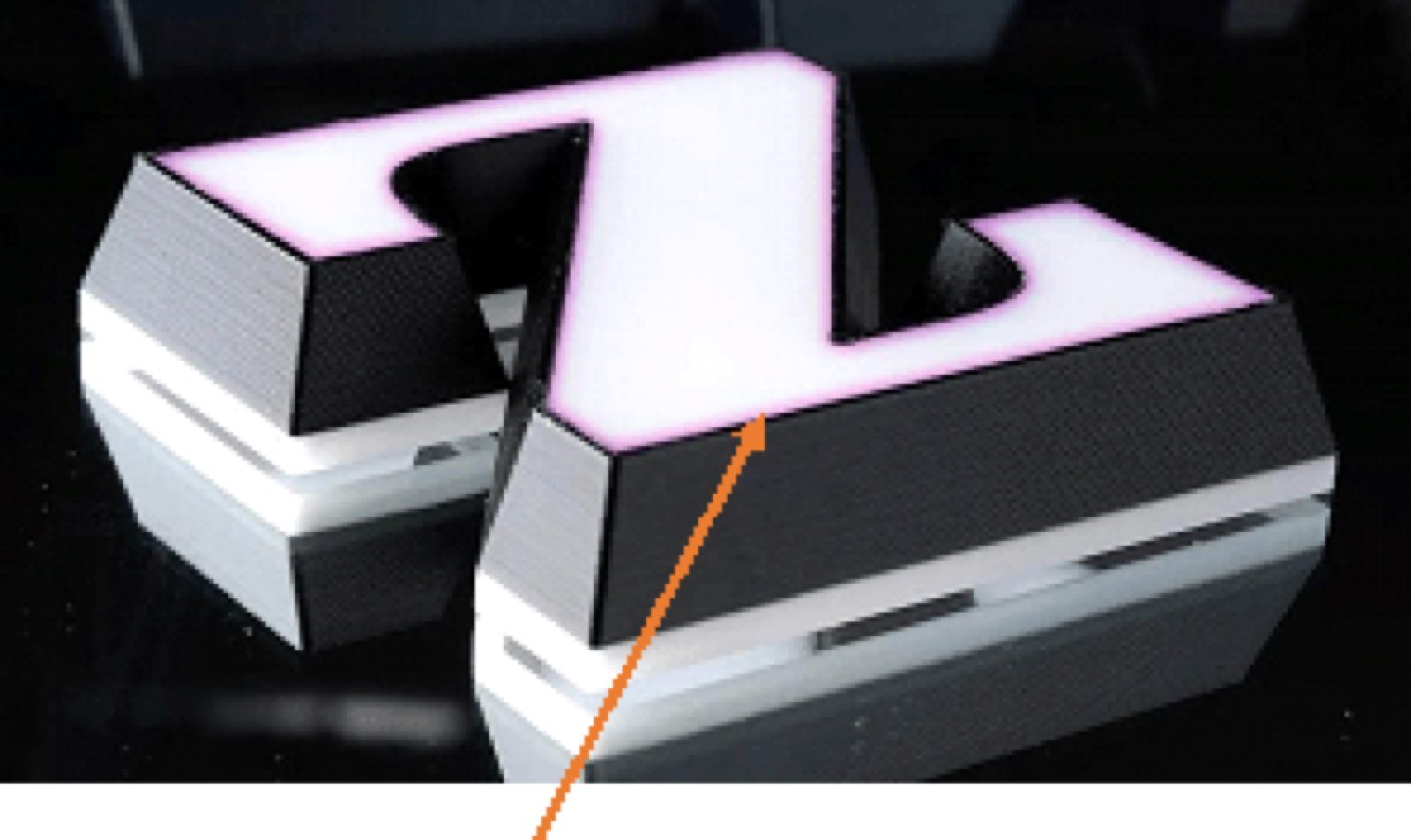
Normal filament — pigment dissolved by liquid acrylic, magenta leak
The development of normal 3D printing filament does not take this into account, so the pigment in the material will be dissolved by liquid acrylic and leach into the liquid acrylic. (Black pigments are magenta when diluted many times.)
Special channel letter filament — pigment will not be dissolved
The pigment in special channel letter filament will not be dissolved.

Differences between our channel letter filament and other channel letter filaments

3. Toughness and assembling

When assembling the LED light or PMMA panels, the material's toughness is a must.
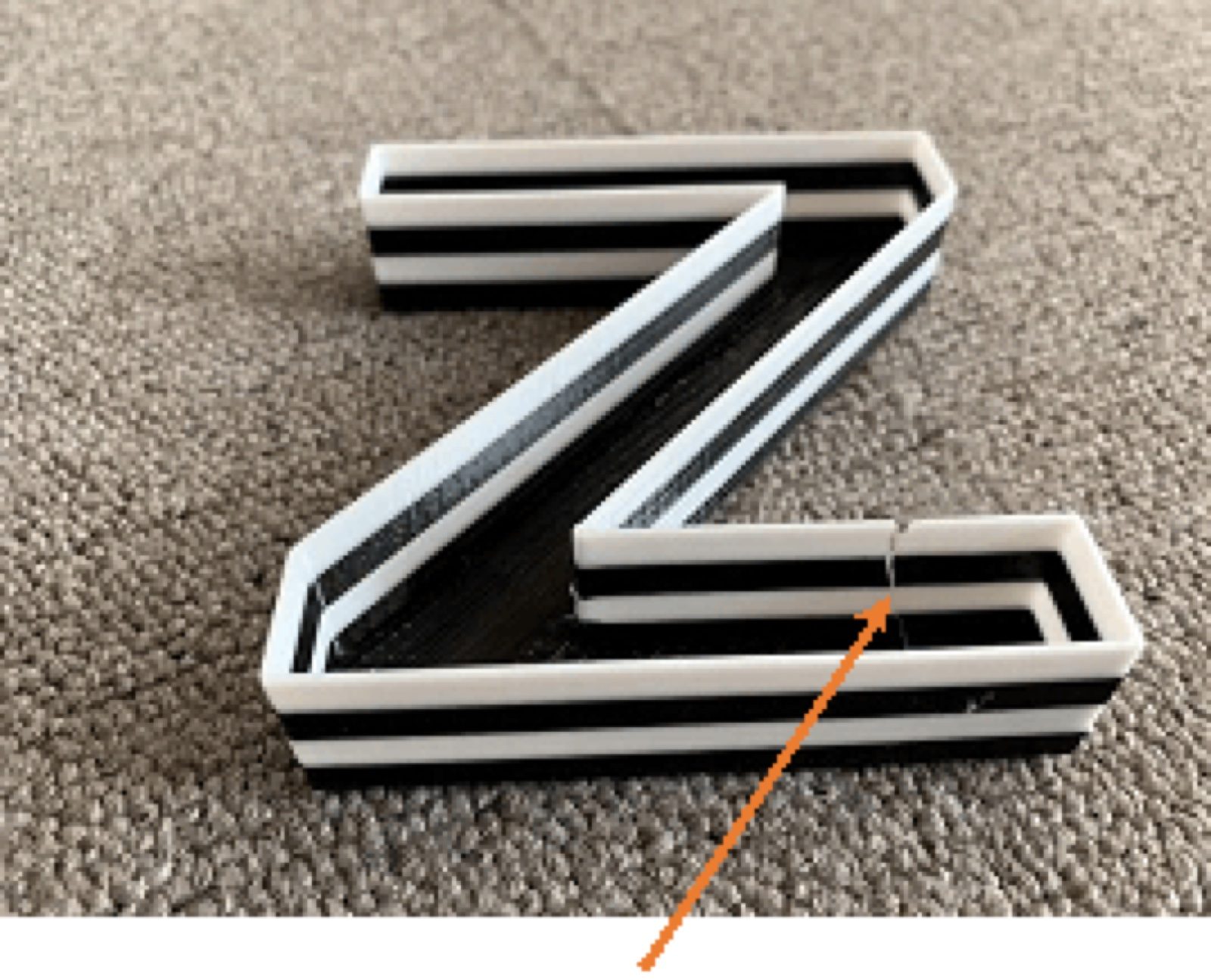
Normal PLA filament — letter breaks when squeezed during PMMA panel install
When you try to squeeze the letter when installing the PMMA panel, the letter 3D printed with normal PLA filament will be broken.
Special channel letter filament — withstands squeezing, even higher toughness than competitors
Special channel letter filament is acceptable for the squeezing. Our channel letter filament has even higher toughness than other filaments on the market — the letter won't break down when it falls on the floor.

4. Low-temperature impact when printing
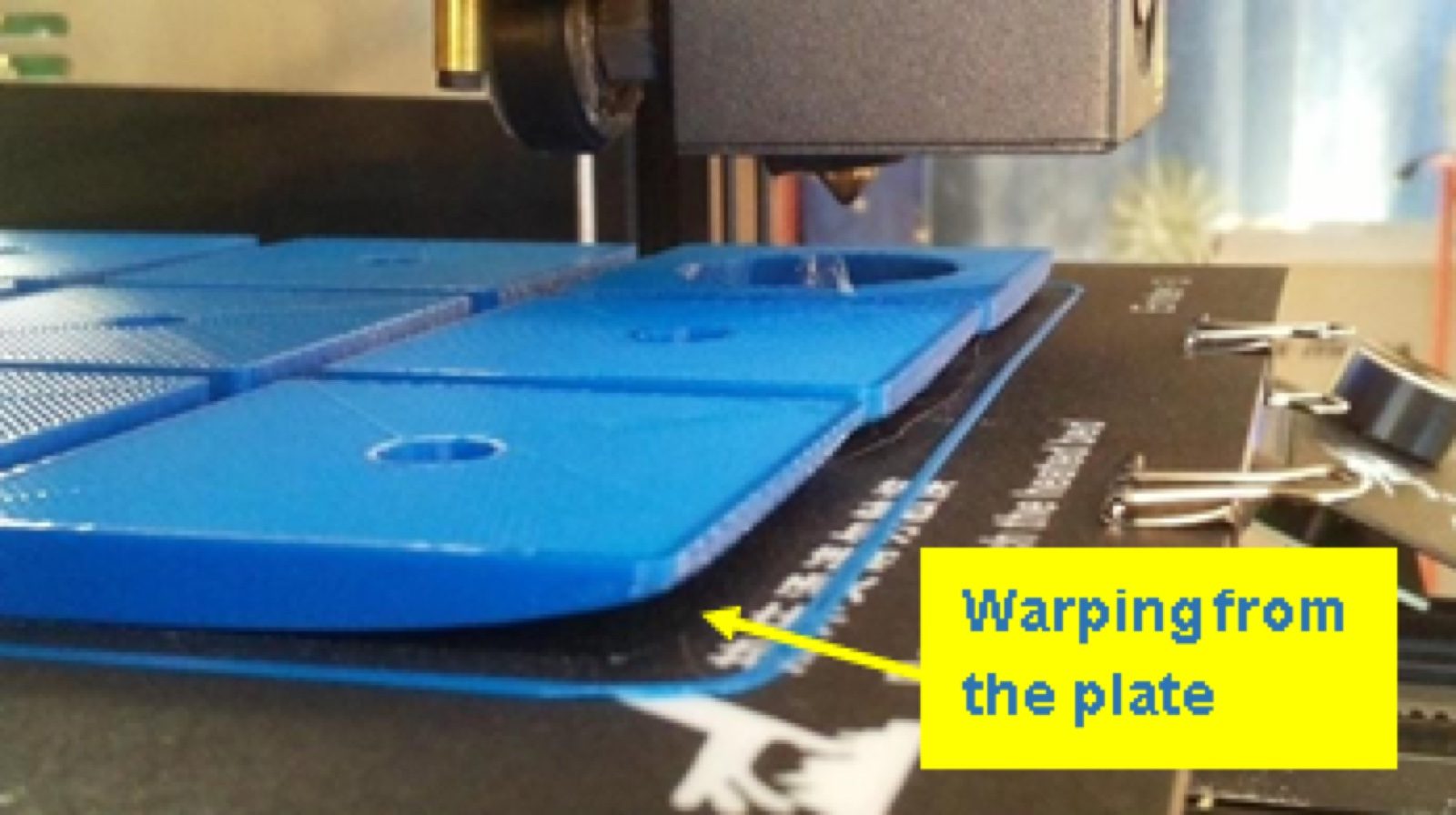
Normal filament — warps under cold air during printing of large objects
When 3D printing large objects/letters, normal filament will require a very warm and stable temperature environment. If lower-temperature air blows, the object/letter will warp, and 3D printing will fail.
Special channel letter filament — withstands cold air impact, stable printing
Our channel letter filament can withstand cold air impact without warping and ensures stable printing progress.

5. High and long edges do not distort
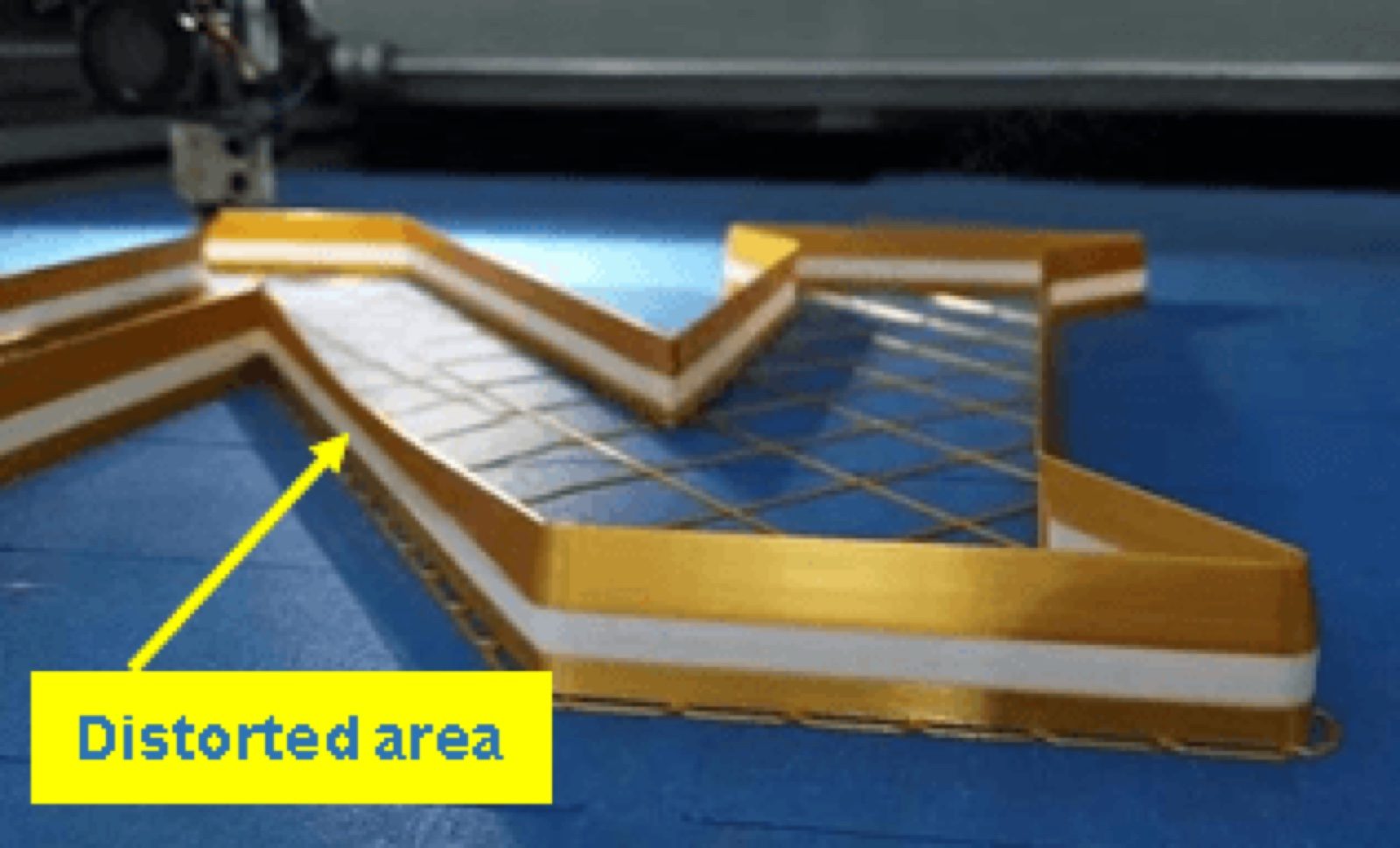
Normal filament — distorts on long, high edges
When printing tough and high-edge letters (e.g. 12 inches long, 3 inches high), a normal channel letter filament will fail. It makes subsequent installation procedures much harder.
Special channel letter filament — works excellent on large, thick letters without distortion
Our channel letter filament works excellent when printing large and thick letters without distortion.

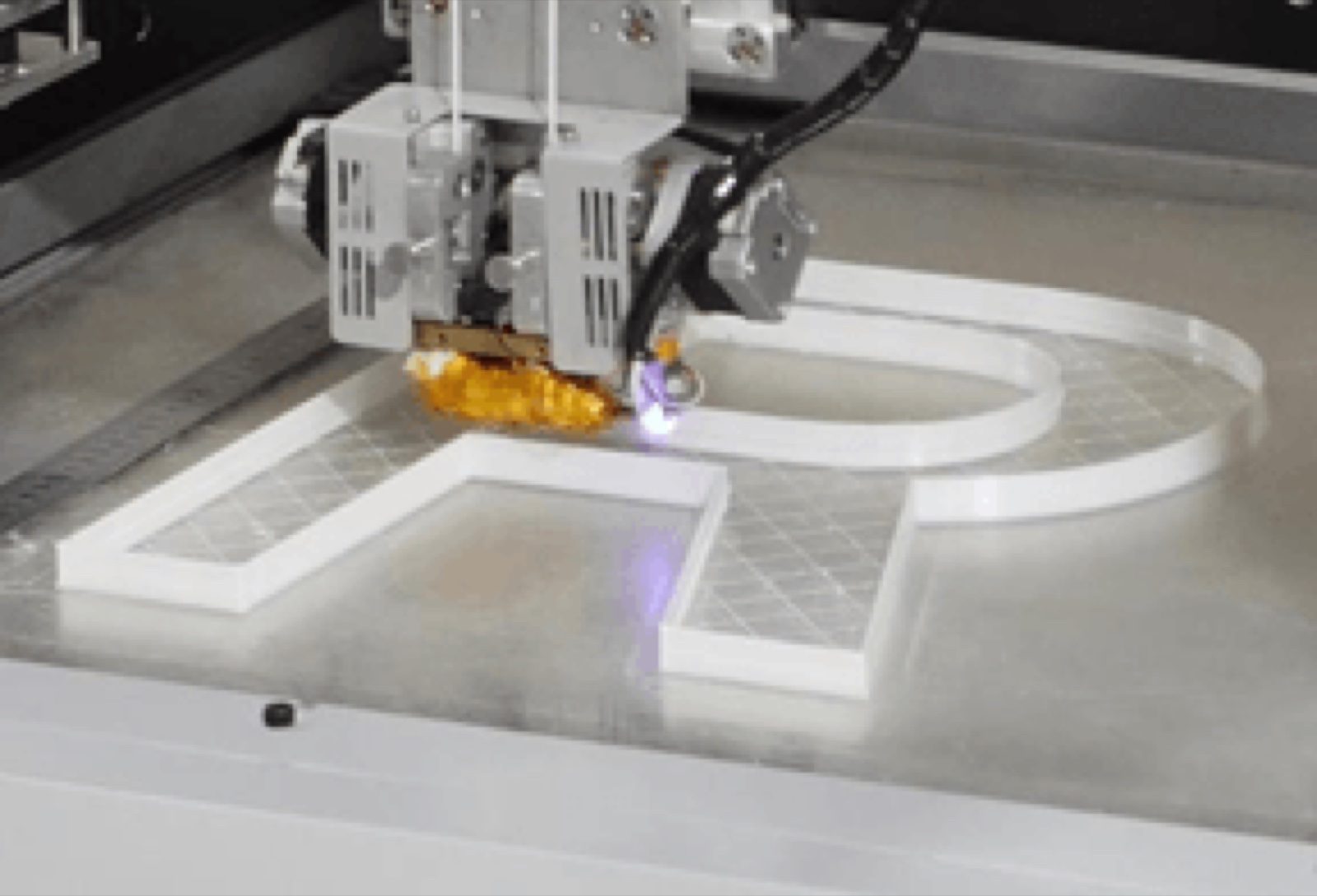
Low shear force and high fluidity, suitable for high-speed printing

Our channel letter filaments have a low shear force and high fluidity. Those are essential features for high-speed extruding in the print head — a must when using our high-speed channel letter 3D printer.

← All articles
More from Ascent

Related articles

How to Set Up a Laser Welding Workstation: Table, Fixturing, Ventilation, and Safety Zone
A practical setup guide for handheld fiber laser welding stations — table height, fixturing essentials, fume extraction placement, safety zone layout, cable management, and what to have within arm's reach before the first arc.
How to Train a Channel Letter Fabricator: Who to Hire, What to Train, and How Long It Takes
Labor is the #1 cost in channel letter production. A practical guide to hiring the right person, what skills to expect on day one versus what to build, and realistic timelines for reaching production speed on each machine in the channel letter workflow.
Laser Welder Fit-Up and Gap Control: Why Gaps Are a Safety Problem, Not Just a Quality Problem
A gap between two parts being laser welded is not just a weld defect waiting to happen — it is a beam transmission hazard. Here is how to achieve proper fit-up, fixture parts correctly, and protect against the gaps that still slip through.
Materials That Block a 1070nm Fiber Laser Beam: What Works, What Doesn't, and Why
Not every material stops a fiber laser beam. This reference guide covers which flexible and rigid materials absorb or reflect 1070nm energy, how to use them in a welding setup, and what the commercial laser safety products are actually made of.
Laser Welder vs. MIG and TIG: How to Convince an Experienced Welder (and Address the Safety Concerns)
An experienced MIG or TIG welder's skepticism about switching to laser is rational. Here is how to address it honestly — the performance comparison across aluminum gauges, the real safety risks, and how to close the conversation.
How to Make a Channel Letter — The Ascent Way with TMB3
A step-by-step walkthrough of building a channel letter using the Ascent CNC Router, TMB3 bending and trim machine, and Ascent Stapler — including how the TMB3 converts flat aluminum coil into trim cap automatically, saving 20–50% on material cost.
How to Make a Channel Letter — The Ascent Way with EDGE3
A complete step-by-step walkthrough of building a channel letter from design to delivery using the Ascent CNC Router, EDGE-3 bending machine, and Ascent Stapler — faster, more accurate, and more profitable than hand methods.
Making Aluminum Trim with the TMB3 — Better Than Plastic, Cheaper Per Foot, and Glues the Same Way
How the Ascent TMB3 converts flat aluminum coil into finished trim cap on demand — why aluminum outlasts plastic, how the PVC-coated coil lets you use standard contact cement, and what the cost savings look like in practice.
Buying Ascent Equipment: Purchase Outright, Finance, and Use IRS Section 179
For most sign companies, the decision isn't whether to buy equipment — it's how to pay for it. A practical guide to purchasing outright vs. financing, cash flow comparisons, and how IRS Section 179 can reduce your tax burden whether you pay cash or finance.
What Sign Manufacturers Are Buying in 2026 — and Why Ascent Has the Answer
The sign industry's equipment buying decisions in 2026 are driven by labor shortages and profitability — not equipment age. Here's who is actively buying, what problem they're solving, and why Ascent Equipment is positioned to solve all of it from one source.
Laser Cutter Consumables: What to Stock for Your CO₂ and Fiber System
A practical guide to consumables, replacement schedules, and spare parts for shops running a dual-gantry CO₂ and fiber laser cutter — so downtime never catches you off guard.
Laser Safety for Industrial Laser Cutters: What U.S. Operators Need to Know
A practical guide to OSHA, FDA, and ANSI laser safety requirements for shops running industrial CO₂ and fiber laser cutting systems — covering engineering controls, PPE, ventilation, and daily checklists.
Safety Considerations for the Ascent QCW Laser Welder
A complete safety guide for the Ascent QCW fiber laser welder — covering Class 4 laser requirements, eye protection, PPE, controlled areas, fume extraction, and daily inspection procedures.
How to Price Channel Letters in 2026 When Using Ascent Equipment
A practical pricing guide for channel letter fabricators — the inch rule, cost-plus method, how each Ascent machine (5AS, EDGE-3, TMB3, laser welder, laser cutter) changes your cost structure, and worked examples comparing five shop configurations.
Ascent 2000W Refrigeration Laser Welder vs. the Competition
A feature-by-feature comparison of the Ascent Equipment 2000W Refrigeration Handheld Fiber Laser Welder against leading competitors — cooling technology, duty cycle, operating costs, and what matters most for production shops.

Let Ascent Experts Assemble All the Pieces of The Equipment Puzzle for your Company

Contact us