
Ascent is introducing automated spray finishing for sign manufacturers. It is meant to cut labor, keep finishes consistent, and hold down coating costs across the many materials a sign shop handles.
Sign shops are not high-volume factories. Most run short batches, one-offs, and custom jobs in wood, MDF, acrylic, plastic, and metal. Spraying every part by hand works, but it becomes a bottleneck that holds back growth. The question is how to raise output and consistency without adding labor when every job is different.
Where hand spraying falls short
- Short runs and frequent custom changes mean constant adjustments and setups.
- Output is limited by how many people you have.
- The finish varies from one operator or shift to the next.
- Frequent color and coating changes slow production.
- Repetitive spraying wears operators out.
Because no two jobs are alike, shops often give up efficiency to keep their flexibility, and the process gets hard to scale.
Why more sprayers is not always the answer
When volume goes up, the first instinct is to hire. In a sign shop that is not always practical. Workloads rise and fall, jobs vary in size and complexity, and a new operator takes time to train. More people add overhead, but they do not guarantee steady output or quality. That is why more shops are turning to automated spraying: to support their flexibility, not replace it.
Short runs and expensive coatings
Many shops use adhesion promoters, specialty paints, and protective topcoats. They often cost more and are used in small amounts, with frequent changes during the day and little room for waste. The usual worry is that automation only pays off at large coating volumes.
It does not have to. A system built for small jobs delivers fluid locally instead of drawing from large central reservoirs. A compact pressure cup mounted on the spray arm, for example, lets you:
- run small batches without wasting material
- switch colors or coatings quickly
- stay flexible on custom jobs
- use only the amount of coating each run needs
What automation does for sign production
Automated spraying suits acrylic, aluminum, MDF, and plastics. It handles base coats before routing or engraving, adhesion promoter before graphics, and protective topcoats on finished signs. Because the machine does the spraying, results no longer depend on each operator's technique. You get repeatable spray patterns, a consistent film build, and predictable results from part to part, even with short runs and frequent changeovers.
Meet the Ascent Automatic Spray Paint System
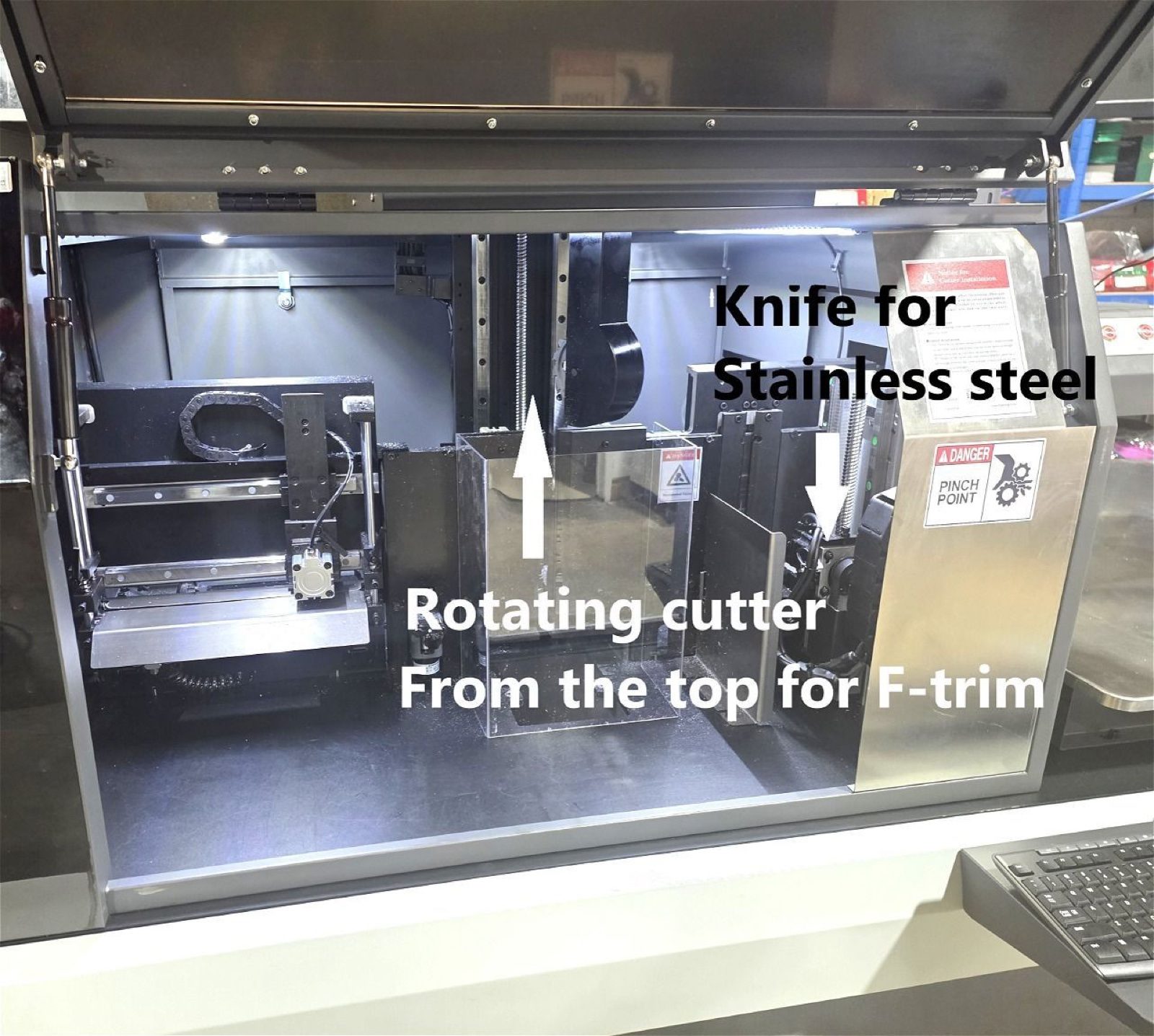
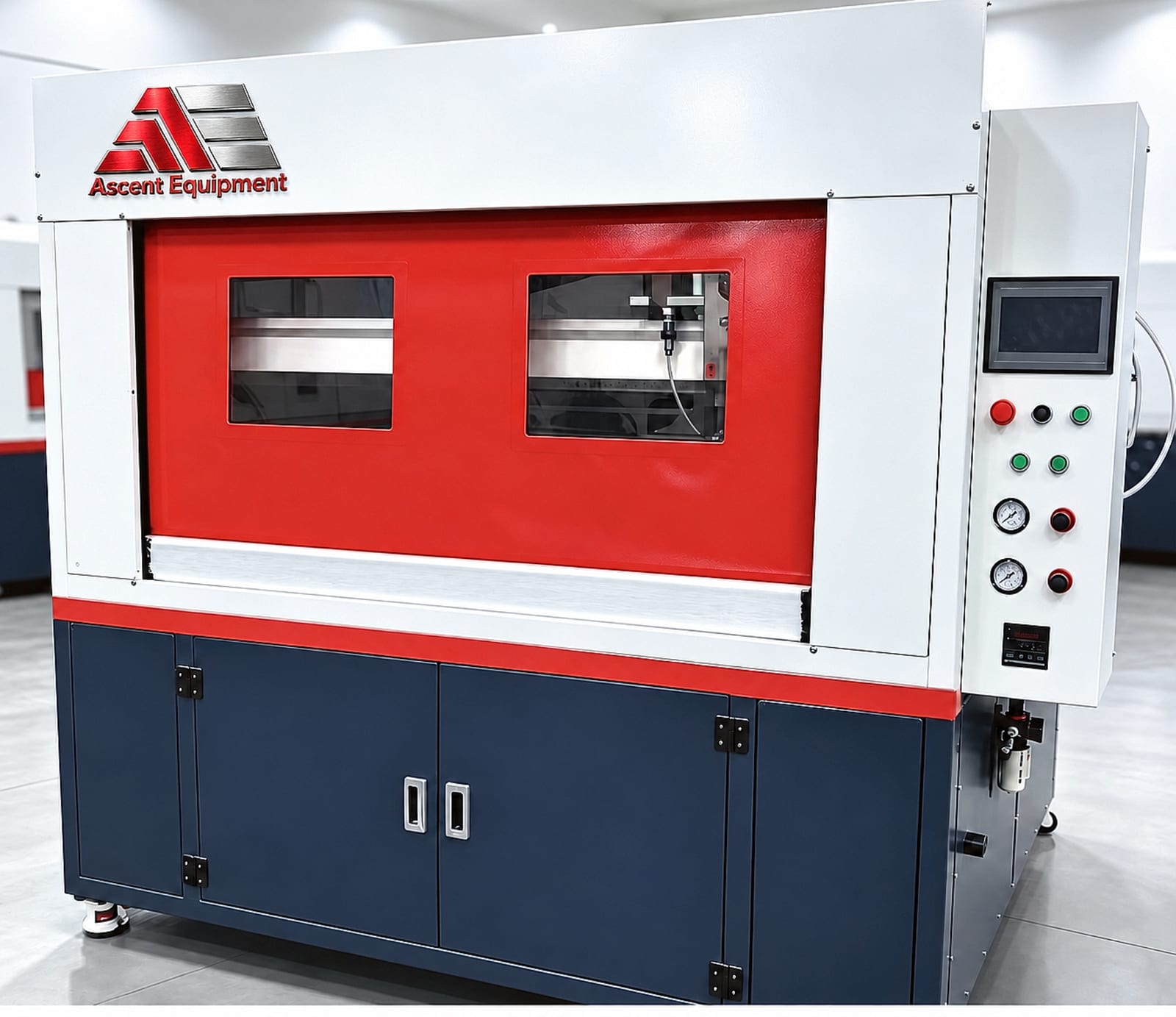
The Ascent Automatic Spray Paint System paints and bakes sign letters in one machine. Three spray guns ride on a moving three-axis head and cover four sides of each piece. You can adjust the spraying speed and the spraying area. The machine cleans its own spray guns and pipelines, and a water curtain takes care of the overspray.
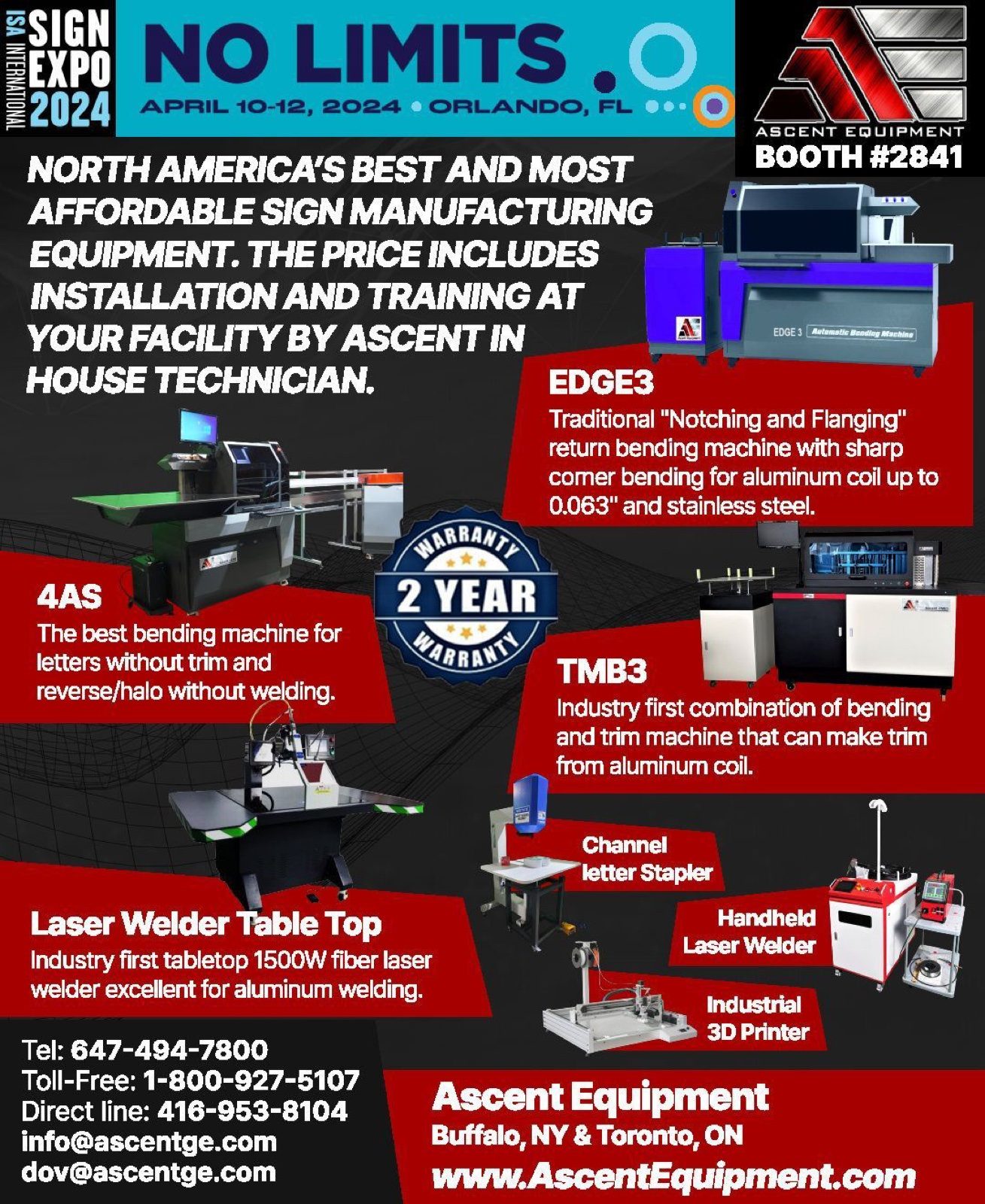
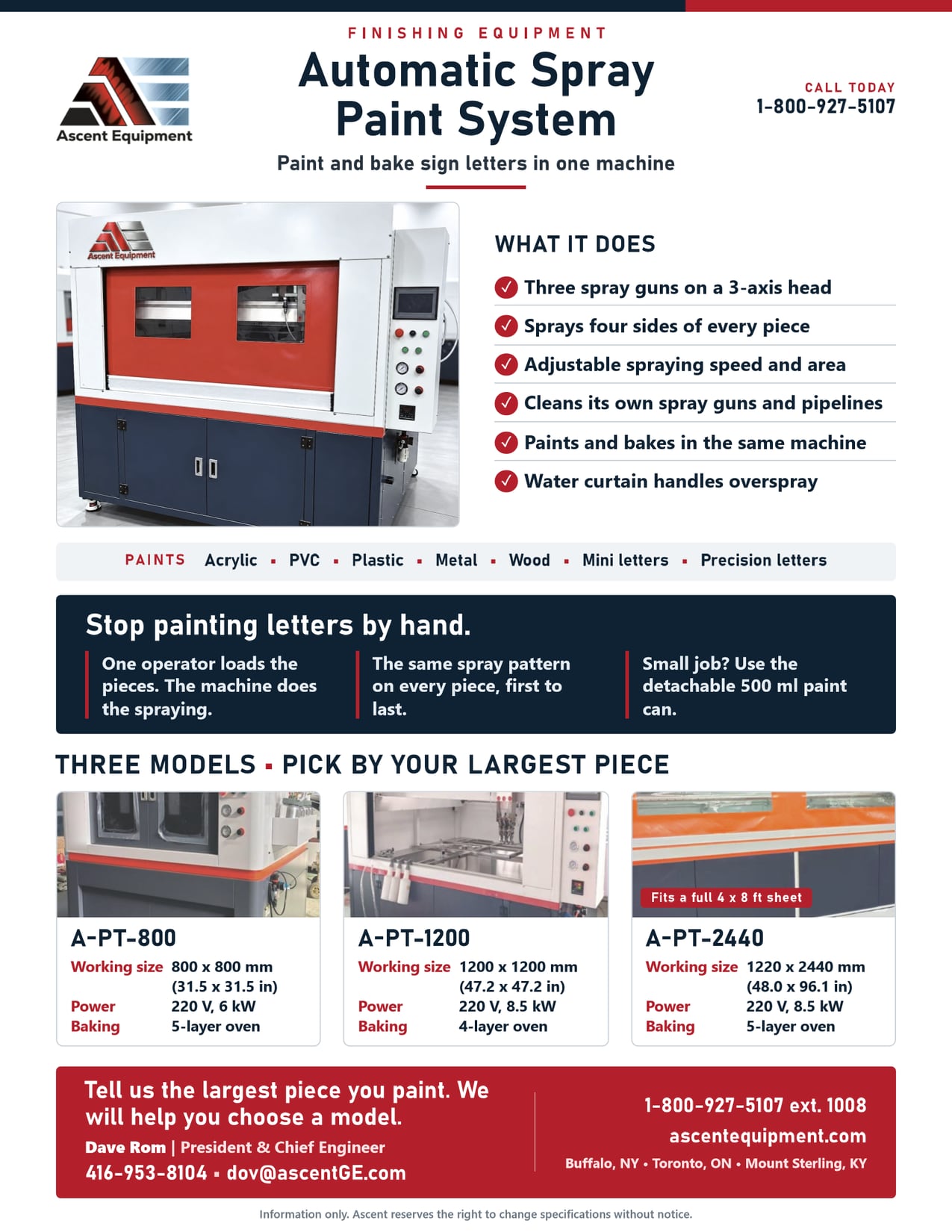
It paints acrylic, PVC, plastic, metal, and wood parts, including mini letters and precision letters. For a small job, use the detachable 500 ml (17 fl oz) paint can instead of filling a large one. The flyer below shows the whole line on one page, and you can download the flyer as a PDF.
Three models, chosen by your largest piece
Pick the model that fits the biggest piece you paint. The A-PT-2440 has a 1220 x 2440 mm (48.0 x 96.1 in) working size, which takes a full 4 x 8 foot sheet.
| A-PT-800 | A-PT-1200 | A-PT-2440 | |
|---|---|---|---|
| Working size | 800 x 800 mm (31.5 x 31.5 in) | 1200 x 1200 mm (47.2 x 47.2 in) | 1220 x 2440 mm (48.0 x 96.1 in) |
| Overall size | 1600 x 1500 x 1700 mm (63.0 x 59.1 x 66.9 in) | 2200 x 2000 x 1900 mm (86.6 x 78.7 x 74.8 in) | 3600 x 2200 x 2150 mm (141.7 x 86.6 x 84.6 in) |
| Power | 220 V, 6 kW | 220 V, 8.5 kW | 220 V, 8.5 kW |
| Oven | 5 layers | 4 layers | 5 layers |
Will it fit in your shop?
Space is a frequent worry. Many shops have little floor area and low ceilings, and new equipment seems unrealistic if it means reworking the layout. Automation does not have to be big or complicated. Compact automated spray machines are built for small footprints, so you can add one without disrupting the rest of the operation.
Each model's overall size is in the table above, so you can check it against your floor space and ceiling height. Every model also needs a 220 V supply.
What to expect when you start
Most hesitation comes from getting started, not the technology. Will the system work with your coatings and materials? How will you know it performs the way you need? How hard is it to get running?
A dedicated Ascent team installs the system, sets it up correctly, and fits it into your workflow. Your operators then get hands-on training in operation, maintenance, and best practices, so you get consistent results from day one without bringing in outside help.
After installation, Ascent continues to support you with technical help and on-demand articles, training materials, and support videos for routine maintenance, refresher training, and new hires.
What it means for your shop
With automated spray finishing, a sign shop can:
- raise output without adding staff
- finish every product more consistently
- waste less coating, especially the expensive kinds
- get short runs and custom jobs done with less effort
- free skilled people for other work
Automation should fit the way sign shops already work, not force a disruptive change. To see how Ascent automated spray finishing could fit your shop, call 1-800-927-5107 or contact us. You can also read about the Automatic Spray Paint System.