QCW Mold Repair System
See it in action
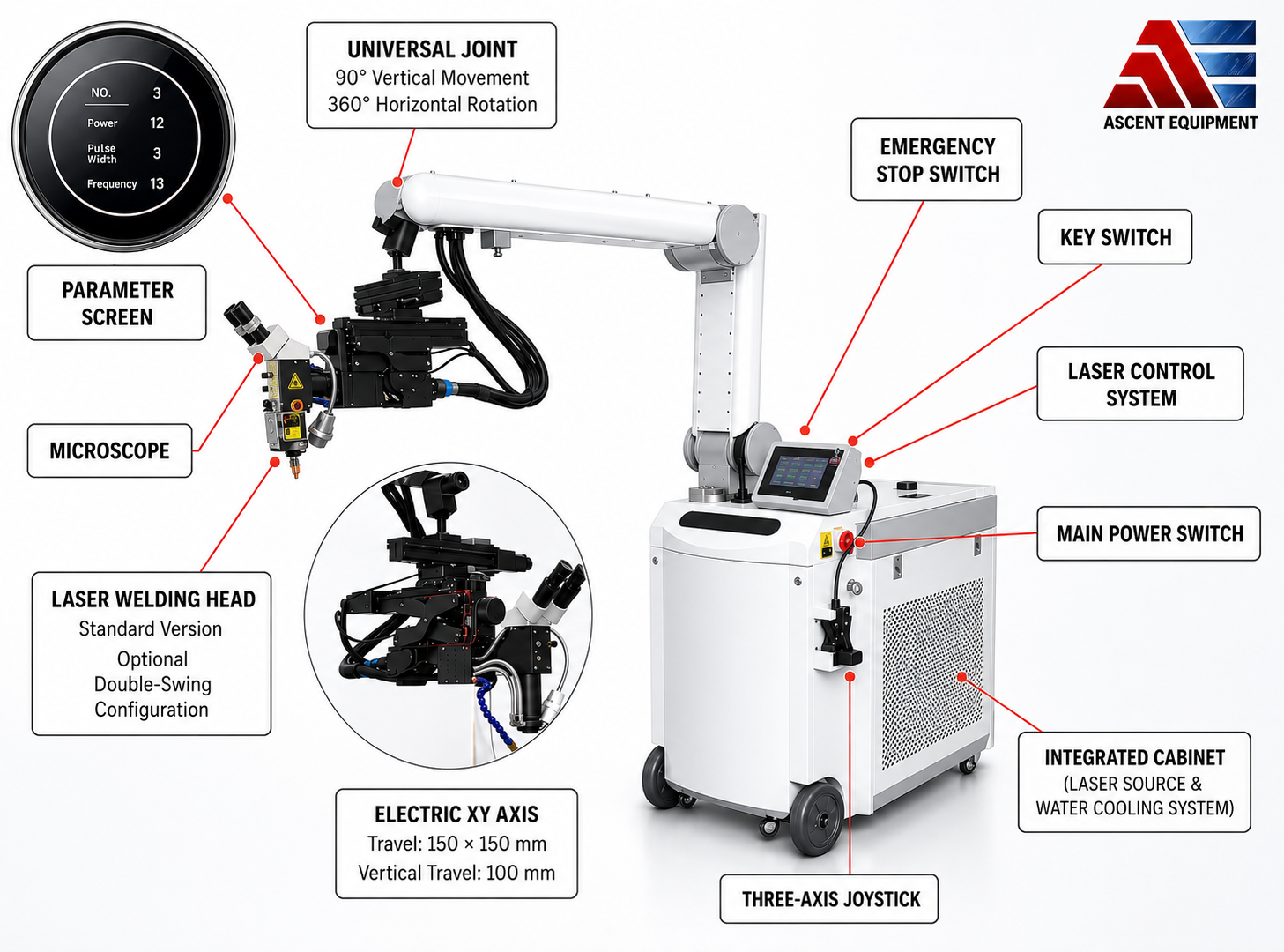
A QCW Mold Repair Laser is a precision laser welding system designed specifically for repairing molds, dies, tooling, and precision metal components by adding weld material with minimal heat distortion.
What Does QCW Mean?
QCW = Quasi-Continuous Wave
A QCW laser operates between a traditional pulsed laser and a continuous-wave (CW) fiber laser:
- High peak power for deep penetration
- Low average heat input
- Minimal distortion and warping
- Excellent control for precision repairs
- Ideal for mold steel, tool steel, stainless steel, copper alloys, and aluminum
How It Works
The operator uses a microscope or camera system, fine filler wire (0.2–0.8 mm), a precision XY table, and the QCW laser beam. The laser melts a small area of the mold while simultaneously fusing filler material to rebuild worn or damaged surfaces.
Common Mold Repair Applications
- Worn mold edges
- Chipped corners
- Flash line repair
- Mold cavity restoration
- Gate repairs
- Ejector pin damage
- Engraving corrections
- Surface defect repair
Typical Specifications
- Laser Power: 300W / 400W (peak power 3000W / 4000W)
- Laser Type: QCW Fiber Laser
- Wavelength: 1080 nm
- Water-cooled source
- Motorized XYZ work platform
- Microscope viewing system
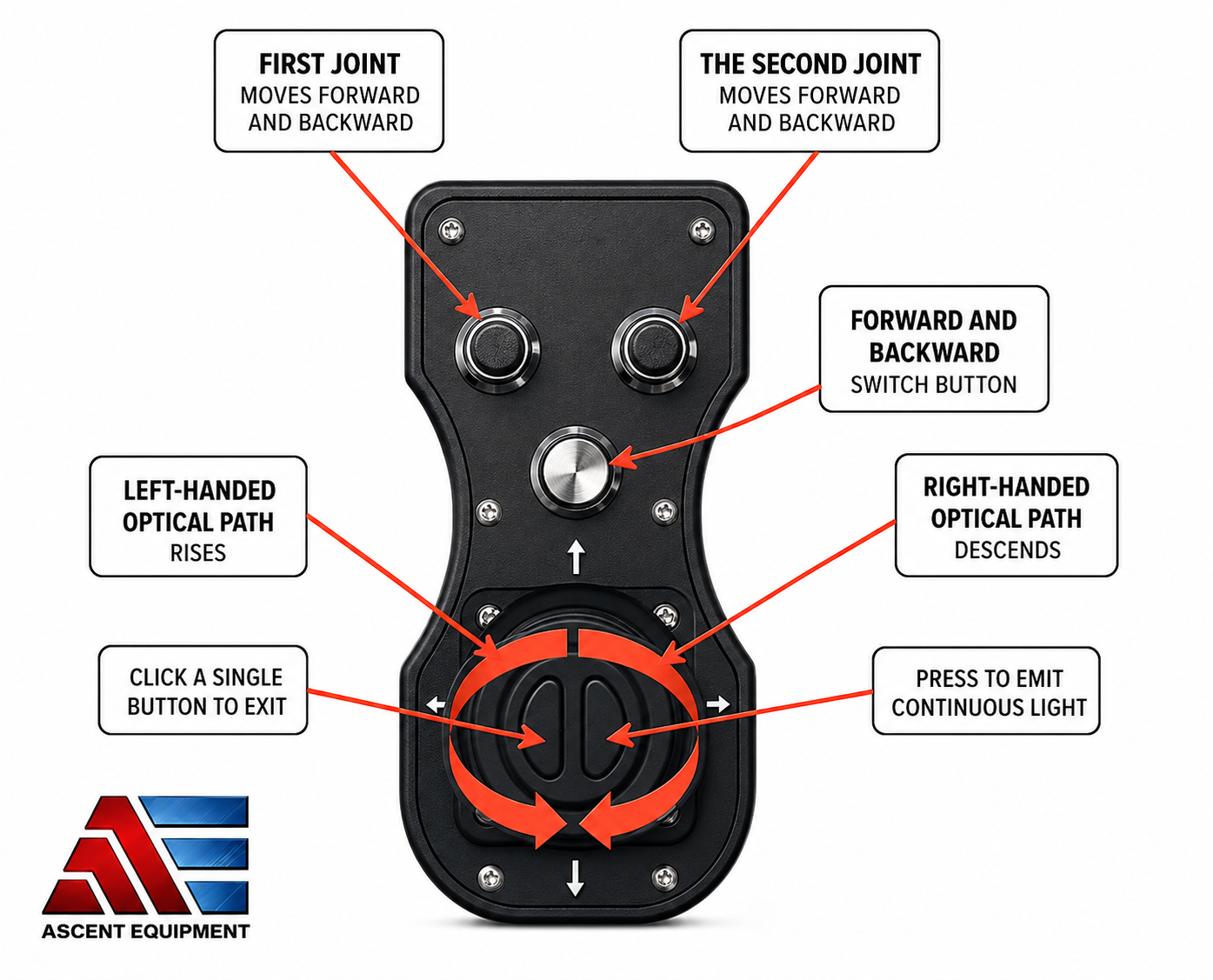
- Joystick control
Industries Using QCW Mold Repair Lasers
- Plastic injection molding
- Automotive tooling
- Die casting
- Aerospace components
- Medical device manufacturing
- Precision machining
- Stamping dies
- Sign industry fixture repair
Why QCW Instead of a Handheld Fiber Laser?
For mold repair, QCW systems provide microscopic precision, stable weld pool control, the ability to repair deep cavities, very low heat input, a better cosmetic finish, and less post-machining and polishing.
A QCW mold repair laser is a high-precision tool and mold-repair system, while a handheld fiber laser welder is a fabrication and production welding machine for stainless steel, aluminum, and sheet-metal assemblies.
The Difference Between a YAG and a QCW Fiber Mold Repair Laser
QCW fiber technology is the modern replacement for traditional Nd:YAG mold repair systems.
Technology Comparison
| Feature | YAG Mold Repair | QCW Fiber Laser |
|---|---|---|
| Laser Medium | Nd:YAG crystal | Fiber laser |
| Wavelength | 1064 nm | 1080 nm |
| Beam Delivery | Mirrors and optics | Fiber optic cable |
| Efficiency | 3–5% | 25–40% |
| Maintenance | High | Low |
| Lamp Replacement | Required | None |
| Cooling | Large water chiller | Smaller chiller |
| Reliability | Moderate | Excellent |
| Electrical Consumption | High | Lower |
Welding Performance
YAG Mold Repair Laser
Traditionally used for plastic injection mold repair, die repair, tool steel repair, and precision build-up welding.
Advantages: Very smooth weld appearance, excellent microscopic control, proven technology.
Disadvantages: Slower welding speed, lower efficiency, frequent flashlamp replacement, higher operating costs.
QCW Fiber Mold Repair Laser
Advantages: Higher peak power, deeper penetration, faster welding, more stable output, lower heat input, better energy efficiency, longer service life.
Disadvantages: Higher initial investment (although prices have fallen dramatically).
Heat Input
QCW systems create a smaller heat-affected zone than YAG systems — less polishing required, less distortion, and better dimensional accuracy.
Maintenance Costs
YAG — requires regular replacement of flash lamps, reflectors, and optical components, plus cooling system maintenance. Typical lamp life: 500,000–2,000,000 pulses.
QCW Fiber — typical fiber source life: 50,000–100,000 hours. No flash lamps to replace.
Mold Repair Quality
For very fine mold work (0.1–0.3 mm welds), both systems can produce excellent results. For larger repairs and build-up welding, QCW generally wins due to higher peak power, better penetration, and a faster deposition rate.
Typical Machine Configuration
Traditional YAG Mold Welder: Large cabinet, microscope, X-Y-Z table, 200–400W average power.
Modern QCW Fiber Mold Welder: Fiber source, higher efficiency, smaller footprint, better reliability, often 1500W–4000W peak power.
If you are introducing a mold repair system today, we recommend QCW fiber technology:
- Lower maintenance cost — no flash lamp replacement
- Better electrical efficiency
- Faster welding speeds and higher reliability
- Easier service support
- Technology preferred by most new mold shops
YAG systems are still found in older tool rooms, but most new mold repair installations are moving toward QCW fiber-based machines for better performance and a lower cost of ownership over the machine's life.